Financial Authorities Hold Follow-up Meeting on Household Debt in Secondary Financial Sector
Highlighting Concerning Indicators... Industry Meetings Continue
"Year-End Seen as the Most Critical Period"
Financial authorities are accelerating efforts to block the ‘balloon effect,’ where household loan demand shifts from banks that have raised lending thresholds to the secondary financial sector. With the possibility of additional base rate cuts high, excessive competition is emerging mainly in the secondary financial sector, and demand exploiting differences in total debt service ratio (DSR) between sectors could explode, according to financial authorities. They also plan to closely monitor loan demand arising from large initial public offerings (IPOs).
On the 24th, according to financial authorities and the financial sector, the Financial Services Commission convened a meeting with the secondary financial sector?including insurance, specialized credit finance, savings banks, and mutual finance?as well as regional banks and internet-only banks. Based on monitoring results by financial authorities, they conveyed areas and concerns that deviate from the purpose of household debt management. The gathering of secondary financial sector executives just one week after the team leader-level working meeting on the 15th is interpreted as a move driven by the judgment that speed must be increased to achieve results in household debt management by the end of the year.
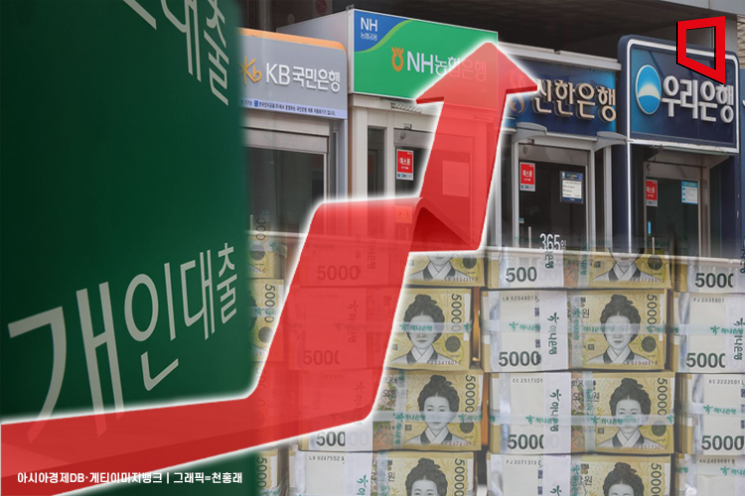
Financial authorities first expressed concerns that if the balloon effect is not firmly controlled by the end of the year, the burden could increase next year. Kwon Daeyoung, the Secretary-General who chaired the inspection meeting, mentioned, "We are closely monitoring household debt trends by sector and are reviewing various management measures in preparation for the balloon effect intensifying," which is interpreted in the same context. A financial sector official said, “At the meeting the day before, financial authorities seemed to consider the end of this year as the most critical period. If household debt surges now, various problems could arise next year.”
Given the expectation of further interest rate cuts, housing purchase demand could spread again, so the Financial Services Commission also shared detailed data it had been monitoring. Besides differences in DSR application standards by sector, concerns were raised that loan demand could increase as the securities industry prepares for large IPOs. A financial sector official explained, “With the DSR applied to non-bank sectors being 50%, which is 10 percentage points higher than banks, financial authorities urged caution to prevent the balloon effect from nullifying policy significance.”
There was also mention of the need for a cautious approach to loan demand arising from large IPOs. A secondary financial sector official said, “Even if loan demand increases due to successive IPOs, we were told not to recklessly extend loans but to manage them properly.” Currently, Theborn Korea and CK Solutions are preparing for listings on the KOSPI within the year.
However, no specific guidelines were presented. Financial authorities are cautious about the messages they convey to the market, adhering to the principle of leaving household debt management to the autonomy of financial companies. A senior official from financial authorities explained, “Since the beginning of this month, household debt has continued to increase in the secondary financial sector, raising concerns about the balloon effect, so sectors are urged to manage household debt autonomously. However, the balloon effect phenomenon in the secondary financial sector has not yet clearly appeared, nor is the situation urgent.”
Financial authorities are expected to continue fine-tuning through meetings with sectors based on the principle of autonomous management. In fact, at the inspection meeting the day before, they emphasized maintaining a strict management stance by reviewing indicators with high balloon effect concerns one by one. This is interpreted as pointing out that while banks tighten household loans, the secondary financial sector is engaging in excessive competition to attract group and interim payment loans by adjusting interest rates and limits. A financial sector official analyzed, “While sharing detailed household debt trends, financial authorities mentioned areas they are closely monitoring. It seems they intend to continue meetings by sector to examine whether there are points that could highlight household debt issues.”
Secretary-General Kwon also criticized, saying, “It is somewhat problematic that the secondary financial sector, regional banks, and internet banks are showing aggressive sales behaviors inconsistent with the household debt management strengthening stance. Since each sector has slightly different roles, rather than focusing on easy sales mainly through mortgage loans, it is necessary to concentrate more on their core roles, such as supplying funds for various demands or for medium- and low-credit borrowers that are difficult to meet in the banking sector.”
© The Asia Business Daily(www.asiae.co.kr). All rights reserved.
![Clutching a Stolen Dior Bag, Saying "I Hate Being Poor but Real"... The Grotesque Con of a "Human Knockoff" [Slate]](https://cwcontent.asiae.co.kr/asiaresize/183/2026021902243444107_1771435474.jpg)
















