Semiconductor, Microelectronics, Quantum Computing, etc.
China's Security-Sensitive Technology Investments to Be Reported to the Treasury Department
The Joe Biden administration in the United States is reportedly set to announce rules restricting domestic capital investment in China's advanced technology sectors, including artificial intelligence (AI), before the November 5 presidential election.
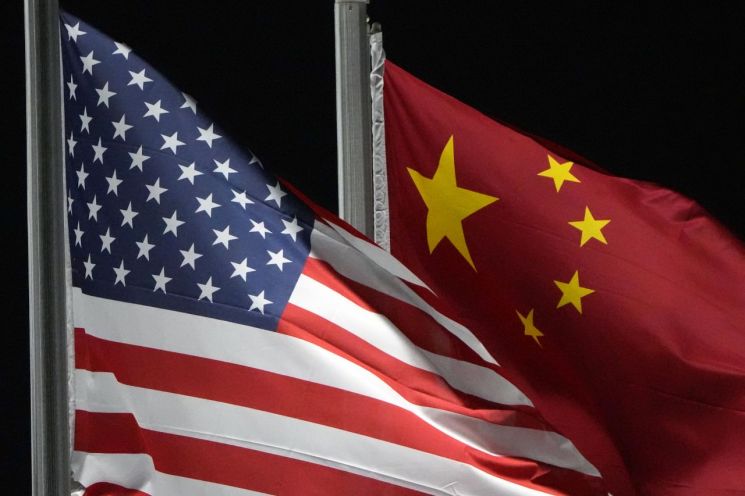
According to major foreign media on the 21st (local time), the Office of Management and Budget (OMB) under the White House is in the final review stage of the rule draft that limits investments in China in fields such as AI, semiconductors, microelectronics, and quantum computing. This is a follow-up to the "Executive Order on Addressing Investments by Certain Countries of Concern in U.S. National Security Technologies and Products," signed by President Biden in August last year. The core provision requires prior reporting to the Treasury Department when investing in Chinese companies in advanced technology sectors. The purpose is to prevent China from using U.S. investments to develop advanced technologies and expand its military capabilities.
Laura Black, a former U.S. Treasury official and attorney at the law firm Akin Gump, predicted that "the rules could be announced before the November 5 election." Typically, the Treasury Department releases rules at least 30 days before implementation. Black explained that the scope of AI covered by the rules and the criteria for limited partners will be clarified in more detail.
Earlier, the Treasury Department published a Notice of Proposed Rulemaking (NPRM) in June and solicited public comments. At that time, equity acquisitions, convertible debt financing, joint ventures, and greenfield investments (establishing production facilities or corporations in the investment country) were selected as subjects to which the rules apply. However, exceptions were made for listed securities such as index funds, certain limited partner investments, and syndicated loans.
The Treasury Department explained the background by stating, "This is a measure to prevent countries of concern (China, Hong Kong, Macau) from abusing U.S. overseas investments to develop next-generation military, intelligence, surveillance, and cyber core technologies or products that threaten U.S. national security." A senior Treasury official emphasized in a press briefing, "Above all, we want to prevent China from developing AI applications that could be used for large-scale surveillance, such as targeting weapons and location tracking during combat."
© The Asia Business Daily(www.asiae.co.kr). All rights reserved.
![Clutching a Stolen Dior Bag, Saying "I Hate Being Poor but Real"... The Grotesque Con of a "Human Knockoff" [Slate]](https://cwcontent.asiae.co.kr/asiaresize/183/2026021902243444107_1771435474.jpg)















