Minneapolis and Dallas Fed Presidents' Remarks
Market Reflects 87% Probability of Small Cut Next Month
The U.S. Federal Reserve (Fed) initiated a monetary easing cycle last month with a 'big cut' (0.5 percentage point interest rate reduction), while Federal Open Market Committee (FOMC) members emphasized the need for gradual and slow rate cuts. This reflects an assessment that the pace of rate cuts should be controlled as signals of continued economic growth in the U.S., driven by a strong labor market and consumer spending, were repeatedly detected last month. In response to expectations that the pace of rate cuts may slow, U.S. Treasury yields surged.
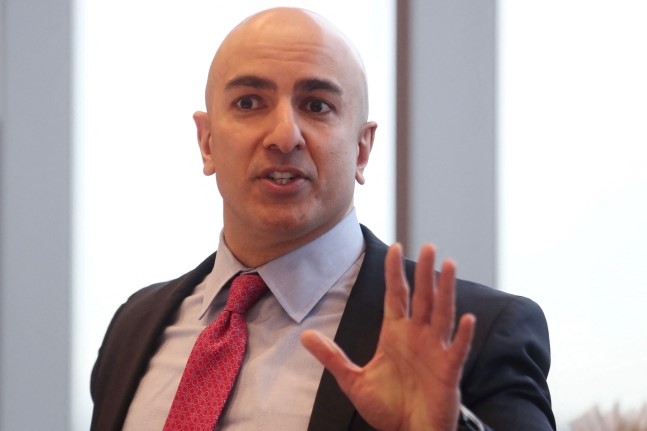
Neel Kashkari, President of the Minneapolis Federal Reserve Bank, attending an event in Wisconsin on the 21st (local time), expressed support for the large rate cut made last month but said he expects smaller rate cuts in the upcoming meetings.
President Kashkari said, "I expect more gradual rate cuts over the next few quarters to reach a neutral (interest rate) level," adding, "This could change depending on the data." He explained that the neutral rate is the level of interest rates that neither stimulates nor restricts the economy.
President Kashkari stated that for the pace of rate cuts to accelerate, "there must be substantial evidence that the labor market is weakening rapidly."
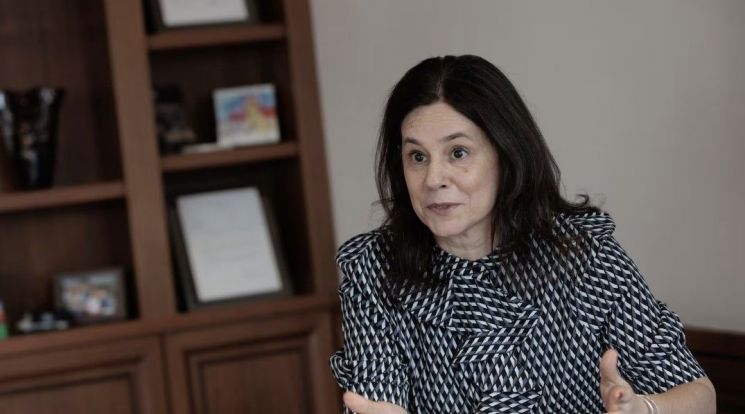
Lorie Logan, President of the Dallas Federal Reserve Bank, also reiterated the Fed's stance that interest rates should be cut at a cautious pace.
At an event held in New York that day, President Logan said, "If the economy moves as expected, a strategy of gradually lowering the policy rate to a more normal or neutral level will help manage risks and achieve goals." She noted that a less restrictive monetary policy would help balance risks in achieving the dual mandates of price stability and full employment. While acknowledging the need for rate cuts, she emphasized controlling the pace of cuts.
Earlier, the Fed lowered the benchmark interest rate by 0.5 percentage points from 5.25?5.5% to 4.75?5.0% at last month's FOMC meeting. Amid criticism that the Fed missed the opportunity to cut rates in June and July, the Fed was seen as taking bold rate cuts in response to concerns about cooling employment. However, subsequent employment data turned out to be stronger than expected. According to the September employment report released by the U.S. Department of Labor on the 4th, nonfarm payrolls increased by 254,000 from the previous month, marking the largest increase in six months. This significantly exceeded both the market forecast (147,000) and the August figure (159,000 increase). Additionally, September retail sales rose 0.4% from the previous month, surpassing the expected 0.3%, indicating that the U.S. economy continues to show solid growth.
As Fed officials signaled their intention to moderate the pace of rate cuts, U.S. Treasury yields surged sharply. The yield on the 10-year U.S. Treasury note, a global benchmark for bond yields, rose 11 basis points (1bp = 0.01 percentage point) from the previous trading day to 4.19%, while the 2-year Treasury yield increased 7 basis points to 4.02%.
The market expects the Fed to cut the benchmark interest rate by 0.25 percentage points at the FOMC meeting scheduled for November 6?7. According to the Chicago Mercantile Exchange (CME) FedWatch tool, the federal funds futures market currently prices in an 87.1% probability of a 0.25 percentage point rate cut in November, up significantly from 49.6% a month ago. The probability of a 0.5 percentage point cut next month has plummeted from 50.4% to 0%, effectively eliminating that possibility.
Sam Stovall, Chief Investment Strategist at CFRA, analyzed, "The continued rise in bond yields means investors believe the U.S. economy remains resilient and the Fed will slow the pace of rate cuts," adding, "As a result, the Fed is likely to face difficulties in bringing inflation down to the 2% target next year."
© The Asia Business Daily(www.asiae.co.kr). All rights reserved.
![Clutching a Stolen Dior Bag, Saying "I Hate Being Poor but Real"... The Grotesque Con of a "Human Knockoff" [Slate]](https://cwcontent.asiae.co.kr/asiaresize/183/2026021902243444107_1771435474.jpg)
















