Seongnam Bundang-gu, Gyeonggi Namyangju-si, Goyang-si Deogyang-gu in order
Clear trend of real estate purchases in Seoul areas adjacent to residential regions
3,848 people moved out of Seoul in August... Only Gangnam area shows net increase
This year, among those who purchased collective housing such as apartments, officetels, and multi-family houses in the Seoul metropolitan area, the largest number of buyers were residents of 'Seongnam Bundang-gu.' It was found that residents of Gyeonggi and Incheon tend to purchase real estate in Seoul that is adjacent to their existing living areas, such as workplaces and schools, allowing them to maintain their current lifestyle zones.
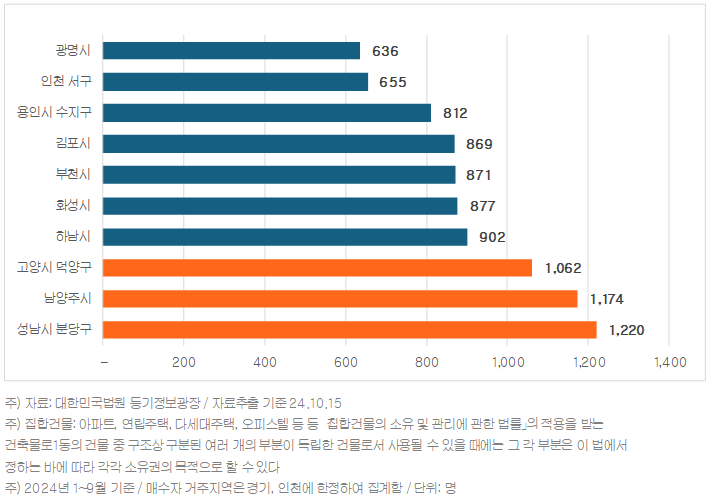 Top 10 Areas with the Most Buyers of Multi-Unit Buildings in Seoul in 2024 (Gyeonggi, Incheon) (Source: Zigbang)
On the 21st, according to data from the Supreme Court Registry Information Plaza reviewed by Zigbang, among 19,343 residents of Gyeonggi and Incheon, the highest number of buyers of collective housing located in Seoul were residents of Seongnam Bundang-gu (1,220 people).
The main purchase areas for Bundang residents were concentrated in the Gangnam area. Songpa-gu had the highest number with 175 buyers, followed by Gangnam-gu with 174, Seocho-gu with 139, and Gangdong-gu with 105. This is interpreted as demand for upgrading to higher-tier areas within convenient access to the Gangnam area and without significantly leaving their existing living zones.
The next region with many buyers of Seoul collective housing after Bundang was Namyangju City. A total of 1,174 people (6.1%) from Namyangju purchased collective housing in Seoul. The most purchased areas were Gangdong-gu (146), Seongdong-gu (139), Jungnang-gu (133), Nowon-gu (80), and Songpa-gu (78). Gangdong-gu saw improved accessibility from Namyangju due to the extension of Subway Line 8 to Byeollae Station in August, which is analyzed as a reason why Namyangju buyers acquired collective housing in that area.
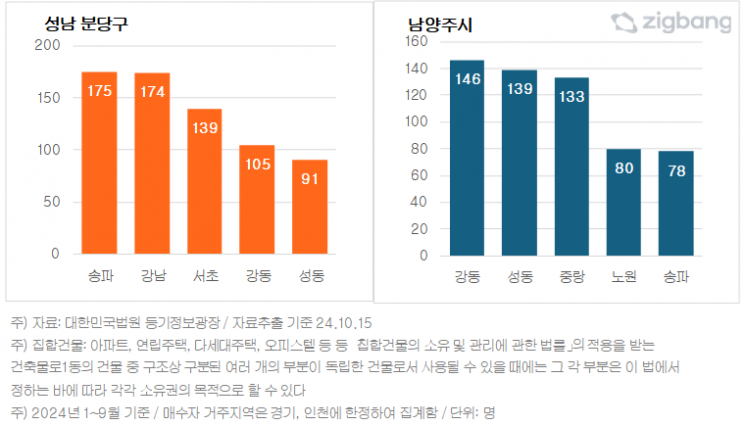 Seoul districts most purchased by residents of Bundang-gu, Seongnam, and Namyangju-si (Source: Zigbang)
The next largest group was 1,062 residents (5.5%) from Deogyang-gu, Goyang City. Deogyang-gu in Goyang City is known as a region with a high proportion of buyers of Seoul collective housing every year. They purchased collective housing mainly in areas expected to have easy access and existing living zones such as Eunpyeong-gu (182), Mapo-gu (97), Seodaemun-gu (91), and Gangseo-gu (85). This is interpreted as purchases focused on areas considering accessibility to the northern downtown area. In the case of Eunpyeong-gu, it is believed that there were many real demand buyers aiming to enter Seoul because the price entry barrier is relatively lower than in Mapo or Seodaemun-gu.
In the southern Gyeonggi region, Hanam City (902) and Hwaseong City (877) also had many buyers of Seoul collective housing. In Hanam City, a high proportion of buyers purchased collective housing in geographically close Gangdong-gu (283) and Songpa-gu (155). In Hwaseong City, buyers were mostly in Songpa-gu (90), Seocho-gu (70), and Gangnam-gu (67).
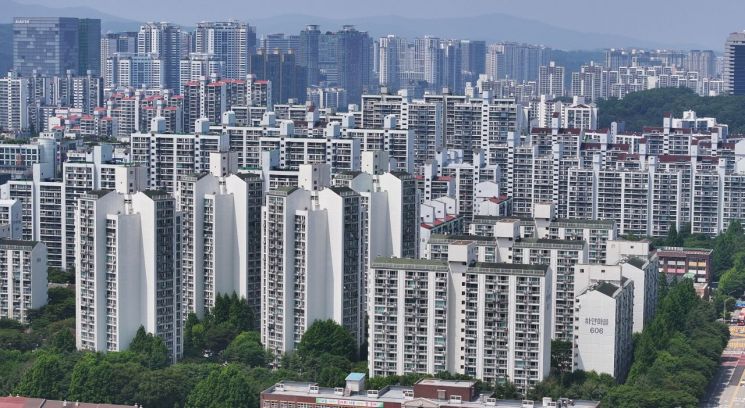
Kim Eun-seon, head of Zigbang Big Data Lab, explained, "As apartment prices in areas such as Dongtan New Town have shown signs of recovery, demand for upgrading to the Gangnam area likely emerged. Since many high-income workers from large corporations such as Samsung Electronics and Hyundai Motor research facilities may be concentrated there, investment purchases in the Gangnam area can also be inferred."
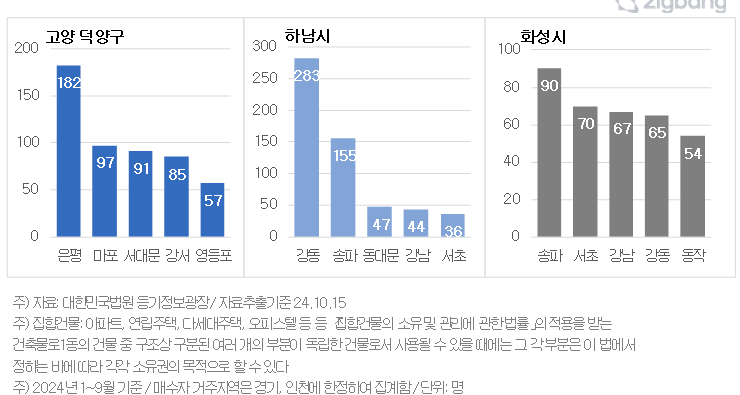 Residents of Deogyang-gu, Goyang-si, Hanam-si, Gyeonggi-do, and Hwaseong-si, Gyeonggi-do, who purchased the most in Seoul autonomous districts (Data=Zigbang)
According to the 'Domestic Population Movement in August 2024' data released by Statistics Korea, the net migration from Seoul was 3,848 people, the highest among the 17 metropolitan cities and provinces nationwide. Net migration by region is calculated by subtracting the total number of people moving out from the total number of people moving in. This means that in Seoul, there were 3,848 more people moving out than moving in. However, unlike Seoul as a whole, the Gangnam area showed positive net migration even in August, indicating steady demand for the Gangnam area.
Lab head Kim analyzed, "Considering the recent craze for subscription in the Gangnam area and the rise in Seoul housing prices in the second and third quarters, demand for entering Seoul with the intention of upgrading to higher-tier areas will continue steadily. While demand is concentrated on higher-tier areas with price rigidity and newly built large complexes, housing prices in areas that do not meet these criteria are likely to stagnate, and the temperature difference between regions will continue for the time being."
© The Asia Business Daily(www.asiae.co.kr). All rights reserved.
![Clutching a Stolen Dior Bag, Saying "I Hate Being Poor but Real"... The Grotesque Con of a "Human Knockoff" [Slate]](https://cwcontent.asiae.co.kr/asiaresize/183/2026021902243444107_1771435474.jpg)

















