Top Clergy Speak Out Unusually
"If Assisted Death Is Permitted, It Will Become an 'Obligation'"
Use of 'Euthanasia Capsules' Suspended in Switzerland
'Assisted dying,' which involves administering drugs or other means to patients with no possibility of recovery to bring about death, has recently sparked intense debate in the UK Parliament ahead of a vote on a bill to approve assisted dying under strict conditions. Public opinion across various sectors of society is sharply divided. Even Anglican bishops, who usually maintain political neutrality, have actively issued statements on the matter.
Debate Intensifies Over 'Assisted Dying' Bill...This Time Clergy Speak Out
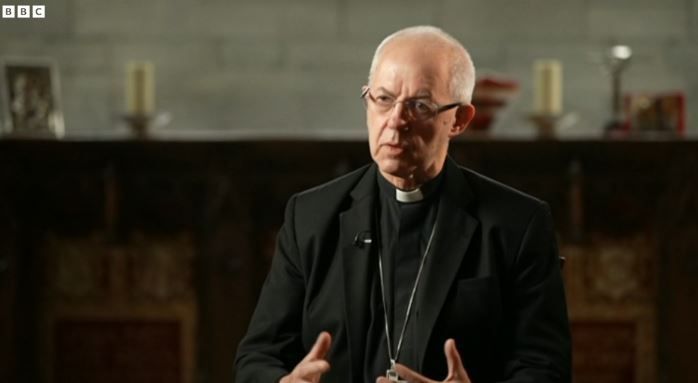 Justin Welby, Archbishop of Canterbury. As the head of the Church of England, he warned about the side effects of 'assisted suicide' in an interview with the public broadcaster BBC.
 [Image source=Captured from BBC homepage]
Justin Welby, the Archbishop of Canterbury and the highest-ranking cleric of the Church of England, the UK’s established church, expressed opposition to assisted dying in an interview with BBC on the 16th (local time). He warned, "(If the assisted dying bill passes) many people will come to see death as somewhat more 'comfortable,'" calling it a "dangerous matter."
In a statement released prior to the interview, Archbishop Welby elaborated on the risks of assisted dying. He said, "This bill disproportionately affects millions of vulnerable people," adding, "Once assisted dying is permitted, (mentally) vulnerable individuals will feel that they 'must (choose assisted dying).' Permission will become an obligation." In other words, there is a heightened concern that mentally vulnerable people may be tempted toward death.
Recently, a bill outlining the conditions for approving assisted dying was introduced in the UK Parliament. While some countries like Switzerland currently permit assisted dying under specific conditions, it remains illegal in the UK. The Assisted Dying Bill proposes allowing euthanasia for those with little chance of recovery who are suffering unbearable pain.
Although public opinion polls show strong support, with 60-75% of respondents in favor, the political and religious sectors, among others in society, remain extremely cautious. This is due to the difficulty in clearly defining the criteria for permitting assisted dying and the unpredictable social repercussions and side effects that the bill’s introduction might cause.
"Medical Standards Will Be Established"...'Euthanasia Capsules' Suspended in Switzerland
 Dr. Philip Nitschke, the doctor who created the assisted death capsule called Sarco, is seen lying inside the Sarco capsule himself on July 8th in Rotterdam, Netherlands.
 [Photo by AP]
Along with Archbishop Welby, 25 Anglican archbishops hold 25 seats in the House of Lords, the upper chamber of the UK Parliament, and thus can vote on the bill’s passage.
However, Kim Leadbeater, the Labour Party MP who introduced the bill, responded to the archbishops’ criticism by protesting, saying it is "for patients suffering at the end of life."
MP Leadbeater stated, "(The bill) is only for terminally ill patients, and people with disabilities or mental health issues will not have access," adding, "Clear criteria for access as well as medical and judicial safeguards will be established."
Meanwhile, controversy has arisen in Switzerland, where assisted suicide is legal, over so-called 'euthanasia capsules.' A woman in her 60s from the United States was the first to use an assisted dying capsule developed by a Dutch civic group, but reports emerged that the capsule was used illegally. As a result, the use of these capsules has been suspended, and several officials from the company operating the capsules have been detained.
Nevertheless, the popularity of euthanasia capsules appears to remain high. It is reported that 371 people applied for the capsule in Switzerland within just one month.
© The Asia Business Daily(www.asiae.co.kr). All rights reserved.
![Clutching a Stolen Dior Bag, Saying "I Hate Being Poor but Real"... The Grotesque Con of a "Human Knockoff" [Slate]](https://cwcontent.asiae.co.kr/asiaresize/183/2026021902243444107_1771435474.jpg)

















