Net Profit Exceeds 20 Billion Won... Successful Turn to Profit
"Result of Selling Non-Performing Assets and Provisioning"
Due to Numerous Adverse Factors, Optimism for Q4 Is Difficult
Savings banks are expected to turn a profit in the third quarter. This is interpreted as a result of continued efforts such as selling non-performing loans and actively setting aside provisions, following the financial authorities' orders for stringent soundness management due to over a year of rising delinquency rates and troubled real estate project financing (PF). However, with negative factors piling up, including the disposal of non-performing assets through auctions and the possibility of timely corrective measures against some savings banks, the outlook remains cautious.
According to the financial sector on the 18th, 79 savings banks nationwide recorded a net profit exceeding 20 billion KRW in the third quarter of this year. The savings bank industry posted a net loss of 555.9 billion KRW last year and continued with a loss of 380.4 billion KRW in the first half of this year, but succeeded in turning a profit in the third quarter, marking a 'surprise' performance.

A senior official from the savings bank industry told Asia Economy in a phone interview, "Our internal estimates expect a net profit of over 20 billion KRW in the third quarter of this year," adding, "Because we had already set aside provisions in advance, the scale of additional provision entries was significantly reduced, and the recent stabilization of funding costs also had an impact."
This turnaround to profitability is due to proactively setting aside provisions in accordance with the financial authorities' policy. Earlier this year, the financial authorities ordered financial companies to reflect 100% of expected losses on the books for some projects that had their maturities extended multiple times. In May, as part of the real estate PF normalization plan, provisions were required to be set aside at a doubtful recovery level (75%) for projects rated D, which are considered at risk of default. The scale of D-rated projects in the savings bank industry was about 3.2 trillion KRW as of the first half of this year, accounting for about 20% of all projects.
All financial sectors, including savings banks, reportedly completed the disposal of non-performing real estate PF projects worth a total of 1.5 trillion KRW by last month. The projects cleared by savings banks were mostly located in Seoul and other metropolitan areas with high business potential. Since these projects were auctioned off at loan principal levels, a significant portion of the provisions previously set aside was reversed into income.
However, it is uncertain whether the profit will continue into the fourth quarter following the surprise third-quarter results. As auctions proceed, sale prices automatically decline, raising concerns about additional losses when disposing of remaining projects. Projects with relatively low business potential, such as those in provincial areas or non-residential facilities, are likely to be sold at bargain prices. The provision ratio for D-rated projects in the savings bank industry was about 30% as of the first half of this year.
Lee Jeong-hyun, senior researcher at the Financial Evaluation Headquarters of Nasinpyeong, analyzed in a recent report, "As projects with good business potential are cleared first, the remaining projects are expected to have lower business potential. Some projects classified as good or average may also deteriorate in soundness due to poor sales rates or concentrated maturity structures, leading to increased bad debt costs."
Nasinpyeong estimated the total expected loss exposure from real estate PF in the entire savings bank industry at 2.6 trillion to 4.8 trillion KRW, and the additional provisions required at about 1.1 trillion to 3.4 trillion KRW.
The future performance of savings banks is expected to depend on how non-performing projects are handled. A senior official from a major savings bank said, "So far, only a single-digit number of projects have been sold through auctions, and those were projects with good business potential, so they were not sold at low prices," adding, "We expect losses not only in the third quarter of this year but also into early next year."
Another savings bank official also forecasted, "Resolving real estate PF exposure could be a turning point for improving the business environment," and "Many financial companies are unlikely to fully recover soundness and profitability until the first half of next year."
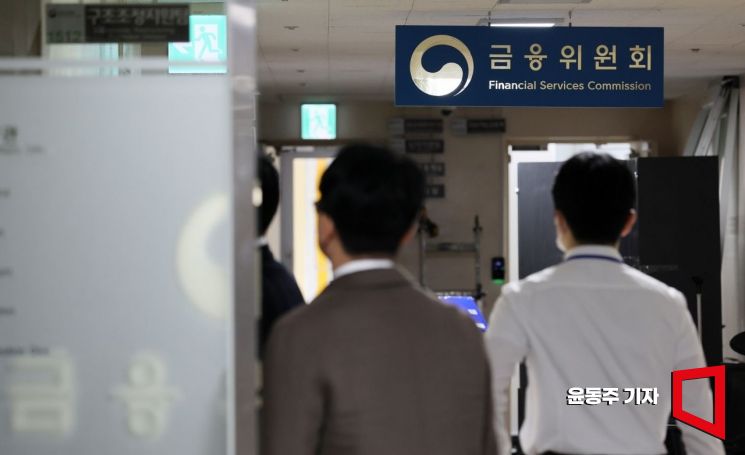
As concerns over real estate PF persist, the financial authorities have decided to select troubled savings banks and initiate intensive management improvement efforts. The Financial Services Commission may impose timely corrective measures on some of the seven savings banks that underwent management evaluations by the Financial Supervisory Service in June and August. Timely corrective measures are mandatory management improvement actions that enforce the disposal of non-performing loans, capital increases, dividend restrictions, and other measures.
The number of savings banks under focused monitoring by the Korea Deposit Insurance Corporation (KDIC) also reached a five-year high. According to data requested by Kim Hyun-jung from the Democratic Party to KDIC, 18 savings banks were under focused monitoring in the first quarter of this year. Focused monitoring targets financial companies with weak financial conditions that are continuously deteriorating and likely to lead to insurance incidents.
Some savings banks with deteriorated soundness have raised capital through stock issuance. Pepper Savings Bank recently announced a paid-in capital increase of 10 billion KRW. Pepper Savings Bank conducted a 20 billion KRW capital increase at the end of May last year and a 10 billion KRW paid-in capital increase in March this year. HB Savings Bank decided on a 40 billion KRW paid-in capital increase at the end of last month, which amounts to 59.1% of its paid-in capital (67.5 billion KRW).
© The Asia Business Daily(www.asiae.co.kr). All rights reserved.
![Clutching a Stolen Dior Bag, Saying "I Hate Being Poor but Real"... The Grotesque Con of a "Human Knockoff" [Slate]](https://cwcontent.asiae.co.kr/asiaresize/183/2026021902243444107_1771435474.jpg)

















