Mitigating Obstacles to Use Changes Such as Corridor Width and Parking Lots
New Raw Dormitory Residential Exclusivity Blocked... Building Act Amendment
Accommodation Business Applications and Enforcement Penalty Deferral Until September Next Year
The government will prevent newly built residential-type lodging facilities (hereinafter referred to as Saengsuk) from being used for residential purposes. Existing Saengsuk must be registered as lodging businesses by their owners or undergo a change of use to officetels in order to be used. If the change of use application is submitted by September next year, the imposition of enforcement fines on Saengsuk owners will be deferred until the end of 2027.
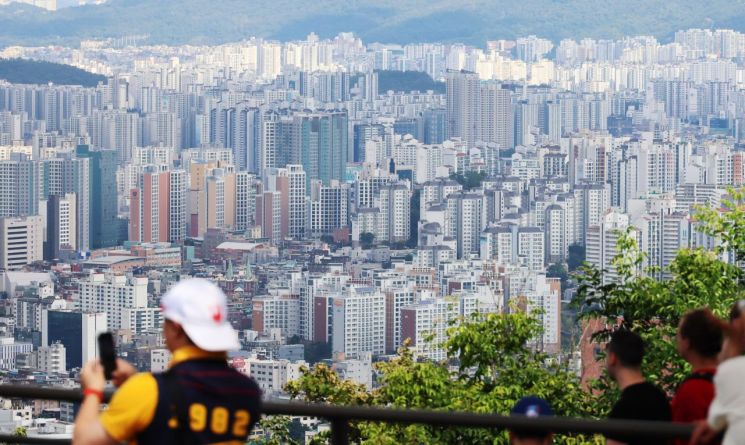
The Ministry of Land, Infrastructure and Transport, the Ministry of Health and Welfare, the National Fire Agency, and other related ministries jointly announced the “Support Plan for the Legal Use of Residential Lodging Facilities” together with 17 local governments including Gyeonggi Province and Incheon City. Regarding this, the government plans to propose an amendment to the Building Act within this year and apply it from the first building permit application submitted after the enforcement date of the amendment to enhance predictability for Saengsuk construction businesses.
This plan was prepared to ensure the legal use of Saengsuk. Saengsuk was introduced as lodging facilities with cooking allowed in response to the increase in tourism demand such as long-term foreign residents, following the amendment of the Enforcement Decree of the Public Health Control Act in 2012. However, more relaxed standards than officetels were applied to construction aspects such as corridor width and parking space, and tax, financial, and subscription regulations had lower thresholds, leading to their de facto misuse as residential units during the full-scale housing price surge starting in 2017.
Accordingly, the government decided in 2021 through the “Saengsuk Illegal Conversion Prevention Measures” to impose enforcement fines if Saengsuk are not reported as lodging businesses or converted to officetels. The imposition was deferred until the end of this year. Currently, 40.5% (76,000 units) of the 188,000 Saengsuk nationwide are being used legally. However, 52,000 units including those not registered as lodging businesses and 60,000 units under construction still have the potential to be used as residential units.
The government has tailored responses to practical obstacles faced by owners or builders of existing Saengsuk to ensure their legal use. When Saengsuk owners register as lodging businesses, regional conditions will be considered, and guidelines will be distributed to allow local governments to relax room and area standards through city or provincial ordinances. From next month, informational notices containing contact details of local government officials will also be sent to Saengsuk owners.
The threshold for change of use of Saengsuk has also been lowered. Regulations will be applied flexibly within the scope that does not undermine legislative purposes such as safety and residential environment protection. For Saengsuk with the first building permit application submitted before this announcement, the government will allow change of use to officetels if fire safety performance equivalent to residential facilities is recognized by reinforcing evacuation and fire prevention equipment. Regarding corridor width, officetels require at least 1.8m, while Saengsuk require at least 1.5m.
For parking, officetels require one space per household, and Saengsuk require one space per 200㎡ of facility area. Alternatives are provided for cases where expanding internal parking space is difficult. First, if nearby land can be secured, external parking lots (including mechanical parking lots) may be installed within a straight-line distance of 300m or a walking distance of 600m. If securing parking lots independently is impossible, owners can pay corresponding fees to local governments to be exempted from additional installation. Local governments will invest in expanding public parking lots. If parking is unnecessary due to local conditions, parking standards can be relaxed through local government ordinance amendments.
For areas where officetels cannot be located due to district unit plans, changes will be considered through donation and acceptance methods. Earlier in March, the Saengsuk “Magok Le West” in Gangseo-gu, Seoul, changed the district unit plan to allow officetel locations by combining a donation and acceptance worth 20 billion KRW (borne by owners).
Additionally, the government will exempt Saengsuk converted to officetels from installing exclusive entrances and will not apply the “inside measurement” method used for officetels, which measures the inside of indoor walls, when calculating exclusive area.
Furthermore, considering the time required for related law and ordinance amendments, enforcement fines will be deferred until the end of 2027 for Saengsuk owners who submit preliminary lodging business registration applications or change of use applications by September next year.
Jang Woo-cheol, Director of Building Policy at the Ministry of Land, Infrastructure and Transport, said, “By introducing flexible regulatory methods for obstacles such as corridor width and parking, a path has been opened for Saengsuk owners to use their properties legally at costs they can bear without damaging social values.” He added, “Local governments should promptly prepare and provide customized support plans based on the distributed Saengsuk guidelines, considering location, regional supply and demand, transportation and parking conditions, urban development directions, characteristics of district unit plans, and the degree of fulfillment of lodging business registration and change of use requirements for each Saengsuk.”
© The Asia Business Daily(www.asiae.co.kr). All rights reserved.

















