Investment in Kumamoto Semiconductor Factory
Revitalizes Local Area and Enhances Security
Semiconductor factories are the lifeblood of local economies. The enormous investment attracts countless workers and partner companies. In South Korea, Samsung Electronics and SK Hynix established factories in Pyeongtaek and Yongin, Gyeonggi Province, respectively, bringing warmth to the entire region.
Japan's Kumamoto Prefecture, chosen by TSMC, the world's largest semiconductor foundry, appears to be undergoing a similar transformation. Originally far from bustling areas, this place was known as a "dangerous street" filled with delinquents and touts just 20 years ago. However, with the influx of TSMC-related personnel and even foreign tourists, the nighttime scenery is changing.
A Small City Once Roamed by Yakuza Has Completely Transformed
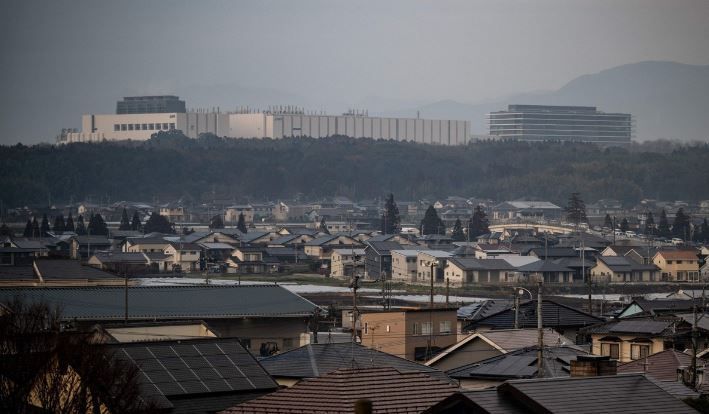 A state-of-the-art semiconductor factory built beyond the old downtown area of Kumamoto Prefecture. [Image source=AFP Yonhap News]
The Japanese daily Sankei Shimbun's evening edition, Sekkan Fuji, published a report on the 12th (local time) titled "Kumamoto's Night Streets Have Changed." The media focused on the changes occurring in this area, where JASM, TSMC's Japanese subsidiary, is actively constructing its second semiconductor factory.
Just 20 years ago, Kumamoto was said to retain the sensibility of the so-called "Heisei era (1990s)." Old restaurant signs lined the alleys, and drunkards, delinquents (yakuza), and touts roamed around. The media described it as having "a dangerous atmosphere reminiscent of Kabukicho (Tokyo's entertainment district)."
But now, Kumamoto's night streets have completely changed. Instead of drunkards, uniformed police patrol the alleys, and restaurants are crowded with tourists. This is because personnel related to the JASM factory construction continuously arrive from overseas, including Taiwan, and various Kumamoto attractions have been reappraised, increasing the number of tourists.
Semiconductor Factories Are the Lifeblood of Local Economies
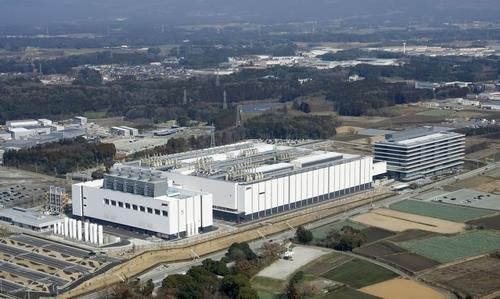
JASM is currently constructing its second factory in this area. Earlier, the Japanese government partnered with TSMC for bold investments aiming to "revive advanced semiconductor manufacturing capabilities." The first factory was completed in just 20 months and will begin actual production by the end of this year. Considering that a typical semiconductor fab takes about five years from construction to final testing, this is a remarkable speed.
The second factory is a massive project with a capital investment of 19 trillion Korean won, featuring advanced semiconductor production lines of 6 to 7 nanometers (nm). The Japanese government covers about one-third of the total construction cost and quickly approved the deployment of experienced Taiwanese engineers to the Japanese factory. Additionally, to secure the essential "water (ultrapure water)" for semiconductor factories stably, TSMC is collaborating on exploring Kumamoto's underground water sources. This is why TSMC is particularly successful in Japan compared to other countries like the United States.
Rapid Changes Have Even Displaced Local Residents
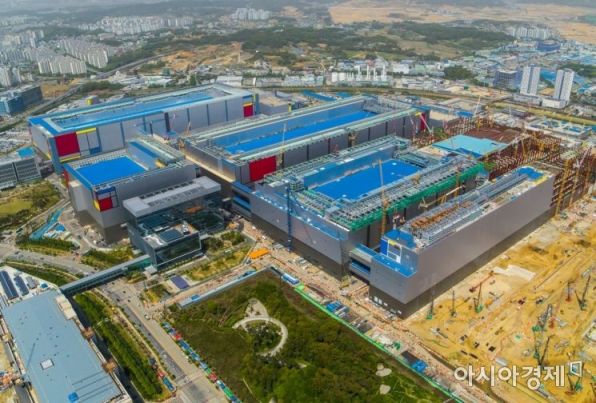 Aerial view of Samsung Electronics' Pyeongtaek Godeok Industrial Complex. Due to the enormous scale of the semiconductor factory, it plays an important role in the local economy.
While the JASM semiconductor factory is positively interpreted as the first counterattack of Japan's semiconductor industry, which had been declining due to competition from Taiwan, South Korea, and China, some express regret over Kumamoto's "face" changing so rapidly. The media reported that local residents already living in Kumamoto have "mixed feelings."
One local resident complained to the media, "Even though restaurants are crowded with foreigners, the nighttime foot traffic has completely decreased," adding, "Recently, police crackdowns have become so severe that it’s hard to go outside." However, he added, "I don’t want to leave Kumamoto because I have family here."
Also, rural villages in Kumamoto have long relied on nightlife industries such as entertainment and adult businesses. However, with the sudden increase in police patrols, the income of those working at night has decreased. Some workers reportedly avoid going out to prevent their identities from being forcibly revealed. The media noted that while Kumamoto’s improved public safety due to economic revitalization is welcome, "local people are scattered and lonely."
© The Asia Business Daily(www.asiae.co.kr). All rights reserved.



















