Seoul Metro Conducts Fare Evasion Prevention Campaign at All 276 Stations on Lines 1-8 from 14th to 18th
Fare Evasion Is a Clear Crime... Civil and Criminal Liability Will Be Pursued Against Offenders
Seoul Metro Corporation (President Baek Ho) announced that it will conduct a fare evasion prevention campaign for five days from the 14th to the 18th to eradicate subway disorderly conduct that has been difficult to reduce.
An official from the corporation stated that a joint subway fare evasion prevention campaign to raise public awareness will be held at Sindorim Station and Hongdae Entrance Station on Line 2 in cooperation with the labor union and Airport Railroad. The corporation also announced that focused campaigns will be conducted at each of the 17 business offices, and campaigns to prevent subway fare evasion will be carried out at all 276 stations on Lines 1 to 8 under the corporation’s jurisdiction during the period.
The corporation revealed that despite strong crackdowns every year, fare evasion is steadily increasing.
Average of 53,199 cases caught and 2,343,955,000 KRW collected annually over the past three years
Types of fare evasion include using the subway without a ticket (unreported riding), fraudulent use of concession (free ride) transportation cards, and improper use of discount tickets for elementary, middle, and high school students.
Subway passengers must use appropriate tickets according to the passenger transportation terms and conditions, and in exceptional cases such as ticket loss, they must report in advance to staff and pay the fare according to the procedures stipulated in the terms to avoid being mistaken for fare evasion.
If caught fare evading, passengers must pay the fare for the traveled section plus an additional fare up to 30 times the fare for that section based on the Railroad Business Act and the corporation’s passenger transportation terms and conditions. If there is a history of past fare evasion, all previous fare evasion amounts will be combined and the additional fare must be paid, so passengers must use legitimate tickets when using the subway.
Citizens need to clearly recognize that fare evasion in public facilities such as the subway is shifting their own responsibility onto others and is a clear criminal act as defined by current criminal law.
The methods for cracking down on fare evasion have also become smarter. The approach is shifting from traditional face-to-face inspections to scientific methods using big data analysis systems and CCTV monitoring. Assuming that staff absence at transportation card tagging points means fare evasion will go unnoticed is a mistaken belief.
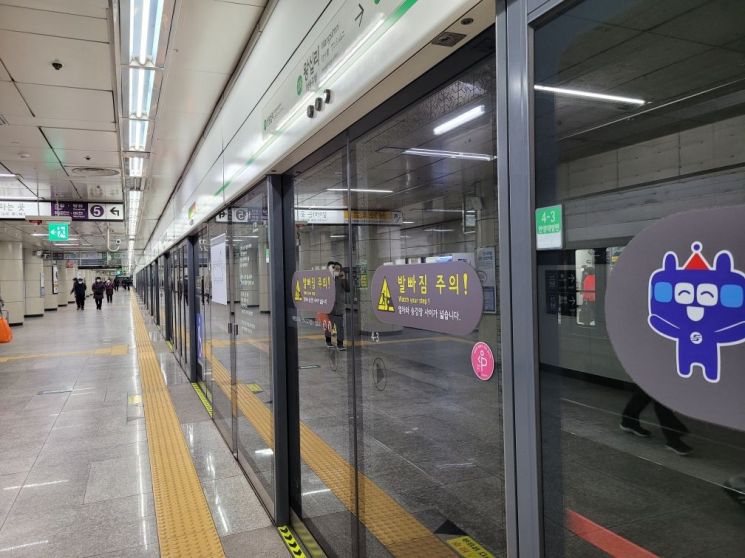
If fare evasion is detected and a history of past fare evasion is confirmed, additional fares including past violations are strongly collected.
The corporation prosecutes fare evaders who do not pay additional charges under Article 347-2 (Computer-related Fraud) and Article 348-2 (Unauthorized Use of Convenience Facilities) of the Criminal Act. Although fines may vary, judicial authorities consistently impose fines for these offenses.
Furthermore, referring to overseas subway additional fare collection cases (Hong Kong 333 times, Boston 83 times, Toronto 78 times, Sydney 59 times, Munich 50 times, etc.), the corporation proposed an amendment to the Railroad Business Act in August 2024 to increase the additional fare from the current 30 times to 50 times to ensure strict regulation and effective collection of additional fares. This proposal is currently under review by the Ministry of Land, Infrastructure and Transport and related agencies.
Separately from criminal penalties, the corporation files civil lawsuits against fare evaders who do not pay additional fares to collect the charges to the end. This is to establish fair subway usage order as the subway operating agency.
Since integration, the corporation has conducted over 110 lawsuits, with the highest additional fare lawsuit being a case in 2018 at the Seoul Western District Court against a fare evader at Sindorim Station, where 19,753,000 KRW was recognized. This case currently includes delayed interest, raising the amount to 25 million KRW. The fare evader has repaid about 12 million KRW so far, paying approximately 600,000 KRW monthly for two years.
# A woman in her 30s, Ms. A, used a concession card registered under her 67-year-old father’s name about 470 times for commuting between her home at Sindorim Station and workplace at Hapjeong Station from January 2023 for about six months. Station staff member Mr. B analyzed station data and confirmed that the boarding and alighting data of the concession card (67-year-old male) and the person on CCTV (woman in her 30s) did not match, then classified Ms. A as a fare evader and charged her 19 million KRW in additional fares for about 470 fare evasion incidents. However, Ms. A refused to pay the additional fare, and Seoul Metro Corporation filed a criminal complaint and a civil lawsuit, obtaining a court ruling from the Seoul 00 District Court ordering payment of 19 million KRW plus delayed interest. After the ruling, Ms. A voluntarily paid 5 million KRW but did not pay the remaining amount, so Seoul Metro Corporation seized her bank account and collected 5 million KRW. After enforcement, Ms. A agreed with Seoul Metro Corporation to pay the remaining 12 million KRW in 24 monthly installments and is currently paying about 600,000 KRW monthly. Fare evasion is a criminal act under criminal law, and fare evaders are held fully accountable both criminally and civilly to establish fair subway usage order.
Baek Ho, President of Seoul Metro Corporation, said, “It is necessary to spread public awareness that subway fare evasion is a clear criminal act that betrays one’s conscience,” and added, “We hope that fare evasion will be eradicated through the corporation’s continuous prevention campaigns and special crackdowns, establishing a fair subway usage order.”
© The Asia Business Daily(www.asiae.co.kr). All rights reserved.
![Clutching a Stolen Dior Bag, Saying "I Hate Being Poor but Real"... The Grotesque Con of a "Human Knockoff" [Slate]](https://cwcontent.asiae.co.kr/asiaresize/183/2026021902243444107_1771435474.jpg)















