Ministry of Education's Pilot Schools for Deferred Integration 'At a Standstill'
Public Kindergarten Teachers "Strongly Oppose"... Project in Jeopardy
The Ministry of Education's pilot project for integrating kindergartens and daycare centers, which was announced to be fully launched next year, is facing criticism for being at a "standstill."
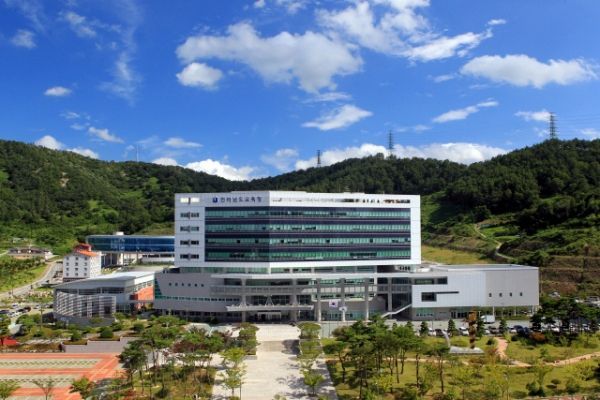
According to the Jeonnam Provincial Office of Education on the 10th, this year the Ministry of Education selected three private kindergartens and three daycare centers?one each from the categories of national/public, private, and workplace?for the pilot project of "integration of kindergartens and daycare centers (early childhood schools)."
A total of six institutions were selected for this project, with four private kindergartens and 42 daycare centers applying in advance. Not a single public kindergarten, which opposes the integration, applied. Among the 42 daycare centers that applied amid fierce competition, 10 institutions suitable for the pilot project operation were evaluated by type and selected in order of highest scores within the first priority group.
The Ministry of Education plans to pilot around 100 early childhood schools this year and then increase the number by 1,000 each year from next year, designating and operating a total of 3,100 integrated institutions by 2027. To proceed with next year’s project, each city and provincial office of education must identify the scope of support for expanding early childhood pilot schools and allocate the budget in advance.
However, the expansion of early childhood schools in Jeonnam next year remains uncertain. Since the Ministry of Education announced the integration implementation plan last June, it has yet to provide any related information for next year’s project to the 17 city and provincial offices of education. Because of this, the education office staff who must push forward with next year’s project are anxiously waiting for official documents from the Ministry of Education.
Meanwhile, opposition from public kindergarten staff to the integration is adding to the difficulties in expanding early childhood schools.
A public kindergarten teacher said, “If the Ministry of Education and the provincial office of education do not present solutions regarding education finance and teacher qualification distinctions, we will absolutely oppose the integration,” and added, “The qualitative level of teachers is not achieved simply by improving research and training conditions.”
She continued, “I went through a difficult appointment process to work at a public kindergarten, and because the threshold was high, I took great pride in my work. It is unfair to be placed on the same level as daycare centers when the starting points are different. I also think the government’s inconsistent policies are problematic.”
As the standstill continues without solutions, criticism from local residents and parents blaming the incompetence of the education field is growing stronger.
An official from the provincial office of education said, “To promote integration, there are many practical issues to overcome, such as teacher qualifications, conversion to national/public status, and installation of CCTV in kindergartens. Although the Ministry of Education announced the integration implementation plan last June, the gap between daycare centers and kindergartens is too wide, resulting in a standstill. The expansion of early childhood schools next year also does not seem easy.”
© The Asia Business Daily(www.asiae.co.kr). All rights reserved.
![Clutching a Stolen Dior Bag, Saying "I Hate Being Poor but Real"... The Grotesque Con of a "Human Knockoff" [Slate]](https://cwcontent.asiae.co.kr/asiaresize/183/2026021902243444107_1771435474.jpg)
















