Won-Dollar Exchange Rate Rose to 1340 Won Range
Dollar Still Weak Compared to Early Year
"Exchange Rate Expected to Maintain Downward Trend in Medium to Long Term"
As the dollar strengthens due to a preference for safe-haven assets amid geopolitical risks in the Middle East, there are forecasts that the dollar will remain weak until next year depending on the interest rate cut path of the U.S. Federal Reserve (Fed). However, volatility in the KRW-USD exchange rate is expected to increase for the time being due to the U.S. presidential election and protectionist trade policies.
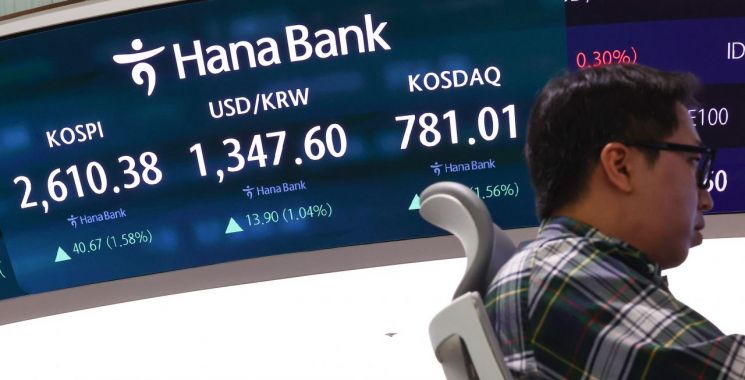
According to the report "Review of Exchange Rate Conditions under Major Countries' Monetary Policies" by the International Finance Center on the 8th, the dollar, which had been strong throughout the year, quickly turned weak from early August due to signs of slowing U.S. growth and the Fed's big cut (a 0.5 percentage point cut in the benchmark interest rate). Then, the dollar rebounded as the robustness of the U.S. economy was reconfirmed in recent employment data and safe-haven demand increased due to risks originating from the Middle East.
The Dollar Index, which measures the value of the dollar against six major currencies, recorded a yearly high of 106.26 on April 16 and maintained strength until the end of July. However, it plunged after the Bank of Japan's (BOJ) rate hike at the end of July and confirmation of U.S. employment data in early August. This month, it recovered to the level seen at the beginning of the year for the first time since mid-August. The Dollar Index was 102.2 on January 2 and recorded 102.5 on the 4th.
The dollar is expected to remain weak for the time being depending on the Fed's interest rate cut path. With the Fed's big cut in August initiating a full-fledged rate-cutting cycle, downward pressure on the dollar has increased.
However, as central banks of major countries also proceed with additional rate cuts, the impact of interest rate differentials on exchange rates is expected to be limited. Although the pace of rate cuts varies among major central banks, the expected additional cuts by the end of next year are at similar levels. The European Central Bank (ECB) started rate cuts in June, the Bank of England (BOE) cut policy rates in August, and the Bank of Canada (BOC) began rate cuts in June. The market expects major central banks to cut rates by around 150 basis points (1bp = 0.01 percentage points) by the end of next year.
The BOJ's expected rate hikes and China's economic stimulus measures are also likely to act as factors weakening the dollar for the time being. Previously, on the 27th of last month, the yen strengthened after Shigeru Ishiba, a former secretary-general of the Liberal Democratic Party known to support rate hikes, was elected as Japan's new prime minister. Additionally, at the end of last month, Chinese authorities announced broad economic stimulus measures, raising expectations for China's economic recovery and fostering risk appetite.
The Direction of the Dollar Likely to Be Determined by Major Economies and the U.S. Presidential Election
However, if the growth of major economies remains sluggish in the future, "U.S. exceptionalism" may be highlighted again, exerting upward pressure on the dollar. The U.S. economy has maintained solid growth, recording 1.6% in Q1 and 3.0% in Q2, with inflation approaching the target level of 2%. In contrast, the Eurozone is expected to slow down due to weak German manufacturing and the end of the Olympic-related boost in France. The Japanese economy has also turned to positive growth supported by strong private consumption, but inflation exceeding targets creates an unstable situation.
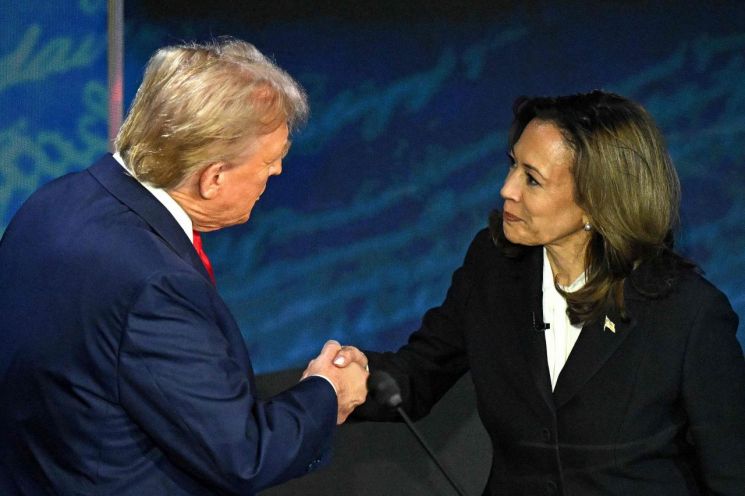
The direction of the dollar could also be influenced by who wins the U.S. presidential election between former President Donald Trump and Vice President Kamala Harris. Recently, the dollar has continued to weaken as Harris holds a narrow lead in polls, but the intense competition between the two candidates means the "Trump trade" has not been fully resolved.
If inflation continues to slow toward the Fed's target of 2%, Harris's election is expected to have a limited impact on the Fed's interest rate cut path. This is because Harris has announced specific economic policies focusing on price control and middle-class tax cuts. If the Democratic Party pushes for full-scale fiscal soundness, the Fed's accommodative monetary policy, which began easing in September, could coincide with a weaker dollar.
On the other hand, Trump's policies such as tariff imposition and stricter immigration policies could increase upward inflationary pressure, delaying further Fed rate cuts and potentially strengthening the dollar. Trump's proposed tax cut extensions support the U.S. exceptionalism stance, which could encourage investment in the U.S. and support a strong dollar.
Jo Eun, a senior researcher at the International Finance Center who authored the report, said, "Although the KRW-USD exchange rate has risen to the 1340 won level in the short term recently, the dollar is still weak compared to the beginning of the year," adding, "Looking at the medium- to long-term trend until next year, the dollar will continue to weaken from its current level, and the KRW-USD exchange rate is also expected to maintain a downward trend."
© The Asia Business Daily(www.asiae.co.kr). All rights reserved.
![Clutching a Stolen Dior Bag, Saying "I Hate Being Poor but Real"... The Grotesque Con of a "Human Knockoff" [Slate]](https://cwcontent.asiae.co.kr/asiaresize/183/2026021902243444107_1771435474.jpg)

















