7 out of 20 Purchased Hwanggeumhyang Show Greenish Tint
Recurrence Happens Occasionally... Criticism Continues on SNS
Jeju Island, which recently suffered from a controversy over pork belly with fat, is now facing allegations of swapping Hallabong oranges.
On the 6th, YouTuber 'TheDudley', who has about 830,000 subscribers, uploaded a Jeju travel vlog. The problematic scene was when he was allegedly tricked with swapped Hallabong oranges at a market. TheDudley stated, "I bought Hallabong oranges at Jeju Dongmun Market," adding, "I only purchased the ones that were yellow, but when I unpacked them at the accommodation, some had been swapped with green ones." In the photos he shared, 7 out of the 20 Hallabong oranges he bought showed a greenish tint.
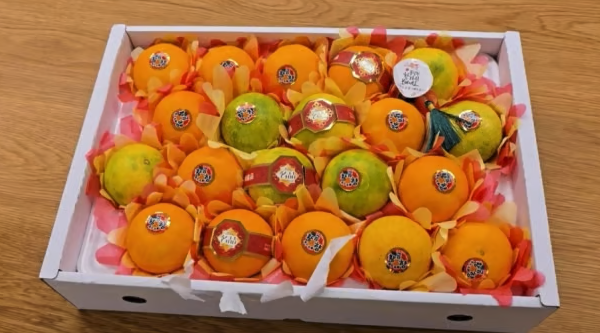 Jeju Island, which previously suffered from controversy over fatty pork belly, is now facing allegations of substituting golden quantities.
 [Photo source=YouTube channel 'The Dudley']
He said, "The green ones can be ripened and eaten later, so it’s not a big deal, but it’s disappointing that they didn’t give me the ones I carefully selected and instead gave me different ones. It made me sad." Netizens who saw the video and photos responded with comments such as, "Regardless of quality, consumers should get the items they chose. Swapping like this makes me lose the incentive to visit markets," "This happens so often that I’m gradually avoiding traditional markets," "Seeing the Hallabong swap reminds me of the Incheon Soraepogu crab incident," and "Traditional markets shouldn’t blame people for not coming if they keep doing things that ruin themselves."
Among them, a netizen who claimed to have lived in Jeju for 10 years explained, "Hallabong oranges start appearing around late August. Most of what’s being sold now is probably leftover stock harvested last year because of the first-in, first-out principle." They added, "That’s why the stored ones have a distinctive musty smell. If possible, buying from the local Nonghyup in Jeju rather than the market will ensure better quality and taste."
Meanwhile, not only in Jeju but also in other regional traditional markets, deceptive sales tactics and overcharging cases have been spreading on online communities and social media, fueling consumer outrage. Around June last year, a controversy arose when a merchant at a traditional market in Yeongyang, Gyeongbuk, was caught on national broadcast selling a 1.5kg bag of old snacks for 70,000 won.
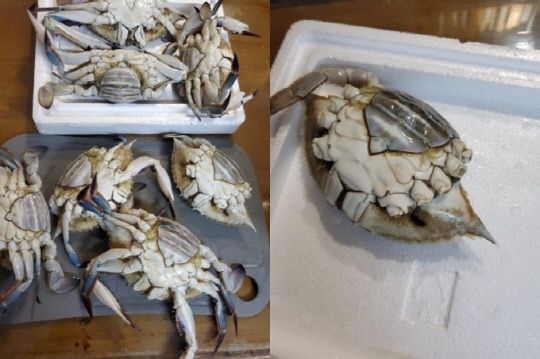 Last year, a post spread widely stating, "I bought live blue crabs at Soraepogu in Incheon, but when I got home and checked, the crabs had lost their legs," which sparked public criticism.
 [Photo by online community 'BobaeDream']
As the controversy grew, Yeongyang County issued a public apology, stating, "This problem occurred due to inadequate management." Around the same time, a post spread claiming, "I bought live crabs at Incheon Soraepogu, but when I got home and checked, they had been swapped with crabs missing legs," which also drew public criticism. Furthermore, some businesses have continued to face backlash for overcharging, such as not disclosing exact weights and charging an exorbitant 378,000 won for two king crabs, or displaying flatfish prices at 40,000 won per kilogram but demanding 50,000 won, perpetuating the overcharging controversy.
© The Asia Business Daily(www.asiae.co.kr). All rights reserved.
![Clutching a Stolen Dior Bag, Saying "I Hate Being Poor but Real"... The Grotesque Con of a "Human Knockoff" [Slate]](https://cwcontent.asiae.co.kr/asiaresize/183/2026021902243444107_1771435474.jpg)
















