Native Korean Peninsula Plant 'Wangmeoru Seeds'
Seed Distribution Service Also Planned
Anti-diabetic activity effective in diabetes prevention and whitening was discovered in the seeds of Wangmeoru, a wild plant native to the Korean Peninsula. The Korea National Arboretum under the Korea Forest Service announced on the 4th that it analyzed the seed resources of Wangmeoru (Vitis amurensis) at the Baekdudaegan National Arboretum and confirmed the potential of functional materials with antioxidant, whitening, and anti-diabetic properties.
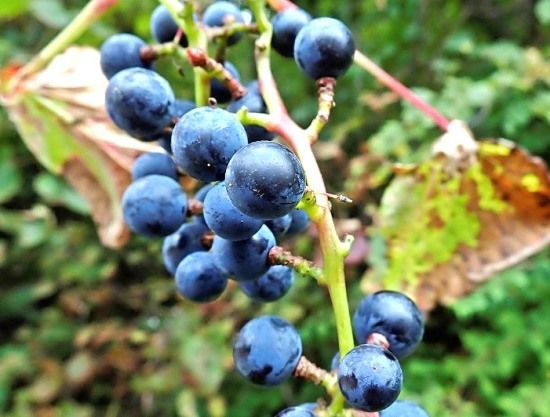
Plants of the Meoru genus help improve appetite and recover from fatigue due to their rich content of sugars and dietary fiber. Fruits, roots, and stems have been used in various ways for cancer, anemia, vomiting, diarrhea, headaches, and more. Meoru plants are known as native forest crops of grapes. In 2002, Wangmeoru was selected as one of the world's top 10 health foods by Time magazine in the United States, and functional research has been actively conducted since then.
Among the Meoru species native to Korea, including Wangmeoru, Saemeoru, Kkamagwimeoru, and Gaemeoru, Wangmeoru is the most widely distributed. Therefore, what we commonly call Meoru mostly refers to Wangmeoru. The name Wangmeoru is said to originate from the fact that it is a type of Meoru with large leaves and fruits. The leaves and fruits look very similar to grapes. It is a deciduous climbing plant of the grape family, also called Sanpodo, and grows naturally in forested areas between 100 and 1650 meters above sea level on the slopes or valleys of Japan, China, and Korea. The main production areas in Korea are Paju and Ganghwa in Gyeonggi Province, Pyeongchang and Goseong in Gangwon Province, Muju in Jeonbuk Province, Bonghwa and Uljin in Gyeongbuk Province, and Hamyang and Sancheong in Gyeongnam Province. Among these, Muju County in Jeonbuk Province has registered Meoru as a geographically indicated forest product.
The Baekdudaegan National Arboretum investigated the antioxidant, whitening, and anti-diabetic activities of Wangmeoru seed extracts and found that they contain various pharmacologically active substances such as phenolic compounds and flavonoids, confirming excellent antioxidant, whitening, and anti-diabetic activities.
The Baekdudaegan National Arboretum published these research results in issue 64 of the Journal of Korean Beauty Art Management, published by the Korean Beauty Art Management Association. In the future, seed distribution services will also be provided through the seed information system ‘Seedpedia,’ which will be released by the Korea National Arboretum.
Han Chang-sul, director of the Baekdudaegan National Arboretum, said, "Through this result, we confirmed the potential for utilizing wild plant resources native to the Korean Peninsula," adding, "We will continue to strive to conserve and utilize the genetic resources of native plants in Korea."
© The Asia Business Daily(www.asiae.co.kr). All rights reserved.
![Clutching a Stolen Dior Bag, Saying "I Hate Being Poor but Real"... The Grotesque Con of a "Human Knockoff" [Slate]](https://cwcontent.asiae.co.kr/asiaresize/183/2026021902243444107_1771435474.jpg)















