Continuous Decline Over the Past Decade... Growing Interest in Used Cars
'Retired Generation' 6070 Shows Steady Upward Trend
The purchasing power of people in their 30s, who used to lead the new car market, has noticeably declined, directly impacting the imported car market. Recently, their purchase share has been found to be even lower than that of the 60s and 70s generations.
On the 3rd, the research company Kaizyu Data Institute announced that the purchase share of people in their 30s in the new car market up to August this year was 20.5%. This figure is lower than that of the 60s and 70s generations, who are classified as retirees. During this period, the number of vehicles purchased by people in their 30s was 133,625 units.
In comparison, the purchase share of the 60s and 70s generations increased from 16.8% in 2019 to 21.7% this year (cumulative up to August). The share of people in their 40s decreased from 26.2% in 2019 to 24.6% this year, and the 50s also saw a slight decrease from 27.9% to 26.6% during the same period.
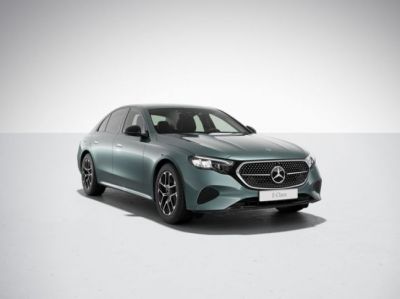
The new car purchases by people in their 30s continue to follow a downward trend. Compared to 2015, when the decline began in earnest, the number of new car registrations by people in their 30s dropped from 316,546 units in 2019 to about 260,000 in 2020, and further down to 204,411 units in 2022. If this trend continues, the number of vehicles purchased by people in their 30s this year may fall below 200,000 units.
In fact, among the 20s and 30s generations, interest in affordable used cars is growing. According to the used car trading platform Encar.com, inquiries about used car purchases from the 20s and 30s generations accounted for 54.4% of the total inquiries from January to August this year. Within this, the share of people in their 30s slightly decreased from 36.1% to 33.62%, but still represents a high proportion.
As people in their 30s withdraw from the new car market, domestic automakers and imported car dealers are also changing their sales strategies. Small and compact cars are produced overseas and sold, while medium and large-sized new cars are mainly introduced domestically. Last month, among the top five best-selling models in Korea were the Sonata, Grandeur, and Carnival, with only one small car, the Seltos.
In contrast, the 60s and 70s generations have shown a steady upward trend over the past decade. This is the opposite trend compared to most other age groups, where new vehicle registrations have decreased or stagnated during the same period. The age group with the largest increase was the 60s, which grew by 59%, from 101,501 units in 2014 to 161,261 units in 2022. The 70s increased by 21%, from 32,222 units in 2014 to 39,144 units in 2022.
Additionally, the number of people in their 20s and 30s who feel they do not necessarily need a car is increasing. According to a recent survey conducted by the market research firm Embrain Trend Monitor on 1,000 men and women aged 15 to 59 nationwide who hold a driver's license, 74.7% of respondents agreed that "a car is essential in modern society." However, the agreement rate was lowest among people in their 20s at 66.8%, followed by 72% in their 30s, 77.6% in their 40s, and 82.4% in their 50s. Regarding the statement "A married household should have at least one car," the agreement rate was also lowest among people in their 20s at 80.4%, followed by 30s (82%), 40s (82.8%), and 50s (87.6%). This analysis suggests that young people are not buying cars.
© The Asia Business Daily(www.asiae.co.kr). All rights reserved.
![Clutching a Stolen Dior Bag, Saying "I Hate Being Poor but Real"... The Grotesque Con of a "Human Knockoff" [Slate]](https://cwcontent.asiae.co.kr/asiaresize/183/2026021902243444107_1771435474.jpg)















