‘4 Mountains and 4 Rivers’ Maximizing Natural Scenery Utilization, 500,000 Nowon Residents Live in Gardens
Large-scale Healing Town Hub with Gardens Created Throughout Neighborhoods, Recognized as a ‘Complete Garden City’
Nation’s First Urban Natural Recreation Forest ‘Surak Hyu(休)’ Set to Open Next Year
Seoul City and its autonomous districts are fully committed to creating a ‘Garden City.’
Leading the way with plans to create around 1,000 gardens and hosting a Garden City Expo, Seoul City and its districts are competing to promote themselves as ‘Garden Cities’ and ‘Cities of Flowers.’
Among them, one district stands out paradoxically for its relatively relaxed approach. Rather than rushing the Garden City initiative, Nowon-gu (Mayor Oh Seung-rok) quietly enhances the quality of its garden assets accumulated so far. What is the secret behind this?
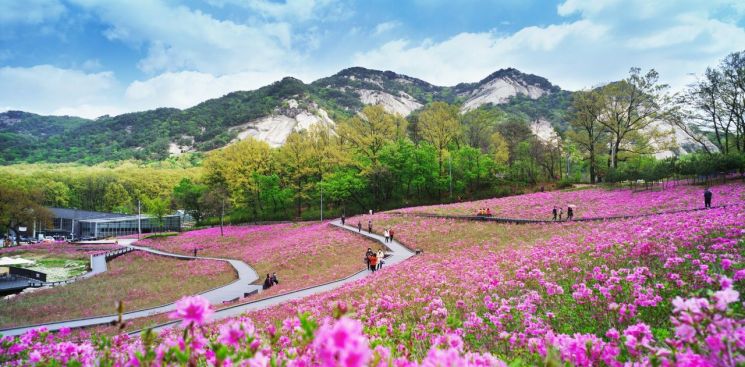
Since the 7th local government, leading leisure culture with the vision of a ‘Healing City’ in harmony with nature
Efforts to transform Nowon-gu into a vast garden began with the 7th local government. At that time, Oh Seung-rok, a first-term mayor, set the direction as ‘Into Nature and Culture, Healing City Nowon’ and launched a large-scale healing city project.
As shown by the green area of 21.03㎢, accounting for 59.1% of the total jurisdiction area of 35.55㎢, Nowon was naturally equipped to coexist with forests, trees, and flowers from the start. Moreover, for Mayor Oh, who enjoys hiking, the forest appeared as the best ‘leisure welfare’ item that could be provided for the greatest number of residents to enjoy.
Immediately, the administrative organization was restructured to establish the ‘Healing City Bureau.’ They appointed Choi Kwang-bin, a living witness of park and green space administration who served twice as director of Seoul’s Green City Bureau, as the bureau chief, securing strong leadership and expertise.
Although Director Choi retired after five years, Yoo Young-bong, former director of Seoul’s Green City Leisure Bureau, succeeded him and currently oversees park, green space, and garden leisure administration. During this period, the responsibilities that were once handled by a single department expanded into three departments: Green City Division, Garden City Division, and Leisure City Division, demonstrating the district’s sincere commitment to healing administration.
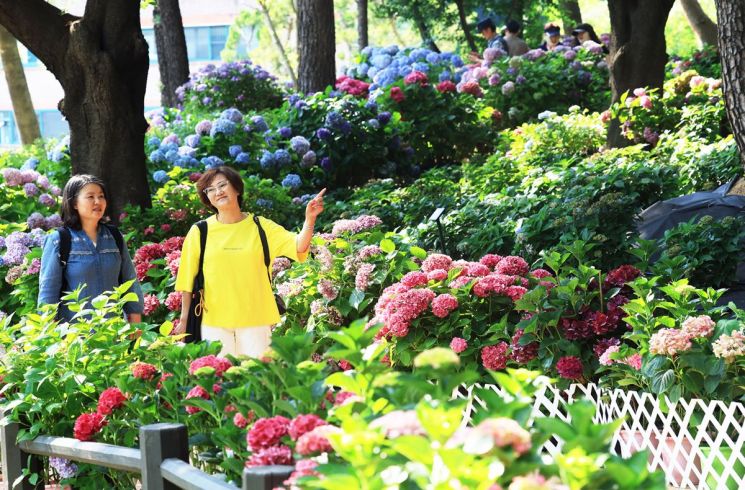
Creating ‘Healing Towns’ by zones including Bulamsan, Suraksan, Choansan, Yeongchuksan, and Hwarangdae Railroad Park
The hallmark achievement of this focused push is the creation of zone-based Healing Towns.
Five Healing Towns have been established: ‘Bulamsan Healing Town,’ ‘Suraksan Healing Town,’ ‘Yeongchuksan Healing Town,’ ‘Choansan Healing Town,’ and ‘Hwarangdae Railroad Park,’ all completed to a level that attracts visitors not only from nearby neighborhoods but also from surrounding municipalities for leisure.
Hwarangdae Railroad Park, centered on the now-defunct old Hwarangdae Station, has become a train-themed park. It features unique attractions such as ‘Scenery with a Train,’ a caf? where trains deliver coffee, and ‘Train Village,’ a detailed diorama showcasing European cities with developed railway cultures, making it an enjoyable place even for casual walks.
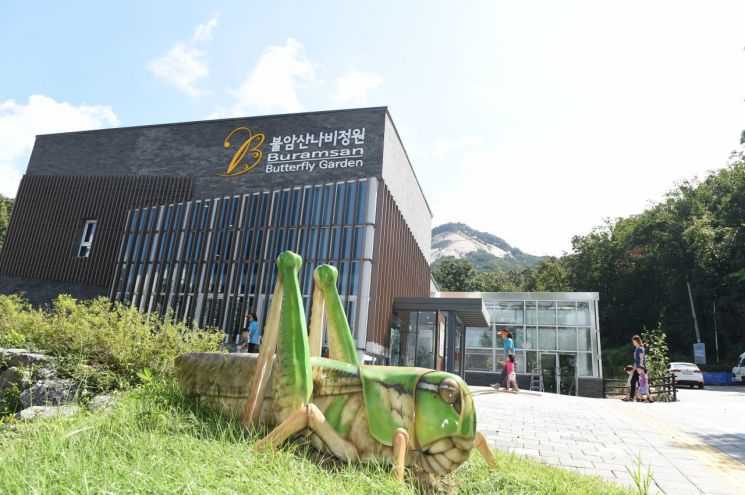
Bulamsan Healing Town offers various ways to enjoy the forest, centered around the ‘Azalea Hill’ with 100,000 azalea bushes in full bloom and the ‘Butterfly Garden,’ where butterflies can be seen year-round. The Forest Healing Center, a children’s forest experience site, and Seoul’s first ‘Garden Support Center’ help residents who have experienced the charm of flowers and gardens at Bulamsan Healing Town to cultivate their own gardens at home. Notably, the ‘2024 Bulamsan Azalea Festival’ held at Bulamsan Healing Town attracted about 230,000 visitors over roughly ten days, showcasing its peak popularity.
Yeongchuksan, which was difficult for residents to access due to the presence of military outposts, opened its summit and improved walking trails. Notably, it connected a gentle-sloped, wheelchair-accessible ‘Barrier-Free Circular Trail’ to the summit, the first of its kind in Seoul.
Suraksan was developed as a waterside Healing Town themed around valleys alongside the mountain, while Choansan preserved its unique historical significance as a Joseon Dynasty tomb cluster while refurbishing walking trails and parks. The newly introduced ‘Hydrangea Hill’ attracted residents even before its official opening with newly planted cherry blossoms, followed by hydrangeas in summer and now blooming red spider lilies, preparing it to become a continuous healing spot.
All four mountains, including the ongoing development at Choansan, are equipped with ‘Barrier-Free Circular Trails.’ These deck paths allow not only people with disabilities but also seniors, children, and pets to safely enjoy the forest.
Moreover, the creation of Healing Towns, as seen in Bulamsan and Choansan, involved regenerating damaged and abandoned lands affected by illegal dumping and cultivation, thereby improving residents’ living environments.
The district’s policy direction to maximize the utilization of natural environments is well demonstrated by Healing Towns, which cater to all seasons and social groups.
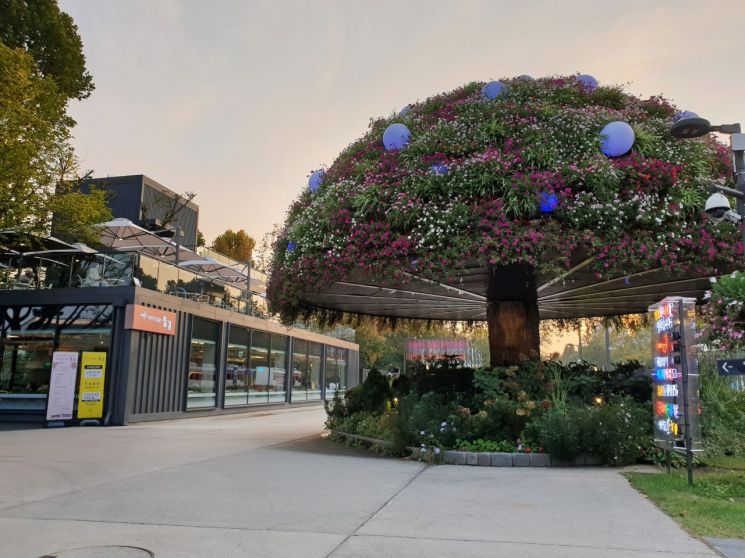
Creating neighborhood parks, gardens, and specialized flower beds... Making Nowon beautiful everywhere
While Healing Towns symbolize Nowon-gu’s zone-based healing projects, the true value of the Garden City is found in parks that showcase different charms in each neighborhood. Even in Nowon, dominated by box-like apartment complexes, parks provide unique atmospheres in each area.
Parks, which were created alongside apartment complexes during large-scale housing developments in the 1980s and had aged with them, have been revitalized through extensive park renovation projects since 2019. Including village squares and street parks, the district remodeled a total of 181 parks, completing 138 renovation projects by 2023.
This truly realizes the concept of ‘a garden every five minutes on foot.’ Some newly renovated parks serve as water play areas in summer and stages for neighborhood festivals in autumn. Adding unique features to each park is also noteworthy.
For example, Madeul Sports Park, which completed its regeneration project in June this year, includes an inclusive playground where children with disabilities can play alongside non-disabled children and a rest area for pet families.
Jungpyeong Children’s Park, reopened in July, now features an indoor playground including a Seoul-style kids caf?, and Nohae Sports Park, soon to complete its project, will include the northeast region’s first X-Games park for youth.
Residents’ participation has also shone in cultivating neighborhood living parks and unused apartment spaces into gardens. By nurturing village gardeners beyond simple volunteer work, the district has created and maintained 15 ‘Rest Gardens’ operated with residents’ involvement. Notably, ‘Biseokgol Neighborhood Park’ was selected as one of Korea’s Beautiful Gardens in 2023.
Following neighborhood parks, popular walking routes such as Danghyeoncheon and Jungnangcheon streams have been transformed into large gardens. Danghyeoncheon’s Charm Garden, popular last year as a European-style themed garden, was revamped this year to allow visitors to experience seasonal color changes, enhanced with picnic zones and conceptual sculptures, serving as leisure spaces and event venues. Jungnangcheon’s flower beds feature rapeseed flowers in the Sanggye area, green barley fields near Changdong Bridge, and poppies in Hagye and Wolgye areas, offering diverse attractions that keep visitors engaged.
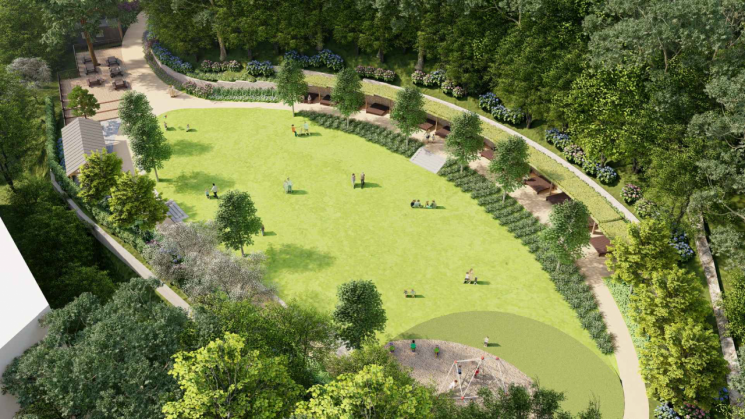
Another attraction at Bulamsan Healing Town?... Completion of Bulamsan Picnic Area
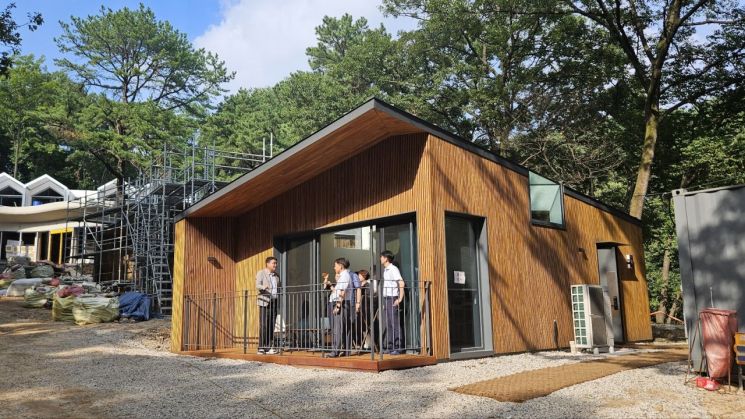
Nowon-gu established the ‘Bulamsan Picnic Area’ at the end of last month to allow residents to safely and enjoyably experience Bulamsan’s four-season scenery.
The Bulamsan Picnic Area is an outdoor picnic site covering 2,500㎡ near Bulamsan Healing Center, located at San 101-6, Junggye-dong. It provides a leisure space that supports residents’ healing through facility development and content creation from the user’s perspective, complementing Bulamsan’s natural environment.
From the planning stage, the district focused on enabling visitors to appreciate Bulamsan’s beautiful nature throughout the seasons. This was to concentrate on the atmosphere and charm of the outdoor picnic area.
To this end, the district carefully considered the flow of nearby high schools and apartment complexes to maximize views of Bulamsan and planted various flowers and trees along the boundary zones to create an urban natural resting place with diverse scenery year-round.
The approximately 670㎡ lawn area is planted with soft natural grass, allowing visitors to enjoy the feeling of playing in nature. Convenience facilities such as five Indian tents, 14 platforms, and eight outdoor tables are also provided to enhance visitor comfort.
In front of the Indian tents, emotional parasols, camping tables, and chairs are available, and various emotional props like waterproof mats and rattan baskets can be rented free of charge to ease visitors’ picnic preparations.
On one side of the lawn, a forest playground was created for children to play freely, featuring three swings and one net playground, stimulating children’s curiosity and adding fun.
Finally, a caravan-themed emotional photo zone was set up to commemorate precious moments for families, couples, and friends.
The Bulamsan Picnic Area operates from Tuesday to Sunday. From March to October (spring, autumn, and summer), it is open from 10 a.m. to 6 p.m., and from November to February (winter), from 10 a.m. to 4 p.m. However, pets are not allowed to ensure visitor safety and lawn hygiene, and the use of audio devices such as Bluetooth speakers is restricted to maintain a peaceful atmosphere.
Cooking, drinking, and smoking are prohibited except for simple eating, and visitors must take their trash with them.
The district will hold an opening ceremony at 4:30 p.m. on October 10 to celebrate the successful establishment of the Bulamsan Picnic Area. About 150 people, including the mayor, city and district council members, and local residents, will attend for progress reports and facility tours.
Mayor Oh Seung-rok said, “With the completion of the picnic area following the Bulamsan Butterfly Garden, Azalea Hill, barrier-free circular trail, and elevator observatory, Bulamsan Healing Town is now complete. We will continue to operate it flawlessly so that many people can fully experience nature and rest comfortably in the city.”
‘Big Cards’ to be unveiled next year... Surak-Hyu, Bulamsan Waterfall Park, and Gyeongchun Line Forest Trail Extension in the pipeline
Although the projects carried out so far are too numerous to list, the district’s garden cultivation shows no signs of stopping. Mayor Oh Seung-rok revealed that “currently, about 70-80% is completed,” indicating more projects to come.
The most representative is the nation’s first urban natural recreation forest, ‘Surak, Hyu.’ Located in Dongmakgol of Suraksan, ‘Surak, Hyu’ will feature 18 forest houses with 25 rooms and a forest healing center. Especially, it will offer treehouses perched on trees like a fairy tale and a hotel-grade restaurant, providing the highest level of forest overnight experience within Seoul. ‘Surak, Hyu’ is scheduled for official opening next year.
A waterfall park is planned at the foot of Bulamsan, and the Gyeongchun Line Forest Trail will be extended by about 870 meters in connection with the development of the Kwangwoon University Station area. Next to the Changdong Vehicle Depot development site, a waterside park covering about 800 meters in length and 21,700㎡ in area is being created. With the undergrounding of the Dongbu Expressway, the waterside parks along the Jungnangcheon River in eastern Seoul will significantly increase. Among them, a specialized waterside park is being developed, having undergone an international design competition last year.
Mayor Oh Seung-rok’s benchmarking efforts continue, having visited Singapore, Hwadam Forest, and Nami Island to learn from excellent cases. This year, he toured Japan, Muju, and Yangpyeong for reference on recreation forest creation; Haenam for garden creation cases; Songchu for waterfall park content; and Yangcheon Park for park book resting area cases, integrating these insights into the district’s project plans.
Nowon’s pioneering Garden City future, a ‘Garden City Model’ leading future changes
Recently, Nowon-gu has faced major development issues including ‘Kwangwoon University Station area development,’ ‘Changdong Vehicle Depot Bio Complex creation,’ and ‘reconstruction and redevelopment.’ Yet, Mayor Oh Seung-rok openly expresses his attachment to the Garden City concept.
In a recent interview with the media, Mayor Oh stated, “Nowon’s greatest assets are its four mountains and four streams, natural conditions, and as mayor, I must maximize their utilization so that residents can best enjoy them.”
Perhaps for this reason, as Nowon prepares for a future as a city combining residence and workplace, it has announced plans to become a ‘Jikju-rak (work-live-play) concentrated city’ by adding premium leisure to the work-live concept. The addition of ‘rak’ (pleasure) reflects confidence that the Garden City assets cultivated so far will harmonize with new jobs and improved residential environments through reconstruction, becoming a regional strength.
There were certainly challenges along the way. Mayor Oh recalled, “In the early days of the 7th local government, when we started planting flowers here and there in neighborhoods, some residents thought it was a waste of budget.” However, through the COVID-19 pandemic, there was a nationwide rediscovery of the value of healthy leisure enjoyed in living areas, and the district’s proactive investment in gardens paid off. Mayor Oh continues to actively support the expansion of garden policies in Seoul and neighboring districts, praising them as “the best green welfare for Seoul citizens and aligned with the current spirit of the times in Korea.”
The district’s efforts are rewarded daily by the smiles of residents enjoying the gardens. External evaluations also consistently recognize the district’s garden policies. Since 2021, Nowon-gu has won awards for four consecutive years at the Korea Land Awards hosted by the Ministry of Land, Infrastructure and Transport. Nowon is the only local government nationwide to achieve this four-year streak. Moreover, the recognition of different themed policies in various zones?Bulamsan Healing Town, Hwarangdae Railroad Park, Danghyeoncheon Waterside Cultural Space, and Choansan Healing Town?is particularly meaningful.
The achievements of Nowon-gu, which began as a healing city in the 7th local government, are worth deep exploration by other districts advocating Garden Cities.
Because of these efforts, visits for benchmarking from Seoul district mayors and nationwide continue.
A few months ago, Kangbuk-gu Mayor Lee Soon-hee toured the site with executives, and recently, Gwanak-gu Mayor Park Joon-hee visited Nowon-gu with officials from the newly established Park Leisure Bureau, receiving explanations from Mayor Oh Seung-rok about the Garden City creation process.
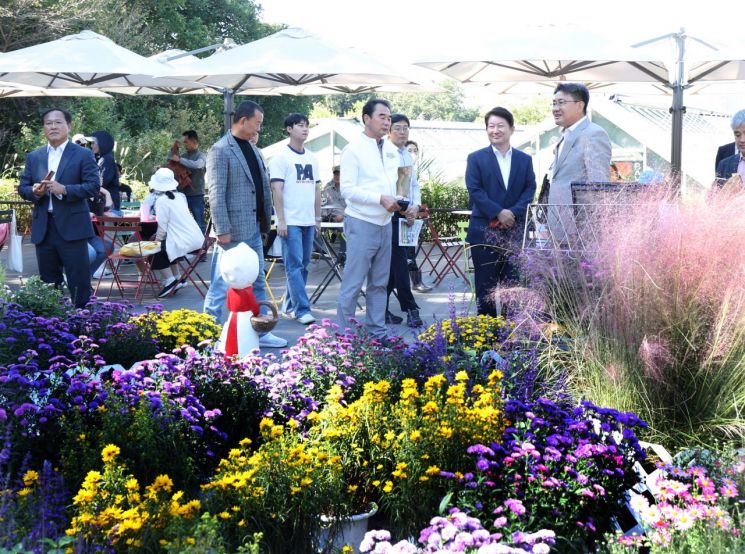 A total of 10 members of the Daegu City and District Council, including Kwon Young-jin, the National Assembly member for Dalseo-byeong, Daegu, who has ties with Nowon-gu as the 18th National Assembly member for Nowon, visited Bulamsan Healing Town for benchmarking.
On the 4th, Kwon Young-jin, member of the National Assembly for Dalseo-gu B, Daegu, along with 10 city and district council members from Daegu, visited Bulamsan Healing Town for benchmarking.
Bulamsan Healing Town is a diverse natural experience space including Azalea Hill with 100,000 azalea bushes in full bloom and the Butterfly Garden where butterflies can be seen year-round. It also features Seoul’s first Garden Support Center, Forest Healing Center, children’s forest experience site, barrier-free deck paths, and an elevator observatory.
The visit aimed to learn about Nowon-gu’s nature-friendly park facilities and management cases to explore applicable measures for enhancing Duryeu Park, Daegu’s representative park.
Duryeu Park is the largest park in Daegu, established in 1977 with an area of about 500,000 pyeong (approximately 1.65 million square meters), and has since developed many cultural, sports, and recreational facilities. The 83 Tower, located at the summit of Duryeusan, is a 200-meter-high observatory and a landmark offering panoramic views of Daegu city.
The visiting group toured the Garden Support Center and then the Butterfly Garden, receiving explanations about facility creation, butterfly breeding methods, and operational status. The Butterfly Garden, popular among Bulamsan Healing Town visitors, allows butterfly viewing year-round, attracting continuous visitors. They also toured and experienced key facilities such as the Forest Healing Center and children’s forest experience site.
Mayor Oh Seung-rok said, “It is meaningful to introduce Bulamsan Healing Town, the district’s representative facility with various programs including gardens, healing, and experiences. I hope this benchmarking will lead to the introduction of diverse facilities and programs in Duryeu Park so that citizens can enjoy richer leisure.”
Mayor Oh’s passion for learning from anywhere suitable for benchmarking, both nationwide and overseas, is undeniable and is likely why Nowon-gu has established itself as the ‘top Garden City.’
© The Asia Business Daily(www.asiae.co.kr). All rights reserved.
![Clutching a Stolen Dior Bag, Saying "I Hate Being Poor but Real"... The Grotesque Con of a "Human Knockoff" [Slate]](https://cwcontent.asiae.co.kr/asiaresize/183/2026021902243444107_1771435474.jpg)













