Domestic financial holding companies recorded profits exceeding 14 trillion won in the first half of the year. According to the "2024 First Half Financial Holding Companies' Business Performance" report released by the Financial Supervisory Service on the 4th, the consolidated net profit of 10 domestic financial holding companies (KB, Shinhan, Hana, Woori, NongHyup, DGB, BNK, JB, Korea Investment, Meritz) for the first half was tentatively estimated at 14.0556 trillion won. This represents an increase of 447.3 billion won (3.3%) compared to the first half of last year (13.6083 trillion won).
The consolidated total assets of financial holding companies amounted to 3,672.7 trillion won, up 142 trillion won (4.0%) from the end of the previous year (3,530.7 trillion won). By subsidiary sector, bank total assets increased by 114.7 trillion won (4.3%), financial investment by 17.7 trillion won (4.8%), credit finance companies and others by 2.8 trillion won (1.2%), and insurance by 2.7 trillion won (1.1%).
Looking at the profit share by subsidiary sector (based on individual net profit), banks accounted for the highest at 54.5%, followed by insurance and financial investment at 15.3% each, and credit finance companies and others at 10.4%.
In terms of profit changes, the insurance sector increased by 287.8 billion won (13.3%) compared to the same period last year, while banks decreased by 455.3 billion won (5.0%). The financial investment sector decreased by 942.3 billion won (27.7%), but this was due to a base effect caused by a one-time dividend income increase between affiliates of some holding companies in the previous year. Excluding this, the actual increase was 150.3 billion won (9.1%). Credit finance companies and others saw a slight decrease of 11.8 billion won (0.7%).
The total capital, tier 1 capital, and common equity tier 1 capital ratios of bank holding companies were 15.76%, 14.59%, and 12.88%, respectively, all exceeding regulatory requirements. However, compared to the end of the previous year, the total capital ratio (down 0.07 percentage points) and common equity tier 1 capital ratio (down 0.02 percentage points) slightly declined, while the tier 1 capital ratio (up 0.03 percentage points) showed a marginal increase.
Regarding asset soundness, the non-performing loan ratio rose by 0.18 percentage points to 0.90% compared to 0.72% at the end of the previous year. Conversely, the loan loss provision coverage ratio fell by 29.6 percentage points to 121.1% from 150.6% at the end of the previous year.
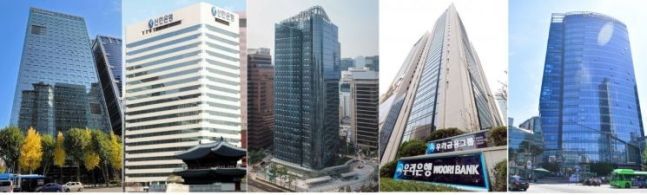
The Financial Supervisory Service evaluated that "the total assets and net profit of financial holding companies have shown continuous growth since 2021," but also explained that "it is necessary to pay attention to asset soundness management due to the increase in non-performing loans."
As for future supervisory directions, the FSS plans to strengthen monitoring of potential risk factors in preparation for increased financial market volatility caused by global interest rate cuts and geopolitical instability. In particular, it will encourage holding companies to enhance risk management at the group level for risks such as real estate project financing (PF) and overseas alternative investments, and will continue to promote the improvement of loss absorption capacity.
© The Asia Business Daily(www.asiae.co.kr). All rights reserved.
![Clutching a Stolen Dior Bag, Saying "I Hate Being Poor but Real"... The Grotesque Con of a "Human Knockoff" [Slate]](https://cwcontent.asiae.co.kr/asiaresize/183/2026021902243444107_1771435474.jpg)















