Fine dust concentrations in Gyeonggi Province have been decreasing since 2019, but ozone levels have continued to rise.
On the 3rd, the Gyeonggi-do Institute of Health and Environment published the "2023 Gyeonggi-do Air Quality Assessment Report," advising that "to reduce ozone, it is necessary to strengthen emission source management policies for volatile organic compounds (VOCs) and other reduction measures."
Fine dust is classified by size (㎛, micrometers) into particulate matter (PM-10) and fine particulate matter (PM-2.5), and concentrations are expressed in ㎍ (micrograms). Generally, it is denoted as ㎍/m³, with higher numbers indicating higher concentrations.
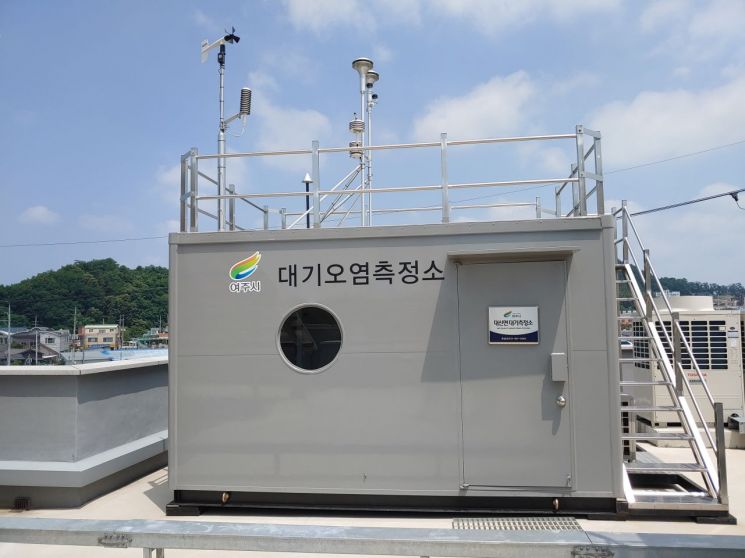
The Institute collected and analyzed data observed last year from a total of 128 air quality monitoring stations across the province to measure air pollutant concentrations and included the findings in the report.
According to the report, over the past five years, the concentration of fine particulate matter in the province has shown a decreasing trend since 2019: 26㎍/㎥ in 2019, 21㎍/㎥ in 2020, 21㎍/㎥ in 2021, 20㎍/㎥ in 2022, and 21㎍/㎥ in 2023. Particulate matter concentrations fluctuated, with 46㎍/㎥ in 2019, 39㎍/㎥ in 2020, 42㎍/㎥ in 2021, 35㎍/㎥ in 2022, and 41㎍/㎥ in 2023.
In contrast, ozone levels steadily increased from 0.027 ppm in 2019 to 0.028 ppm in 2020, 0.029 ppm in 2021, 0.029 ppm in 2022, and 0.0306 ppm in 2023.
The number of days with air pollution alerts also rose from 2022 to 2023. Particulate matter alert days increased 3.3 times from 6 days in 2022 to 20 days in 2023, fine particulate matter alert days rose 1.8 times from 16 days to 29 days, and ozone alert days increased 1.5 times from 24 days to 37 days.
Notably, in 2023, an ozone advisory was issued as early as March, the earliest since the air pollution alert system was implemented, and the number of days with ozone air quality ratings of "Bad" or worse increased by 20 days compared to 2022, totaling 110 days.
The Institute analyzed that this was due to favorable conditions for ozone formation, such as the record-breaking high temperatures experienced in 2023.
© The Asia Business Daily(www.asiae.co.kr). All rights reserved.
![Clutching a Stolen Dior Bag, Saying "I Hate Being Poor but Real"... The Grotesque Con of a "Human Knockoff" [Slate]](https://cwcontent.asiae.co.kr/asiaresize/183/2026021902243444107_1771435474.jpg)
















