On the evening of the 1st (local time), Iran launched a large-scale ballistic missile attack targeting Israel. Israel also warned of retaliatory strikes against Iran, further escalating the risk of war in the Middle East.
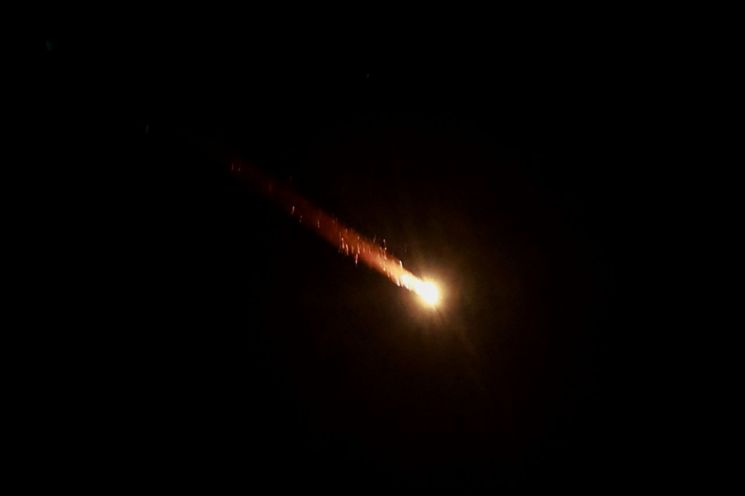
The Iranian Revolutionary Guard Corps (IRGC) stated in a press release that day, "We fired ballistic missiles targeting important military and security objectives in the heart of the occupied territory (Israel)." This comes about five months after the missile and drone attacks on the Israeli mainland in April.
The IRGC defined this missile launch as retaliation for the deaths of Ismail Haniyeh, leader of the Palestinian armed faction Hamas; Hassan Nasrallah, leader of the Lebanese Shia armed faction Hezbollah; and Abbas Nilforushan, deputy operations commander of the Revolutionary Guard. They added that three Israeli military bases were hit in the attack and warned, "If the Zionist regime (Israel) responds to the operation, it will face even more overwhelming attacks."
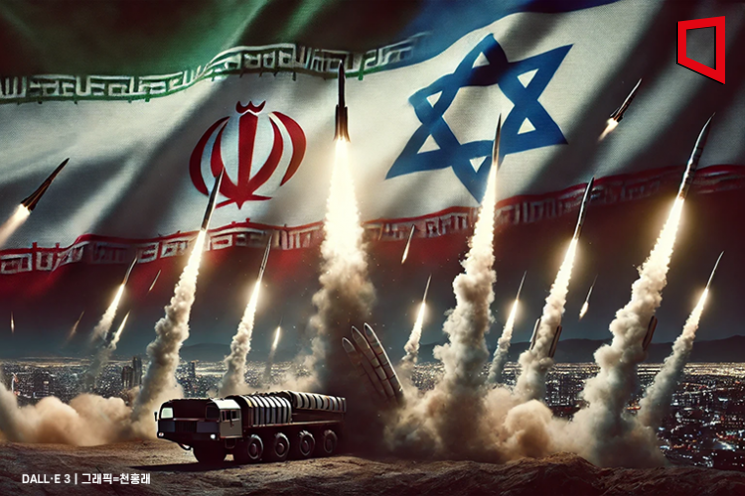
Since the assassination of Haniyeh, who visited Iran at the end of July, Iran has been warning of strong retaliation against Israel. Recently, as Israel expanded the frontlines targeting the so-called 'Axis of Resistance' countries including Gaza, Lebanon's Hezbollah, and Yemen's Houthi rebels, Iran proceeded with its retaliation. Iranian President Masoud Pezeshkian posted on X (formerly Twitter), "Iran has firmly responded to the Zionist regime's aggression for regional peace and security." Hamas, one of the 'Axis of Resistance' and engaged in nearly a year of war with Israel since last year, also issued a statement blessing the missile launch by the heroic Iranian Islamic Revolutionary Guard Corps, calling it "revenge for the blood of our martyrs."
The Israeli military announced that Iran fired approximately 180 missiles that day. Foreign media, citing eyewitnesses, reported a series of explosions heard in Israel's capital Jerusalem and Tel Aviv. Takeoffs and landings at Tel Aviv's Ben Gurion International Airport were temporarily suspended, and neighboring countries such as Jordan and Iraq closed their airspace.
However, the Israeli military indicated that its air combat capabilities were not damaged, suggesting that Iran's airstrike, like the one in April, did not cause significant damage to Israel. The evacuation order was lifted about an hour after the air raid alert was issued, and as of 10 p.m. that day, only two minor injuries were reported with no fatalities. There was also no confirmed damage to Israeli aircraft or strategic military assets. Daniel Hagari, the Israeli military's chief spokesperson, said at a briefing that day, "We have (retaliation) plans. We will act at a time and place of our choosing," signaling further retaliatory actions.
The U.S. White House also expressed its intention to coordinate the next steps with Israel. Jake Sullivan, White House National Security Advisor, said at a briefing regarding Iran's attack on Israel, "This attack does not appear to be effective," and "We have made it clear that there will be consequences, severe consequences, for Iran's actions. We will work with Israel on this." The White House reported that President Joe Biden ordered the U.S. military to support Israel's defense and to intercept missiles aimed at Israel.
© The Asia Business Daily(www.asiae.co.kr). All rights reserved.
![Clutching a Stolen Dior Bag, Saying "I Hate Being Poor but Real"... The Grotesque Con of a "Human Knockoff" [Slate]](https://cwcontent.asiae.co.kr/asiaresize/183/2026021902243444107_1771435474.jpg)
















