Water Supply Fees Increased by 4.9% Annually for 5 Years
Abolishing Progressive Rates and Simplifying Billing Steps
Yongin City in Gyeonggi Province will raise water and sewage fees for the first time in nine years. Water fees will increase by 4.9% annually, and sewage fees will also rise by 80 to 100 KRW each year during this period.
Yongin City announced on the 1st that it has prepared a plan to revise water and sewage fees, which will be applied starting from the bills issued in December. This fee increase is the first since 2015, marking a nine-year interval.
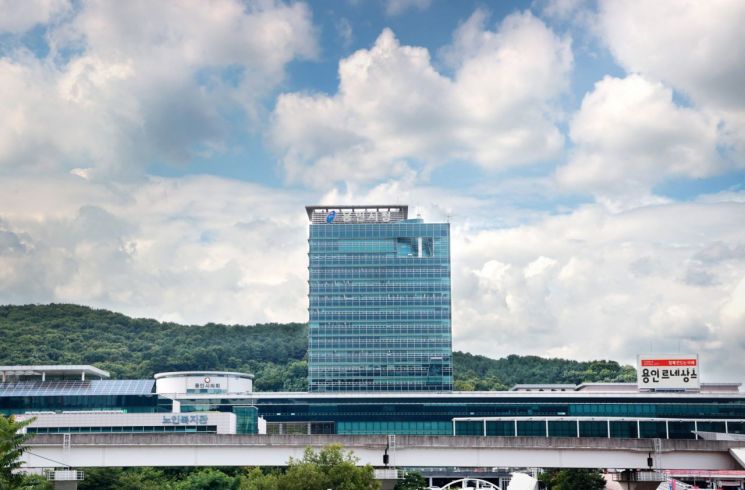
The city explained that the reasons for raising water fees include increased production costs, facility investments for aging infrastructure maintenance, and growing demand, which have increased financial burdens. Regarding sewage fees, the city stated that fee adjustments are inevitable due to rising sewage treatment costs and the need to establish a stable sewage treatment infrastructure. According to the city, the water fee realization rate is 75.1%. Last year, the net loss from water fees reached approximately 15 billion KRW.
For sewage, the treatment cost is 1,706 KRW per ton, while the fee is only 672 KRW, resulting in a realization rate of just 39.37%. Meanwhile, the city’s sewage business environmental improvement costs are expected to increase from 147.7 billion KRW this year to 187.7 billion KRW in 2028. Accordingly, the net loss is projected to rise from 61.6 billion KRW this year to 101.3 billion KRW in 2028, the city forecasted.
To address this issue, the city decided to raise water fees by about 4.9% annually over five years until 2028. Additionally, the current progressive rate system of ▲400 KRW for 1?20㎥ ▲550 KRW for 21?30㎥ ▲840 KRW for over 31㎥ will be abolished and replaced with a uniform rate of 440 KRW per 1㎥. The fees will then be gradually increased starting from the bills issued each December, reaching up to 520 KRW per 1㎥ by the December 2028 billing cycle.
Applying the increased fees, a household of four using an average of 20㎥ of water per month will see their water bill rise by 2,400 KRW per month by the time the increase is fully implemented in the December 2028 billing.
Along with this, the city simplified the water fees for business and commercial use by merging them into the general water fee category and reduced the fee steps from five to four. Accordingly, the general water fee will start at 680 KRW per 1㎥ for the December billing this year and will be sequentially increased to 820 KRW per 1㎥ by the December 2028 billing.
The fee for public bathhouses, which have frequently experienced excessive water use and unpaid bills, will also be simplified from four steps to two. The December billing this year will apply a rate of 840 KRW per 1㎥, rising to 1,010 KRW by December 2028.
However, to reduce the burden caused by the fee increase, the city plans to expand welfare benefits. Starting in December, severely disabled persons will receive a discount on 10㎥ of water usage per month. Schools will also be charged the lowest rate of the first step regardless of usage to ease their burden.
Sewage fees will also be gradually increased over five years starting from the December billing this year. The December 2023 billing will see a 100 KRW increase, followed by annual increases of 80 KRW from 2025 to 2027, and a 90 KRW increase in the December 2028 billing. For a household discharging 20 tons of sewage per month, the current fee of 1,400 KRW will rise to 12,400 KRW in the December billing this year and to 19,000 KRW by December 2028.
Residential sewage fees will also abolish the progressive rate system like water fees, and fees for business and commercial use will be integrated into the general category due to similar fee structures. The progressive system for public bathhouses will be reduced from four steps to two. To alleviate the economic burden on vulnerable groups such as families with three or more children and basic livelihood security recipients, the policy to discount fees for up to 10㎥ of monthly usage will be expanded to include households with severely disabled residents who require social consideration.
A city official stated, "Although water and sewage fees have been frozen for the past nine years, sequential fee increases were unavoidable due to growing deficits and the need to establish a stable water and sewage supply system. Through fee adjustments, we aim to improve citizens’ quality of life and water and sewage services, while expanding welfare policies to reduce the burden on socially vulnerable groups who need assistance."
© The Asia Business Daily(www.asiae.co.kr). All rights reserved.
![Clutching a Stolen Dior Bag, Saying "I Hate Being Poor but Real"... The Grotesque Con of a "Human Knockoff" [Slate]](https://cwcontent.asiae.co.kr/asiaresize/183/2026021902243444107_1771435474.jpg)
















