Daejeon District Court Sentences 2 Million Won Fine
Dissatisfied Over Fine Imposed on Own Son
A public institution employee in his 60s who threatened a public official by saying "I will kill you" after being dissatisfied with a fine imposed on his son was sentenced to a fine.
On the 30th, Yonhap News reported that the Daejeon District Court Criminal Division 9 (Presiding Judge Ko Young-sik) sentenced Mr. A, in his 60s, who was charged with intimidation, to a fine of 2 million won.
Mr. A, known to be an executive of a public institution, was brought to trial on charges of threatening Mr. B, a public official at Daejeon Customs, on October 6 last year. He was dissatisfied with the customs investigation team imposing a fine on his son for violating the Foreign Exchange Transactions Act and filed about 20 complaints to Daejeon Customs. However, when the complaints were not accepted, Mr. A even went to the front gate of the government building in Yuseong-gu, Daejeon, to meet Mr. B.
A witness who observed the meeting between the two testified that Mr. A put his arm around Mr. B's shoulder and whispered something in his ear. The investigation revealed that Mr. A threatened the victim Mr. B by saying, "I will return the pain my family has suffered. I will kill you."
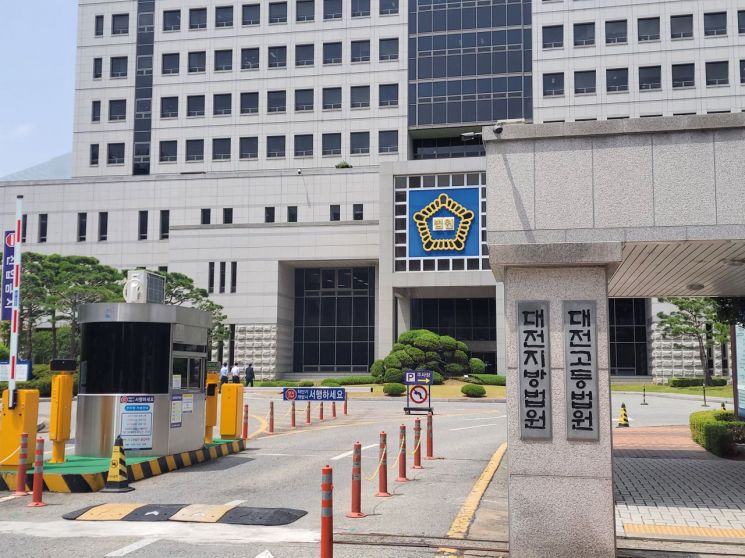
The court explained the sentencing by stating, "The defendant's actions were sufficient to cause fear," and "Considering the circumstances and methods of the crime, the nature of the offense is not light."
Statistics show that in the past six years, there have been about 41,000 malicious complaints against public officials annually.
According to data received by Lee Seong-gwon, a member of the People Power Party (Busan Saha-gap), from the Ministry of the Interior and Safety on the 20th, there were 249,714 illegal acts against public officials nationwide over the past six years. By year, there were ▲34,484 cases in 2018 ▲38,054 in 2019 ▲46,079 in 2020 ▲51,883 in 2021 ▲41,559 in 2022 ▲37,655 in 2023.
Among the types of illegal acts, verbal abuse and threats accounted for the majority with 228,837 cases, followed by sexual harassment (2,851 cases), assault (1,614 cases), as well as property damage, possession of dangerous items, drunken disturbances, and obstruction of work.
Rep. Lee emphasized, "Illegal acts by complainants are selfish behaviors that harm citizen convenience," and added, "The government should continuously monitor the effectiveness of recently announced measures to prevent malicious complaints and protect public officials to minimize harm to public officials."
In July, the Anti-Corruption and Civil Rights Commission announced the results of a nationwide survey identifying 2,784 'malicious complainants.' This was the result of a full survey conducted from March to May targeting 49 central administrative agencies, 243 local governments, and 17 metropolitan and provincial offices of education.
Regarding types of malicious complainants, the 'habitual/repetitive' type, who send hundreds of messages multiple times to the personal phone of the person in charge, and the 'verbal abuse/assault/threat' type accounted for 48% (1,340 people) and 40% (1,113 people), respectively. Additionally, 6% (182 people) were of the 'doxxing' type, who publicly disclose the names of responsible officials and encourage protest calls, and 3% (80 people) were those who excessively request information disclosure or make irrational claims due to dissatisfaction with complaint handling results. By institution, malicious complainants were counted as 1,372 in basic local governments, 1,124 in central administrative agencies, 192 in metropolitan local governments, and 96 in offices of education.
Despite the seriousness of malicious complaints, the Anti-Corruption and Civil Rights Commission explained that 45% (140 institutions) of all institutions have not conducted malicious complaint response training in the past three years, and even among those that did, many cases were found where the training was not appropriate for responding to malicious complaints.
© The Asia Business Daily(www.asiae.co.kr). All rights reserved.
![Clutching a Stolen Dior Bag, Saying "I Hate Being Poor but Real"... The Grotesque Con of a "Human Knockoff" [Slate]](https://cwcontent.asiae.co.kr/asiaresize/183/2026021902243444107_1771435474.jpg)















