Strike Scheduled to Begin on the 1st
Political Impact Expected Ahead of the Presidential Election
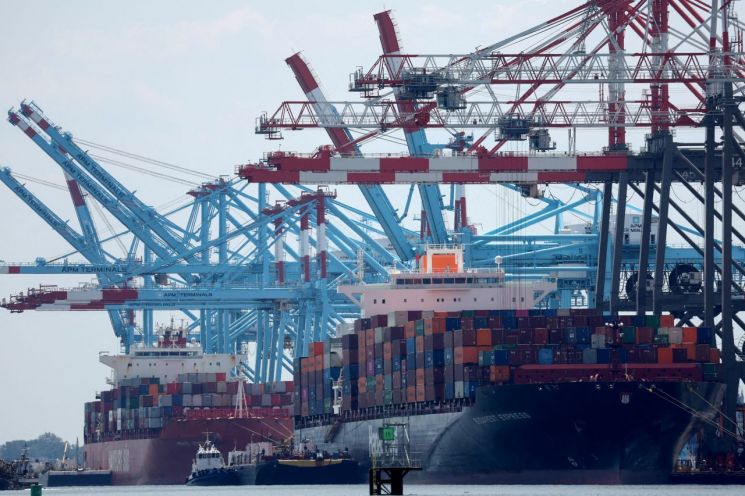
East Coast port workers, who handle half of the United States' maritime logistics, have announced plans to go on strike starting October 1, signaling a red alert for major retailers, automobile manufacturers, and others. The strike is expected to cause up to 6.5 trillion won in daily damage to the U.S. economy and negatively impact global supply chains.
On the 29th (local time), the International Longshoremen's Association (ILA) announced that the strike at ports along the U.S. East Coast and the Gulf of Mexico would begin on October 1, stating that the United States Maritime Alliance (USMX) "refused to address wage stagnation that has lasted for half a century."
USMX is an organization representing employers in the maritime industry along the U.S. East Coast and Gulf of Mexico.
According to foreign media reports citing sources, no negotiations took place between the ILA and USMX on the 29th, and no negotiations are scheduled until midnight on the 30th. If the ILA goes on strike, it will be the first time since 1977 that a strike occurs across all U.S. coasts.
President Joe Biden stated that he has no intention of intervening to prevent the strike if the ILA fails to reach a new contract by October 1. He said, "This is collective bargaining," and added, "The Taft-Hartley Act (which allows the president to impose an 80-day cooling-off period on labor disputes threatening national security or safety) will not be applied."
The East Coast and Gulf of Mexico ports set to strike handle about half of the U.S. maritime transportation. JP Morgan analysts predict that the strike could cause up to $5 billion (approximately 6.5235 trillion won) in daily damage to the U.S. economy.
Businesses and government officials are concerned that a strike ahead of the holiday season could trigger inflation. Limited vessel supply could lead shipowners to increase prices charged to customers, ultimately raising consumer costs.
Major retailers are contracting with West Coast maritime or rail transport companies to expedite imports and avoid transportation disruptions. According to Brian Pakula, a supply chain expert at consulting firm West Monroe, this process incurs additional warehouse costs to store increased inventory, raising companies' transportation costs by up to 20%.
According to freight market analyst Geneta, the average cost to transport a 40-foot container on a short-term contract from Northern Europe to the U.S. East Coast has risen 29% since the end of August, reaching $2,376. Peter Sand, Geneta’s senior analyst, noted that shipping logistics from Asia, which can easily reroute to the West Coast, have seen little cost increase during this period, but the situation could change if the strike continues. He also warned that transportation delays in the U.S. causing shipment delays overseas could increase global shipping costs.
Brian Ossenbeck, a JP Morgan analyst, does not expect the strike to last more than a week even if it begins. However, some economists believe that if the strike prolongs, consumers could face the worst inflation since the COVID-19 pandemic.
Seth Harris, a senior researcher at Northeastern University and former chief labor policy advisor to President Biden, predicted that a prolonged strike would also have political repercussions. Former President Donald Trump has criticized Vice President Kamala Harris over high inflation. Harris noted, "The Republican Party will seize this opportunity to criticize President Biden."
© The Asia Business Daily(www.asiae.co.kr). All rights reserved.
![Clutching a Stolen Dior Bag, Saying "I Hate Being Poor but Real"... The Grotesque Con of a "Human Knockoff" [Slate]](https://cwcontent.asiae.co.kr/asiaresize/183/2026021902243444107_1771435474.jpg)
















