Famous Family Restaurant Implements Menu Price Increase
Newly Harvested Rice Priced 1.5 Times Higher Than Usual
Due to Abnormal Heat and Pest Damage... 'Grade 1 Rice' Also Scarce
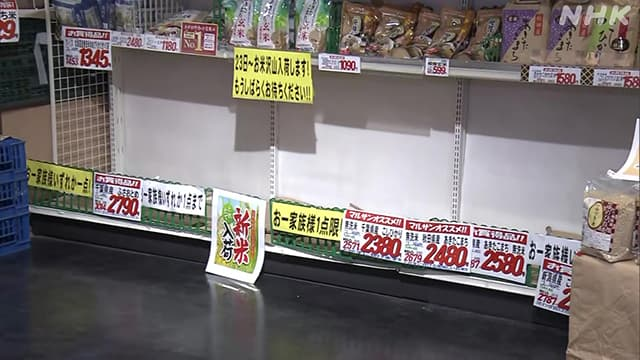
As the rice shortage problem in Japan remains unresolved and continues, major food service franchises have begun responding by raising the prices of rice served at their stores.
On the 1st, NHK reported that due to the increase in rice prices, large food service franchises have started raising the prices or reducing the portions of rice dishes offered at their stores.
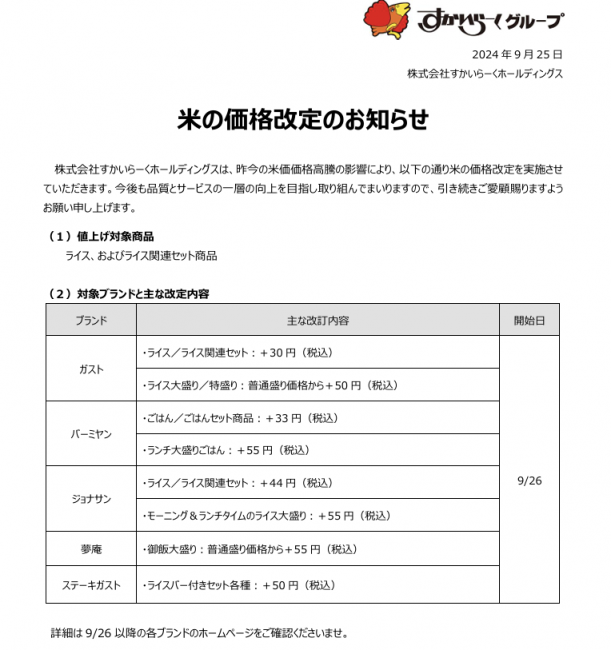
Skylark Holdings, which operates the famous family restaurant chain "Gusto," raised the prices of rice menu items at five brand chains including Gusto as of September 26. The price increase applies not only to individual rice dishes but also to set meals that include rice, with the increase ranging from 30 yen (275 won) to 55 yen (504 won). The price of a single rice dish is expected to rise from the previous 200 yen (1,835 won) to 230 yen (2,110 won). A company representative explained, "We have made efforts to reduce costs by directly contracting with production areas, but we have inevitably decided to raise prices to continue providing stable menu offerings."
The well-known lunchbox chain "Origin Higashihide" also decided to respond at 124 out of 473 stores in the Kanto and Kinki regions as of October 1. Instead of raising prices, they plan to reduce the amount of rice served to adjust the unit price. Accordingly, 18 types of products including single rice balls and rice ball and side dish sets will be offered in smaller portions than before.
The rice shortage phenomenon in Japan is attributed to a decrease in rice harvest last year due to a heatwave. Since the supply did not circulate sufficiently in the market, the shortage began last month even before this year's new rice was available. Additionally, panic buying triggered by fears of a major earthquake and typhoons also had an impact. Major Japanese media have even mentioned the increase in tourists as a cause. NHK reported, "As the demand from foreign tourists visiting Japan increases and panic buying in preparation for earthquakes and typhoons spreads, prices have remained higher than usual even after the new rice started circulating."
There are concerns that the problem may prolong due to poor supply and demand conditions for this year's new rice. According to the inspection results of this year's new rice announced by the Ministry of Agriculture, Forestry and Fisheries, the highest-rated "Grade 1 rice" accounted for only 63% compared to last year. The causes are attributed to high temperatures caused by abnormal weather and damage from beetles and other pests.
The prevailing assessment is that rice price stability in Japan will be difficult for the time being. The average price of this year's new rice currently distributed is already 1.5 times higher than usual.
© The Asia Business Daily(www.asiae.co.kr). All rights reserved.
![Clutching a Stolen Dior Bag, Saying "I Hate Being Poor but Real"... The Grotesque Con of a "Human Knockoff" [Slate]](https://cwcontent.asiae.co.kr/asiaresize/183/2026021902243444107_1771435474.jpg)
















