Unsold Units After Completion Reach Highest in 3 Years 11 Months
Transactions Decrease, Permits and Groundbreaking Increase Compared to Previous Month
Despite the nationwide decrease in unsold housing units, the number of post-completion unsold houses, known as 'malignant unsold housing,' increased for 13 consecutive months, mainly in provincial areas. Meanwhile, overall housing supply indicators such as housing permits, groundbreaking, completion, and sales improved compared to the previous month.
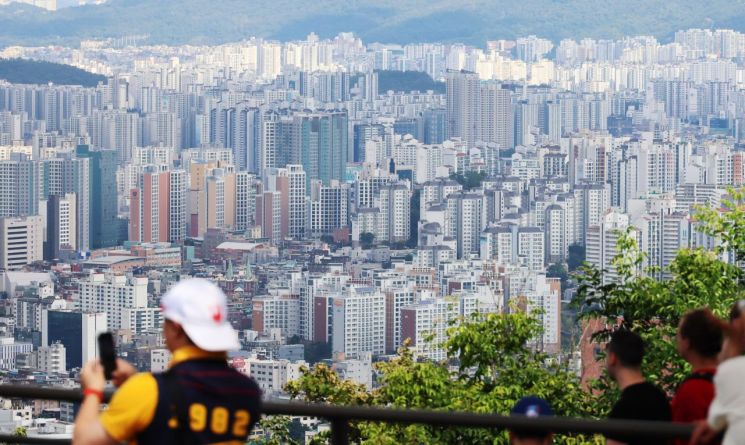
According to the 'August Housing Statistics' released by the Ministry of Land, Infrastructure and Transport on the 30th, the number of post-completion unsold houses nationwide last month was 16,461 units, a 2.6% increase from the previous month (16,038 units). The number has increased for 13 consecutive months since August last year, marking the highest level in 3 years and 11 months since September 2020 (16,883 units).
Post-completion unsold houses in the Seoul metropolitan area, including Seoul, were 2,921 units, a 2.7% decrease from the previous month, but increased by 3.8% in provincial areas. Jeonnam had the highest number with 2,549 units, and Gwangju showed the largest increase rate compared to the previous month (58.8%).
The total number of unsold houses was 67,550 units, decreasing for the second consecutive month. After staying in the 70,000-unit range for four consecutive months since April (71,997 units), it dropped to the 60,000-unit range. The metropolitan area and provincial areas recorded 12,616 units and 54,934 units respectively, down 9.8% and 5.0% from the previous month. However, provincial areas accounted for 81.3% of the total unsold houses, increasing their share.
Housing supply indicators all increased last month. In particular, groundbreaking stood out with 29,751 units, an 85.7% increase from the previous month. Compared to the same month last year, it more than doubled (108.6%). In the metropolitan area, groundbreaking reached 21,840 units, up 176.9% from the previous month and 372.5% compared to the same month last year.
Sales and completions also showed an upward trend. Sales in August were 16,077 units, up 23.9% from the previous month and 8.5% higher than the same month last year. Completions were 38,844 units, a 33.7% increase from the previous month and 23.2% higher than the same period last year. However, the leading indicator of permits was 28,478 units, up 30.5% from the previous month but down 12.3% compared to the same month last year.
Meanwhile, the volume of housing sales transactions in Seoul (based on registration date) in August was 10,992 units, showing a slowdown in growth. Although it maintained the 10,000-unit level, which was surpassed for the first time in 2 years and 11 months last July, the transaction volume decreased by 14.0% from the previous month (12,783 units).
Nationwide housing transaction volume also decreased by 11.2% from the previous month to 60,648 units last month. The metropolitan area recorded 32,776 units and provincial areas 27,872 units, down 13.0% and 9.0% respectively from the previous month.
Last month, the total volume of housing lease and monthly rent transactions was 209,453 units, down 3.0% from the previous month and 3.6% from the same month last year. Jeonse (long-term lease) decreased by 10.0% compared to the same period last year, while monthly rent increased by 1.6%. From January to August this year, the proportion of monthly rent transactions in total lease and monthly rent transactions was 57.4%, up 2.4 percentage points from the same period last year.
© The Asia Business Daily(www.asiae.co.kr). All rights reserved.

















