Average of 6,228 Doctors Diagnosed Mental Illness Annually Over 5 Years
Including Schizophrenia, Delusional Disorder, and Drug Addiction Diagnoses
It has been revealed that an average of about 6,000 doctors per year were diagnosed with mental illnesses over the past five years. These doctors performed approximately 28 million medical treatments and surgeries annually.
On the 29th, Choo Kyung-ho, a member of the People Power Party on the National Assembly's Health and Welfare Committee, analyzed the 'Status of Medical Professionals Diagnosed with Mental Illness' received from the Health Insurance Review and Assessment Service and announced the number of doctors diagnosed with mental illnesses over the five years from 2019 to 2023. As a result, an average of 6,228 doctors per year were diagnosed with mental illnesses during the recent five years. During the same period, they performed an average of 27.99 million medical treatments and surgeries annually.
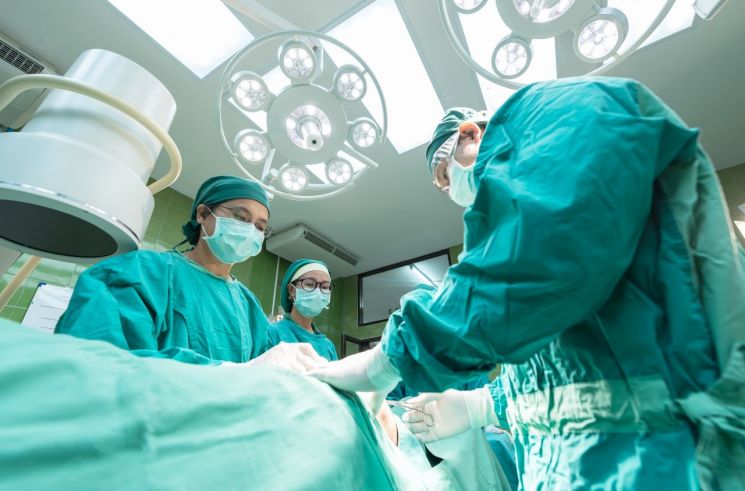
The number of doctors diagnosed with bipolar disorder averaged 2,243 per year, and they performed an average of 9,095,934 medical treatments and surgeries annually. The number of doctors diagnosed with schizophrenia and delusional disorders averaged 54 per year, and their annual average number of treatments and surgeries was 151,694. According to the status by medical specialty from January to July this year, doctors diagnosed with schizophrenia and delusional disorders performed 845 psychiatric treatments.
The average number of nurses diagnosed with mental illnesses from 2019 to 2023 was 10,074 per year. Among them, the average number of nurses diagnosed with schizophrenia was 173 per year, and the number of nurses diagnosed with bipolar disorder was as high as 4,120.
Over the past five years, five doctors and seven nurses were diagnosed with drug addiction. According to current medical law, individuals with mental illnesses or drug addiction cannot become medical professionals, but it is difficult to filter out those who develop mental illnesses after already becoming medical professionals. This is because there is no qualification verification system to confirm whether medical professionals who suffer from mental illnesses have fully recovered and whether they have any issues performing medical activities.
Since the full revision of the Medical Service Act in 2007, there has been only one case of medical professional qualification cancellation due to mental illness: the license of a nurse diagnosed with schizophrenia was revoked in 2017. In that case, the nurse voluntarily requested the cancellation of her license.
Representative Choo pointed out, "Although current medical law stipulates that individuals with mental illnesses and drug addiction cannot become medical professionals, there are no specific legal procedures for qualification verification, leaving the issue effectively neglected." He added, "The Ministry of Health and Welfare should promptly establish procedures to verify qualifications, such as confirming full recovery after a mental illness diagnosis, and strengthen related systems so that the public can receive medical services with confidence."
Meanwhile, on the 19th, Seo Mi-hwa, a member of the Democratic Party of Korea, revealed based on data submitted by the Ministry of Health and Welfare that 40 doctors suffering from dementia or schizophrenia performed 49,678 medical treatments from January to July this year. In response, the Ministry of Health and Welfare stated, "We are internally reviewing management measures for disqualified medical professionals" and "We will prevent inappropriate medical practices by medical professionals suspected of disqualifications such as mental illness or drug addiction."
© The Asia Business Daily(www.asiae.co.kr). All rights reserved.
![Clutching a Stolen Dior Bag, Saying "I Hate Being Poor but Real"... The Grotesque Con of a "Human Knockoff" [Slate]](https://cwcontent.asiae.co.kr/asiaresize/183/2026021902243444107_1771435474.jpg)











