Real Estate R114 'Weekly Apartment Market Status in the Seoul Metropolitan Area for the Fourth Week of September'
Sales Transactions in a Slump, Housing Price Increase Expected to Slow Down for the Time Being
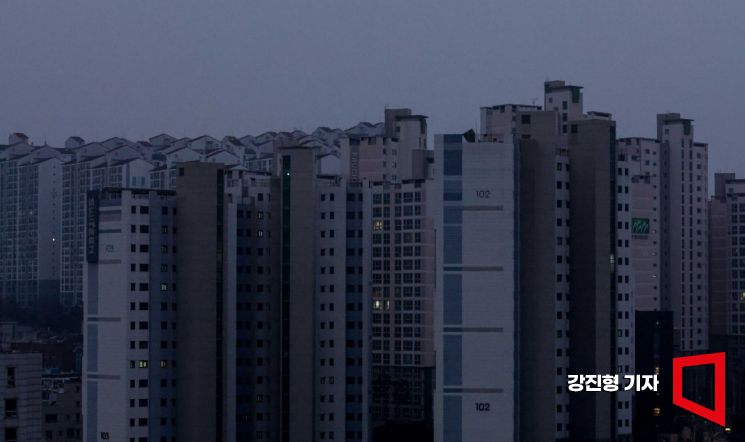
As the autumn moving season begins, the jeonse prices of apartments in Seoul rose by 0.03% compared to the week before the holiday. According to the 'Weekly Apartment Market Status in the Seoul Metropolitan Area for the Fourth Week of September' released by Real Estate R114 on the 28th, the strength of small to medium-sized apartments stood out due to the characteristics of the moving season, and the price increase was larger in large complexes rather than small and medium-sized complexes.
As the shortage of apartment jeonse listings continues, there is growing upward pressure on jeonse prices due to supply and demand effects, especially in preferred areas, which could lead to a larger price increase.
In the metropolitan area, applications for the first phase of the 1st New Town pilot district began on the 23rd. Among the 1st New Towns, Bundang New Town, where reconstruction fever is intense, saw complexes such as Seohyeon-dong's Simbeom Samsung Hanshin and Simbeom Hanyang, which are pilot district promotion complexes, rise by about 2.5 million KRW this week alone, reflecting expectations for district designation in the weekly market prices.
In the last week of September, Seoul apartment sale prices rose by 0.02%. General apartments increased by 0.03%, while reconstruction apartments remained flat (0.00%). New towns showed no significant price changes, and Gyeonggi and Incheon were adjusted upward by 0.01%.
In Seoul, Dongjak (0.14%) showed the largest weekly increase, rising more than 0.10%. This was followed by Gwanak (0.07%), Nowon (0.06%), Gangnam (0.05%), Seongbuk (0.03%), Yangcheon (0.02%), and Songpa (0.02%).
Among new towns, Bundang rose by 0.02%, while other areas remained flat (0.00%). In Gyeonggi and Incheon, Hwaseong (0.10%), Osan (0.02%), Suwon (0.02%), and Gwacheon (0.02%) increased, whereas Pyeongtaek fell by 0.02% as areas like Pyeongtaek Cheongbuk District in Cheongbuk-eup dropped by about 5 million KRW.
Compared to before the Chuseok holiday, the jeonse market saw a significant increase in areas with rising jeonse prices throughout the metropolitan area. Seoul rose by 0.03%, while new towns and Gyeonggi-Incheon each increased by 0.01%.
In individual areas of Seoul, Nowon (0.16%), Guro (0.08%), Seongbuk (0.06%), Gangnam (0.06%), Songpa (0.05%), and Dongjak (0.05%) saw increases.
Among new towns, Dongtan (0.04%), Sanbon (0.03%), and Pyeongchon (0.02%) rose in that order. In Gyeonggi and Incheon, Suwon (0.06%), Uiwang (0.03%), Incheon (0.03%), Ansan (0.02%), and Gwacheon (0.02%) increased.
Pyeongtaek fell by 0.01% as areas like Hwacheon Village Woorim Phil-Yu in Anjung-eup dropped by 2.5 to 5 million KRW.
A Real Estate R114 official said, "Starting with the introduction of the Stage 2 Stress DSR in September, banks have been tightening loan screening and raising interest rates to manage household loans, continuing the loan squeeze."
He added, "As loan limits decrease and interest burdens increase, it is highly likely that demand groups with relatively low financial capacity will become more cautious about purchasing."
He continued, "In Seoul, where price recovery was rapid, demand is expected to stay in the rental market, waiting for a drop in market interest rates rather than rushing to buy. With weak buying power, it will be difficult to conclude sales contracts at the increased prices, leading to a somewhat subdued transaction market and a period of price stabilization for some time."
© The Asia Business Daily(www.asiae.co.kr). All rights reserved.
![Clutching a Stolen Dior Bag, Saying "I Hate Being Poor but Real"... The Grotesque Con of a "Human Knockoff" [Slate]](https://cwcontent.asiae.co.kr/asiaresize/183/2026021902243444107_1771435474.jpg)















