International oil prices plummeted on the 26th (local time) as expectations grew that Saudi Arabia, the world's largest oil producer, would increase oil production. Saudi Arabia is reportedly set to lift production cuts starting early December and abandon its unofficial price target of '100 dollars per barrel.' The message is to wait and see even if oil prices decline due to increased production.
On the same day, West Texas Intermediate (WTI) crude oil for November delivery, the near-month contract on the New York Mercantile Exchange, closed at $67.67 per barrel, down $2.02 (2.90%) from the previous trading day. The global benchmark Brent crude for November delivery on the ICE Futures Exchange also closed at $71.60 per barrel, down $1.86 (2.53%) from the previous session.
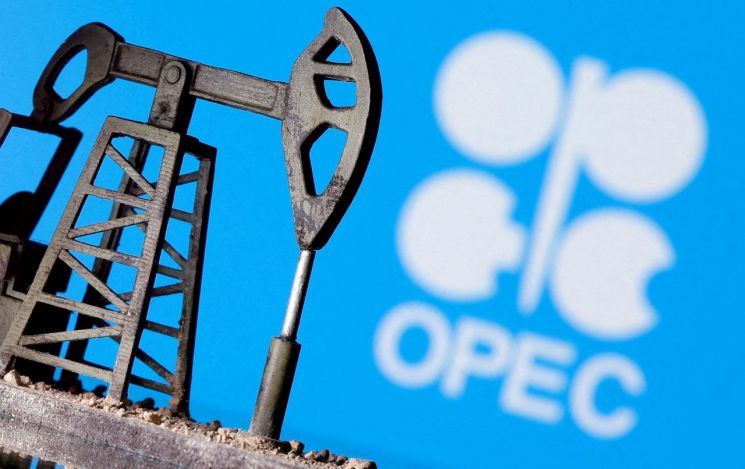
This is due to expectations of increased production by oil-producing countries including Saudi Arabia. According to foreign media, the Saudi government plans to increase production again starting December to regain market share. A source said, "The Saudi government has promised to lift production cuts as scheduled from December 1, even if oil prices decline for a long period," adding, "They are prepared to abandon the unofficial price target of $100 per barrel." Originally, the Organization of the Petroleum Exporting Countries (OPEC) and the major oil-producing countries' coalition 'OPEC+' planned to lift the long-standing production cuts since 2022 starting in October, but they had extended the cuts by two months earlier.
According to the International Monetary Fund (IMF), Saudi Arabia needs oil prices around $100 per barrel to balance its budget. However, the source said Saudi Arabia decided that even if prices fall due to increased production, it cannot continue to lose market share to other producers. Instead, Saudi Arabia is considering alternative financing options such as utilizing foreign exchange reserves or issuing government bonds. Currently, Saudi Arabia's oil production is about 8.9 million barrels per day, the lowest level since 2011.
Additionally, signs of an early resolution to Libya's oil production disruptions amid internal conflicts further raised expectations for supply expansion, contributing to the oil price decline on the day. The two independent governments controlling eastern and western Libya signed an agreement on the appointment of the governor of the Central Bank of Libya, which had been a major source of conflict.
Tony Sycamore, market analyst at IG, said, "The momentum in the crude oil market has weakened due to the increased likelihood of Libya resuming oil supply and news that even Saudi Arabia has lowered its price target due to increased supply." Ole Hansen, commodities analyst at Saxo Bank, also said, "The prospects of increased production from Libya and Saudi Arabia are major reasons for the recent weakness in oil prices." The day before, Evercore ISI lowered its Brent crude price forecast for the end of this year from $85 per barrel to $75 per barrel. The forecast for next year was also lowered from $80 per barrel to $70 per barrel.
© The Asia Business Daily(www.asiae.co.kr). All rights reserved.
![Clutching a Stolen Dior Bag, Saying "I Hate Being Poor but Real"... The Grotesque Con of a "Human Knockoff" [Slate]](https://cwcontent.asiae.co.kr/asiaresize/183/2026021902243444107_1771435474.jpg)















