Following the four major domestic financial holding companies (KB, Shinhan, Hana, Woori), the third-quarter earnings of major regional financial holding companies are also expected to show improvement.
According to financial information analysis firm FnGuide on the 27th, the consensus net income attributable to controlling shareholders for the combined three major regional financial holding companies (BNK, JB, DGB) in Korea is estimated at 531.3 billion KRW, a 9.19% increase compared to the previous year (486.6 billion KRW). The growth rate surpasses that of the four major financial groups (6.85%).
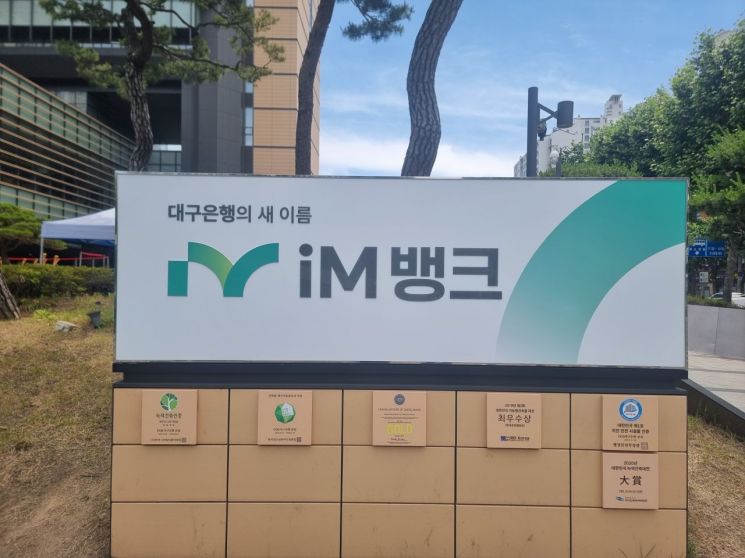
By company, BNK Financial, which oversees Busan and Gyeongnam banks, is expected to post net income of 227.1 billion KRW, up 11.16%. DGB Financial Group, whose largest subsidiary iM Bank recently converted into a commercial bank, is predicted to record net income of 133.5 billion KRW, a 16.09% increase. However, JB Financial, which manages Gwangju and Jeonbuk banks, is forecasted to see a modest increase of 2.03%, reaching 170.7 billion KRW.
A regional finance official stated, "One reason could be that loan loss costs were preemptively reflected earlier, and due to improvements in the real estate market, the actual scale of loan loss provisions translating into losses is lower than expected." He added, "As the mandatory loan proportion to small and medium enterprises by regional banks decreases, portfolio expansion toward household loans and large corporations is underway, and some banks may have been influenced by the actual increase in household loans."
This trend is not limited to regional banks alone. The four major financial groups are also showing strong earnings improvements. KB Financial is expected to maintain its leading bank position with net income of 1.4989 trillion KRW, up 9.11% from the previous year. Shinhan Financial, competing closely with KB Financial, is projected to increase net income by 13.10% to 1.3483 trillion KRW, while Hana Financial is forecasted to post net income of 1.0271 trillion KRW, up 7.32%.
The recent surge in household debt is cited as a background for this earnings improvement. The financial authorities postponed the implementation of the second phase of the stress Debt Service Ratio (DSR) regulation to this month, concentrating last-minute loan demand in July and August. In fact, household debt in the banking sector increased by approximately 9.8 trillion KRW last month, the largest in three years.
A financial sector official said, "Despite raising loan interest rates to manage household loan demand, last-minute demand surged, and when regulations were imposed, a balloon effect benefited regional banks and the secondary financial sector," adding, "Thanks to the authorities' indecisiveness, banks were able to increase their profits."
However, the high-interest-rate environment that has driven record-breaking net income every year is gradually fading. The U.S. Federal Reserve (Fed) lowered the benchmark interest rate by 0.50 percentage points at the Federal Open Market Committee (FOMC) meeting held on the 17th-18th (local time). Prior to this, market interest rates had already been declining in anticipation. In Korea, expectations are growing that the Bank of Korea will soon follow suit with a rate cut.
The banking sector cannot escape the interest rate cut phase either. Seol Yong-jin, a researcher at SK Securities, noted in a recent report, "Although interest rates on household loans have risen recently due to household debt management measures, the rate levels were excessively low before the full-scale regulations, and considering the relatively short repricing cycle for corporate loans, it is difficult to avoid a downward trend in net interest margin (NIM)." He added, "On an annual basis, the simple average NIM of eight banks is expected to decline by about 6 basis points (1bp=0.01%) compared to last year."
© The Asia Business Daily(www.asiae.co.kr). All rights reserved.
![Clutching a Stolen Dior Bag, Saying "I Hate Being Poor but Real"... The Grotesque Con of a "Human Knockoff" [Slate]](https://cwcontent.asiae.co.kr/asiaresize/183/2026021902243444107_1771435474.jpg)















