Government Approval Required for Acquisition by Foreign Companies
Difficult to Directly Block MBK Acquisition Due to Timing
However, MBK Must 'Exit'
Government Approval or Divestiture Required... Procedures Become More Complex
Korea Zinc's request to the government to designate its secondary battery precursor manufacturing technology as a national core technology is drawing attention to whether it will affect the public tender offers by MBK Partners and Young Poong. This move is interpreted as a strategic measure to make future sales to foreign companies difficult, even if MBK Partners acquires management rights.
On the 25th, Korea Zinc announced that it had submitted an application to the Ministry of Trade, Industry and Energy to designate its precursor manufacturing technology as a national core technology. The technology in question is a high-nickel precursor processing patented technology, jointly held with its subsidiary Kemco.
If Korea Zinc is designated as a company holding national core technology, government approval will be required for acquisition by foreign companies. The Industrial Technology Protection Act defines national core technology as "technology that has high technical and economic value in domestic and international markets or has high growth potential in related industries, and if leaked overseas, may pose a serious adverse effect on national security and the development of the national economy," and manages it specially.
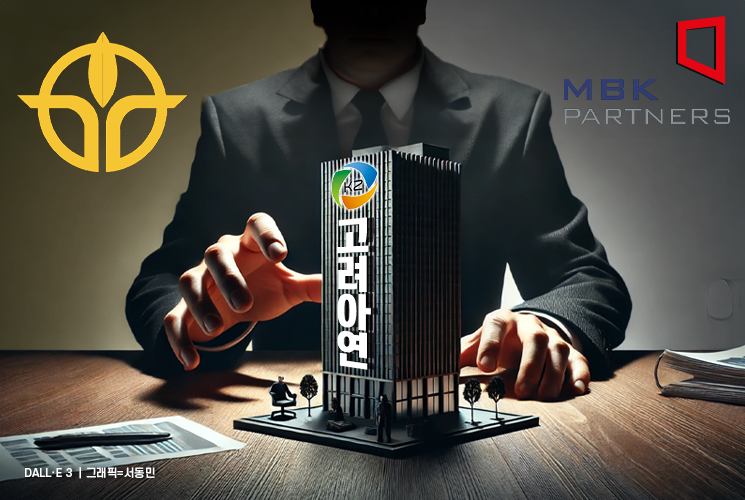
It is still uncertain whether Korea Zinc’s designation of this technology as a national core technology will directly affect MBK Partners’ acquisition plan. Some have claimed that MBK Partners is backed by Chinese capital, but MBK Partners denies this, stating it is "a native Korean private equity firm." The proportion of Chinese capital in MBK Partners is around 5%.
Timing-wise, it also seems difficult to affect the tender offer. The Ministry of Trade, Industry and Energy will decide on the designation after completing internal reviews, including holding an expert committee and following standard procedures. Industry insiders expect a conclusion no earlier than next month. Considering that MBK Partners’ tender offer period ends on the 4th of next month, the general view is that it is unlikely Korea Zinc will be designated as a national core technology holding company before the acquisition of management rights, regardless of MBK Partners’ nationality.
However, if MBK Partners, which ultimately needs to exit, attempts to sell part of Korea Zinc’s business in the future, it may have to go through complicated procedures such as splitting the corporation to avoid government approval. This has led to analysis that Korea Zinc hurried to apply for the national core technology designation.
At a press conference on the 24th, Lee Je-jung, Vice Chairman of Korea Zinc, emphasized, "Within the company, there are technologies worth several hundred billion won and more than hundreds of technologies containing 50 years of know-how in each process," and added, "we must prevent technology leakage not only for our company but also for the nation."
© The Asia Business Daily(www.asiae.co.kr). All rights reserved.
![Clutching a Stolen Dior Bag, Saying "I Hate Being Poor but Real"... The Grotesque Con of a "Human Knockoff" [Slate]](https://cwcontent.asiae.co.kr/asiaresize/183/2026021902243444107_1771435474.jpg)
















