FSS Publishes Integrated Guidelines on Short Selling to the Public
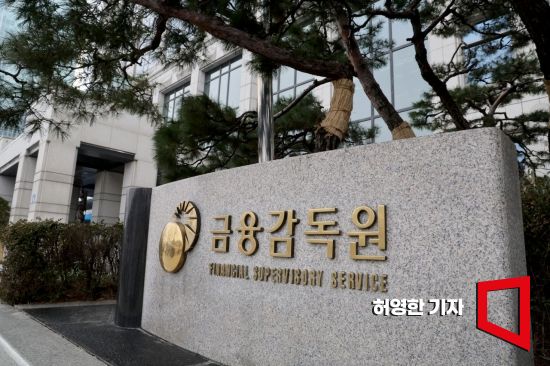
On the 25th, the Financial Supervisory Service (FSS) released the "Integrated Short Selling Guidelines," which include judgment criteria and principles to help short sellers prevent and control naked short selling on their own.
At a local meeting in Hong Kong last May attended by global investment banks (IBs), foreign investors requested detailed judgment criteria to enable self-prevention of naked short selling and the establishment of an internal inventory management system within institutions.
According to the guidelines released on this day, the calculation timing for the sellable inventory is determined in real time by reflecting inventory increases and decreases such as recoverable quantities on the daily starting inventory. Inventory changes include the starting inventory of the day, recoverable quantities, daily trading volume, rights quantities, and changes in loaned securities inventory.
The guidelines also address the recognition of ownership of loaned securities. If securities loaned to others cannot be returned by the short selling settlement date (T+2), it is considered naked short selling. Ownership is only recognized if the lender requests the borrower to return the securities before or on the order date and the securities can be returned by the settlement date. However, if the delivery deadline changes depending on the timing of the lender's early repayment request during the day, the early repayment request must be completed timely within the order date.
The recognition of ownership of collateral securities is also specified. If securities provided as collateral to others cannot be returned by the short selling settlement date (T+2), it is considered naked short selling. Ownership of collateral securities is only recognized if the collateral provider requests the collateral holder to deliver the collateral securities before or after the order and the securities can be recovered by the settlement date.
Ownership of borrowed securities is recognized if there is an agreement on essential terms of the securities lending contract between the lender and borrower.
Sellable inventory must be calculated and managed both at the independent trading unit level and at the company-wide level. This means that controls are necessary to prevent naked short selling and settlement failures, such as verifying whether stocks loaned internally have been returned and automatically limiting the quantity available for sell orders.
The guidelines also specify the criteria for pre-depositing securities. Here, "deposit" means that the delivery of securities has been completed through account transfers in the Korea Securities Depository’s depositor account book or the securities firm's investor account book. Especially, investors who short sell after pre-depositing securities significantly reduce the possibility of naked short selling, enabling them to be exempt from the obligation to report transaction details to the short selling central monitoring system (NSDS) and to build internal inventory management systems.
Securities firms must also monitor proprietary short selling transactions, where the order placer and the custodian are the same entity, as if the firm is processing its own short selling orders. Departments responsible for monitoring inventory management systems must perform verification procedures such as checking the firm's internal control standards.
Meanwhile, the FSS plans to establish a customized support system. On the 9th, the FSS expanded its short selling computerization task force (T/F) into a joint T/F with related institutions. A dedicated Relationship Manager (RM) will be assigned to each large-scale short selling investor (101 companies) to provide one-on-one consulting. For foreign investors, the English version of the guidelines will be provided in October, coinciding with the finalization of the Korean version.
© The Asia Business Daily(www.asiae.co.kr). All rights reserved.
![Clutching a Stolen Dior Bag, Saying "I Hate Being Poor but Real"... The Grotesque Con of a "Human Knockoff" [Slate]](https://cwcontent.asiae.co.kr/asiaresize/183/2026021902243444107_1771435474.jpg)















