Korea Federation of SMEs Conducts Survey on Energy Cost Burden
A survey found that 93% of small and medium-sized enterprises (SMEs) currently feel burdened by industrial electricity rates. There is a growing call for urgently including energy costs such as electricity fees in the delivery price linkage system.
The Korea Federation of SMEs announced the results of the 'Energy Cost Burden Survey' on the 25th. Conducted from August 21 to September 6 with 302 small manufacturing companies, the survey revealed that 93.0% of respondents felt burdened by current industrial electricity rates. Among them, 39.7% answered that the burden was 'very heavy.'
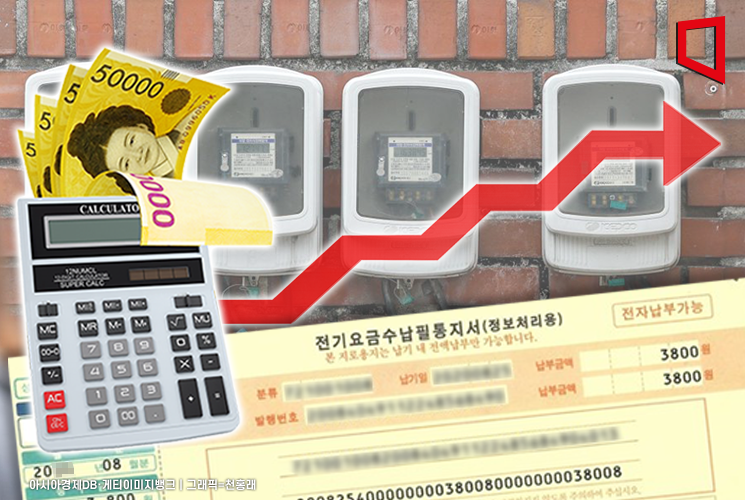
Regarding plans to respond to electricity rate increases, 76.8% reported 'no special measures,' followed by 'reducing non-core usage such as heating, cooling, and lighting' (12.9%). Additionally, 77.5% of respondent companies did not reflect the electricity rate increase in their delivery prices, and even among those who did, 82.4% incorporated less than 20% of the rate hike.
As for the impact of rising electricity rates on operating profits, 74.2% responded that profits decreased, and 8.9% said operating profits turned into losses. The biggest difficulty in reducing electricity costs was 'short-term sharp rise in industrial electricity rates compared to residential rates,' cited by 36.4%, followed by '24-hour operation unavoidable due to equipment characteristics' (27.2%) and 'unpredictable order patterns from clients' (21.9%).
The most helpful support policy was 'improvement of rates such as SME-exclusive tariffs,' chosen by 80.5%, followed by 'support for replacing old equipment with high-efficiency devices' (23.5%) and 'expansion of ESS (Energy Storage System) dissemination' (7.6%).
In particular, the most urgent areas for electricity rate improvement were 'seasonal rate adjustments' (45.3%), followed by 'time-of-use rate adjustments' and 'introduction of energy efficiency improvement incentives.'
Yang Chan-hoe, Head of the Innovation Growth Division at the Korea Federation of SMEs, stated, “Last year, industrial electricity rates surged so much that the relatively low-cost industrial selling price exceeded residential rates, but most SMEs have not properly reflected the rate increases in their delivery prices, worsening operating profits and increasing management burdens.” “It is urgent to establish an SME-exclusive tariff system that reflects seasonal and time-of-use rate adjustments to alleviate the electricity cost burden on SMEs, and to introduce a delivery price linkage system including energy costs such as electricity fees. Furthermore, in the mid to long term, support measures for SMEs’ energy structure transition should be prepared, such as expanding support for replacing equipment with high-efficiency devices to improve energy efficiency and increasing tax credits for investments in energy-saving facilities.”
© The Asia Business Daily(www.asiae.co.kr). All rights reserved.
![Clutching a Stolen Dior Bag, Saying "I Hate Being Poor but Real"... The Grotesque Con of a "Human Knockoff" [Slate]](https://cwcontent.asiae.co.kr/asiaresize/183/2026021902243444107_1771435474.jpg)















