Founded in 1992, the Drug Eradication Movement Headquarters
Leading Rehabilitation Support and Social Reintegration Efforts
Drug offenders are stigmatized as criminals or patients and are not welcomed in society. In reality, it is difficult to break free from the cycle of addiction during the process of reintegration into society, leading to high recidivism rates. To address these issues, the Korea Drug Prevention Movement Headquarters operates a program that trains ‘Recovery Supporters’ who assist drug addicts with treatment and rehabilitation.
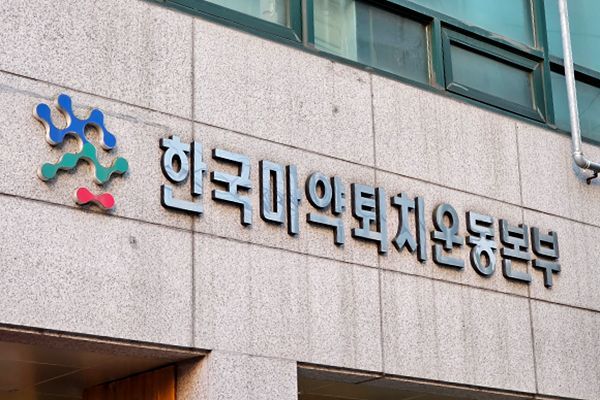
The Korea Drug Prevention Movement Headquarters was established in 1992 with the aim of creating a world free of drugs. Beyond simple preventive education, it actively supports the rehabilitation and social reintegration of drug addicts so they can return to a healthy life. Through drug eradication campaigns, educational programs, counseling for addicts, and tailored rehabilitation support, the headquarters helps many substance abusers find a new life. It is recognized as a partner that raises awareness of the dangers of drugs and offers hope to addicts.
Support Available Only to Those in Recovery for Over One Year
The Recovery Supporters trained by the headquarters are professionals who support people recovering from drug addiction and assist in their rehabilitation. However, not everyone can take on this role. Only individuals who have been in recovery from drug addiction for at least one year or family members of drug users are eligible to participate in the training.
In 2020, 12 people (10 addicts, 2 family members), in 2022, 8 people (6 addicts, 2 family members), and in 2023, 11 people (8 addicts, 3 family members) were selected as Recovery Supporters. This year, 13 people (10 addicts, 3 family members) are currently undergoing training.
To become a Recovery Supporter, candidates must complete step-by-step online and offline training. They attend lectures to enhance their basic understanding of drugs and addiction, followed by advanced training that addresses emotions experienced by addicts, such as cravings. Subsequently, they receive education on recovery, social reintegration, and communication methods with addicts and those in recovery. Through this process, Recovery Supporters acquire the expertise needed to provide professional assistance to addicts.
Motivating Others Based on Personal Experience
Not all trainees qualify. Only those selected according to internal appointment criteria can work as Recovery Supporters. Once certified, Recovery Supporters can serve as instructors for mandatory education aimed at preventing recidivism among drug offenders and for conditional suspended prosecution rehabilitation education. They build empathy with addicts through sharing their own recovery stories and offer hope to those despairing from relapse and drug use. Additionally, based on their personal experiences with drug addiction, they provide concrete modeling that helps addicts resist the temptation of drugs and strengthen their will to recover. This process is expected to be a significant motivator for addicts to commit to rehabilitation.
The Korea Drug Prevention Movement Headquarters has signed a Memorandum of Understanding (MOU) with the Ministry of Justice to conduct an information linkage project targeting drug offenders scheduled for release. As part of this project, released drug offenders can receive support at the ‘Hamkkehan Georeum Center,’ an addiction rehabilitation center. Recovery Supporters play a crucial role here by running group programs or conducting individual counseling. They provide continuous assistance to help addicts reestablish themselves healthily in society. One reason the Recovery Supporter program has recently gained particular attention is the participation of celebrity Seo Eun-woo (formerly Seo Min-jae). Seo, who was sentenced to 10 months in prison with a 2-year probation for methamphetamine use, expressed a strong desire to become a Recovery Supporter and offer hope to others suffering similar pain.
If Seo establishes herself as a Recovery Supporter, it will serve as a case demonstrating that the headquarters’ Recovery Supporter program goes beyond simple rehabilitation, creating a virtuous cycle where addicts are socially recognized and help others through their own experiences.
Woo Bin, Reporter for Legal Newspaper
※This article is based on content supplied by Law Times.
© The Asia Business Daily(www.asiae.co.kr). All rights reserved.
![Clutching a Stolen Dior Bag, Saying "I Hate Being Poor but Real"... The Grotesque Con of a "Human Knockoff" [Slate]](https://cwcontent.asiae.co.kr/asiaresize/183/2026021902243444107_1771435474.jpg)











