1st Trial "Concerns Over Religious Freedom Infringement... Violation of Equality Principle"
2nd Trial "Public Interest Achieved Through Worship Restrictions Is Significant"
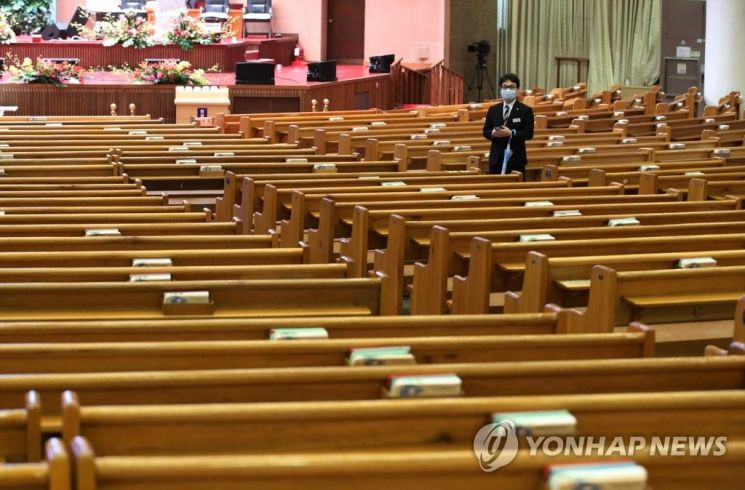
The second trial ruling upheld that Seoul City's order banning in-person worship services at churches as part of COVID-19 prevention measures was lawful. While the first trial had found that Seoul City's order infringed on the essence of religious freedom and violated the principles of proportionality and equality by abusing its discretion, the second trial reached a different conclusion.
According to the legal community on the 21st, the Seoul High Court Administrative Division 1-1 (Presiding Judges Shim Jun-bo, Kim Jong-ho, Lee Seung-han) recently overturned the first trial ruling that favored the plaintiffs in the appeal case filed by churches in the Seoul area against the city's order banning in-person worship services, ruling instead in favor of the defendant. The court stated, "Seoul City needed to actively implement all possible quarantine measures to prevent the spread of COVID-19," and "It is also difficult to deny that restricting face-to-face contact was the most effective measure that could be immediately implemented to suppress the spread of the virus."
Furthermore, the court noted, "In the urgent situation of an unprecedented novel infectious disease pandemic, where measures were taken under constraints such as limited available information and means and lack of response time, judging the presence of defects in the exercise of discretion by the same strict standards and criteria as in normal times risks causing an undesirable result of stifling flexible and proactive quarantine administration."
Additionally, the court stated, "The public interest pursued by the order banning in-person worship is not the protection of the legal interests of some individuals but the protection of the entire population from the threat of infectious diseases to life and bodily safety," and "Considering the high uncertainty and rapidly changing nature of the pandemic situation, religious freedom cannot be definitively regarded as more essential or more important than the public interest sought to be achieved through this measure."
© The Asia Business Daily(www.asiae.co.kr). All rights reserved.
![Clutching a Stolen Dior Bag, Saying "I Hate Being Poor but Real"... The Grotesque Con of a "Human Knockoff" [Slate]](https://cwcontent.asiae.co.kr/asiaresize/183/2026021902243444107_1771435474.jpg)
















