Financial Matters Under Superintendent's Jurisdiction... No Prior Consultation
Opposition from Education Offices Except Seoul and Daegu
Assembly Member Gominjeong: "Unilateral Administrative Case"
Concerns have been raised that the government's plan to utilize closed schools to prevent local extinction is being carried out without consultation with the relevant education offices. Some worry that closed schools, which are assets of the education offices, may be used as administrative facilities by local governments. Opposition from various local education offices is intensifying.
According to the office of Go Min-jung, a member of the Democratic Party of Korea, an investigation into whether meetings were held regarding the free transfer of closed school properties in population-declining areas to local governments found that 16 education offices nationwide (excluding Seoul) responded that they had "never held prior meetings with the Ministry of Education."
Earlier in July, the Ministry of the Interior and Safety, together with related ministries, announced the 'Expansion Plan for Regulatory Exceptions in Population-Declining Areas.' Among the measures related to the Ministry of Education, the government stated it would pursue a special exception to allow the free transfer of closed school properties in population-declining areas to local governments.
According to the Ministry of Education's survey, as of March, out of 367 unused closed schools nationwide, 243 are in population-declining areas, accounting for 66.2%. There are 3,955 closed schools nationwide, of which 2,609 have been sold, and 1,346 are being used as assets held by education offices. However, 367 schools, or 9.2% of all closed schools, remain unused. Some local governments have voiced that these should be utilized in various ways, such as local administrative facilities rather than educational facilities.
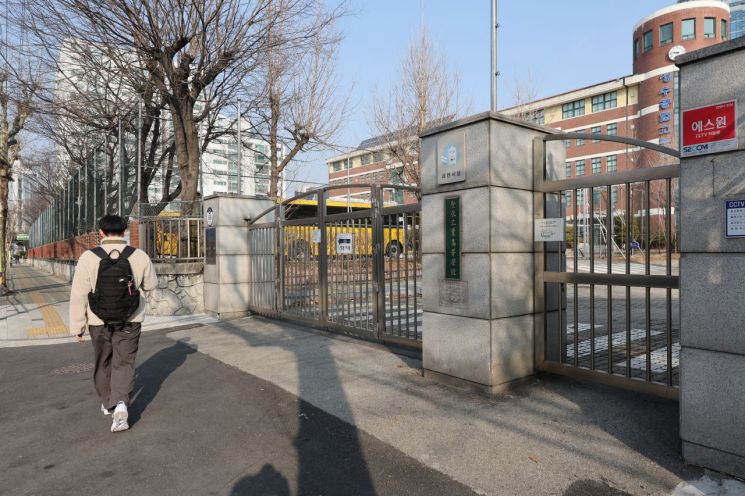
On the other hand, education offices are concerned that closed school properties will shift from local education finances to assets used by local governments. Currently, closed school properties are assets under local education finances managed by each provincial or metropolitan superintendent of education, as they pertain to public schools closed due to declining student numbers or school consolidations. In fact, when Go Min-jung’s office surveyed education offices nationwide about the special exception, excluding Seoul which has no population-declining areas, 16 education offices expressed opposition. Only Daegu Metropolitan Office of Education submitted 'no opinion.'
One local education office stated, "The 'Education Autonomy Act' was enacted to preserve the autonomy and expertise of education and the uniqueness of local education, and the affairs related to education and academic matters of provinces and cities (special accounts for education expenses) are delegated to superintendents of education as executing agencies," adding, "Promoting the free transfer of shared assets (unused closed school properties) under the special account for education expenses to local government heads under the general account contradicts the purpose of the Education Autonomy Act."
Assemblywoman Go said, "Cooperation from the education offices, which hold ownership of the closed schools, is absolutely necessary to utilize closed schools in population-declining areas, but the fact that not a single meeting has been held is a typical case of unilateral administration," and added, "It is necessary to actively consult with the education offices even at this stage."
© The Asia Business Daily(www.asiae.co.kr). All rights reserved.
![Clutching a Stolen Dior Bag, Saying "I Hate Being Poor but Real"... The Grotesque Con of a "Human Knockoff" [Slate]](https://cwcontent.asiae.co.kr/asiaresize/183/2026021902243444107_1771435474.jpg)















