[Current Status of Biofuels Seen from the US]④
Korea Mixes Biofuels Only in Diesel Sector
"Reducing Carbon Emissions for Public Health Benefits"
As part of carbon emission reduction efforts in major countries, the use of bioethanol blended with gasoline is increasing. In South Korea, the Renewable Fuel Standard (RFS) mandates a certain blending ratio only for diesel, but no such system has yet been established for gasoline.
If Korea introduces a gasoline blending system, it has been suggested that it would be better to import raw materials directly and produce ethanol domestically rather than importing ethanol itself. Ryan LeGrand, CEO of the U.S. Grains Council, said at a press conference with Korean media on the 5th (local time), "If ethanol is first imported and then blended, there is no need to build a plant to produce ethanol," adding, "Considering job creation and increased economic activity, importing corn and producing ethanol domestically is a better approach."
 Ryan LeGrand, CEO of the U.S. Grains Council, is holding a meeting with Korean reporters at the Washington D.C. office on the 5th.
 [Photo by U.S. Grains Council]
The U.S. Grains Council represents the U.S. ethanol industry and promotes the validity of ethanol blending policies in the U.S. and other major countries worldwide. Carrie Cyphers, Vice President of the same council, also said, "Korea is the second largest importer of dried distillers grains with solubles (DDGS), a byproduct of ethanol production, from the U.S., so there would be benefits to producing ethanol domestically."
South Korea imports a significant portion of its corn and ethanol. Corn is mainly imported from the U.S., Brazil, Ukraine, and Argentina. Ethanol is also largely imported from the U.S. and Brazil. DDGS is widely used as a raw material for animal feed.
The policy of blending bioethanol with gasoline has been adopted by more than 60 countries worldwide as part of carbon reduction efforts. The U.S. applies a 10% blending ratio, while European countries apply differentiated rates ranging from 5% to 10%. Brazil, where sugarcane is abundant, adopted the policy early and has currently increased the blending ratio to 27%. Thailand and India are reportedly considering raising their E10 blending to E20.
LeGrand CEO explained, "The Philippines maintained E10 for several years and recently switched to E20," adding, "Using ethanol in many countries reduces dependence on gasoline imports and decreases air pollution, which is also beneficial for the environment."
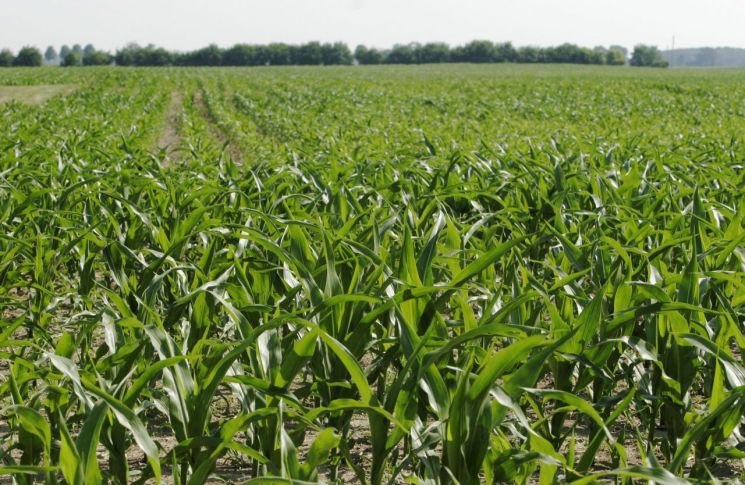
Recent increases in adoption are also attributed to research findings showing benefits not only for energy security but also for public health. According to research from the U.S. National Argonne Laboratory, ethanol reduces carbon emissions by about 44-46% compared to gasoline. Blending 10% ethanol with gasoline can reduce carbon emissions by approximately 4.5%. Additionally, ethanol replaces harmful substances such as aromatics used to increase gasoline octane ratings. The U.S. has regulated substances like MTBE (methyl tertiary-butyl ether) used for this purpose.
In the early stages of ethanol distribution, conflicts arose with the existing refining industry, but recently the relationship has shifted toward mutual cooperation. Refiners initially viewed ethanol as a substitute for gasoline that would take away market share, but with the increase in electric vehicle adoption, concerns have grown that gasoline demand itself may sharply decline in the long term.
Vice President Cyphers said, "The advantage of ethanol is that it can increase the ethanol blending ratio significantly without major changes to the existing E10 policy," adding, "At the same time, I believe that biofuels can continue to provide clean energy until technologies like hydrogen and electric vehicles reach a certain level, enabling us to achieve the 2050 decarbonization goals."
© The Asia Business Daily(www.asiae.co.kr). All rights reserved.
![Clutching a Stolen Dior Bag, Saying "I Hate Being Poor but Real"... The Grotesque Con of a "Human Knockoff" [Slate]](https://cwcontent.asiae.co.kr/asiaresize/183/2026021902243444107_1771435474.jpg)
















