Despite Global Popularity of K-pop, Domestic Venue Infrastructure Lacking
Stars Unable to Book Venues Give Up Performances One After Another
Jamsil Main Stadium Under Construction Until 2026
Sangam Stadium Denies Bookings Due to Turf Damage
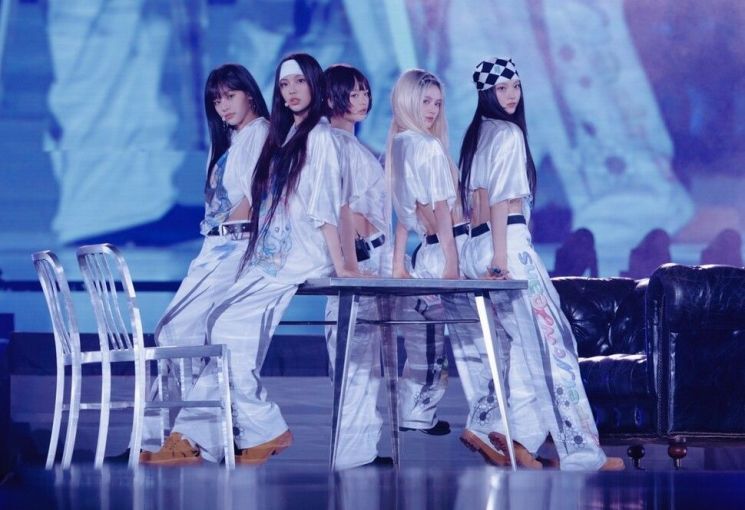 The group NewJeans performed their fan meeting stage "Bunnies Camp" at Tokyo Dome in Japan on June 26-27.
 [Photo by Adore]
4th generation girl groups NewJeans and IVE recently proved the hot K-pop fever by setting sold-out records at Tokyo Dome in Japan. IVE held the encore concerts of their first world tour, 'Show What I Have,' at Tokyo Dome on the 4th and 5th, attracting a total audience of about 95,800. NewJeans also held their first fan meeting in Japan, 'Bunnies Camp 2024 Tokyo Dome,' over two days on June 26-27, drawing about 91,200 attendees.
Why do fan meetings and concerts of representative K-pop groups start and end not in Seoul but in Tokyo? The background points to the lack of large-capacity venues. Although the whole world is paying attention to K-pop and both market size and demand are rapidly increasing, South Korea is unable to fully enjoy these achievements due to the absence of large-scale concert halls.
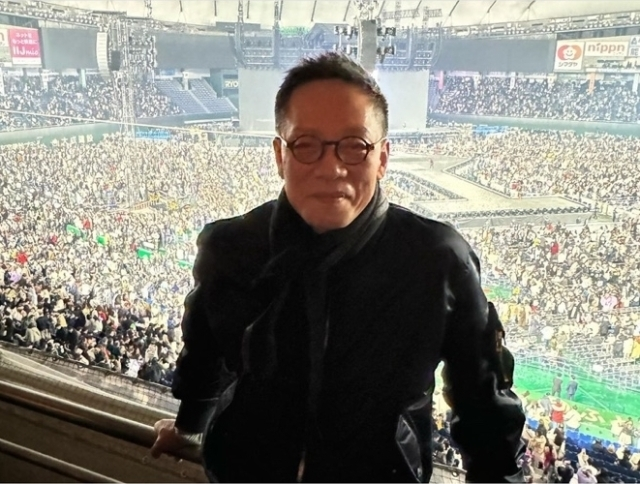 Jung Tae-young, Vice Chairman of Hyundai Card, expressed his regret on his SNS last February with a photo from Taylor Swift's Tokyo concert, saying, "We should have arranged it well to hear the phrase 'Hello Seoul,' but here I am hearing 'Hello Tokyo'."
 [Photo by Vice Chairman Jung Tae-young SNS]
Since the Jamsil Olympic Main Stadium began remodeling in August last year, the popular music industry has been suffering from a shortage of venues. The construction is scheduled to be completed in December 2026. In February, Chung Tae-young, Vice Chairman of Hyundai Card, posted on social media a photo of American pop star Taylor Swift’s concert in Tokyo along with the comment, “We should have secured her well enough to hear ‘Hello Seoul,’ but instead, I hear ‘Hello Tokyo’ here.” He added, “In the fierce competition for booking that even attracted the attention of governments worldwide, we couldn’t even bring up the topic because we don’t have a large concert hall.”
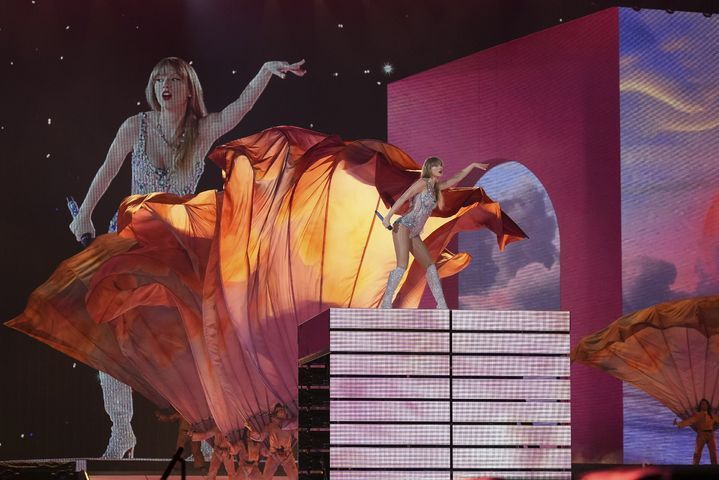
Due to the lack of venues, Swift’s four Tokyo Dome concerts attracted 220,000 spectators. According to local media such as The Japan Times, the economic effect generated by Swift’s four performances in Tokyo alone reached approximately 301.8 billion KRW. An entertainment industry insider said, “Even without foreign artists’ visits, Korea, the home of K-pop, has many stars like BTS, BLACKPINK, and SEVENTEEN, and could utilize large concerts and inbound tourism, but the current absence of large venues is a painfully harsh reality.” He continued, “To compensate, they wage battles to split up small venues for bookings or push ahead with overseas tours, but actual profits from performances are earned in the countries where the tours take place.”
Currently, the only venue in Seoul that can accommodate over 10,000 people is KSPO Dome (formerly Gymnastics Stadium) with 15,000 seats. Although the Seoul World Cup Stadium has a capacity of 66,000, it is used for professional soccer matches during the season, so installing concert facilities often leads to controversies over turf damage. Last August, a government-led K-pop concert to make up for the failed Saemangeum World Scout Jamboree sparked outrage among soccer fans.
Despite this, as the shortage of venues continues, Seoul City has conditionally allowed limited concert bookings to minimize turf damage. Consequently, SEVENTEEN and Lim Young-woong, both with massive fandoms, held concerts in April and May, drawing attention. Gocheok Sky Dome (25,000 seats) cannot be booked during the baseball season (April to October). Various performances have been held at Inspire Arena in Yeongjongdo, Incheon (15,000 seats), which opened in December last year, but the industry consensus is that there is still no alternative for large-scale artist concerts.
Recently, 2NE1, announcing their reunion with a 15th anniversary concert, will hold performances from October 4 to 6 at Olympic Hall in Seoul Olympic Park. The venue, with about 3,000 seats including standing room, saw overwhelming fan requests for additional shows. Originally scheduled for the 5th and 6th, the concert added the 4th and even opened restricted view seats, selling out all tickets. This happened because there was no place to accommodate audiences in the tens of thousands. A YG Entertainment official explained, “Usually, venue reservations are completed months in advance, and larger venues than Olympic Hall were already fully booked, making this an unavoidable choice.”
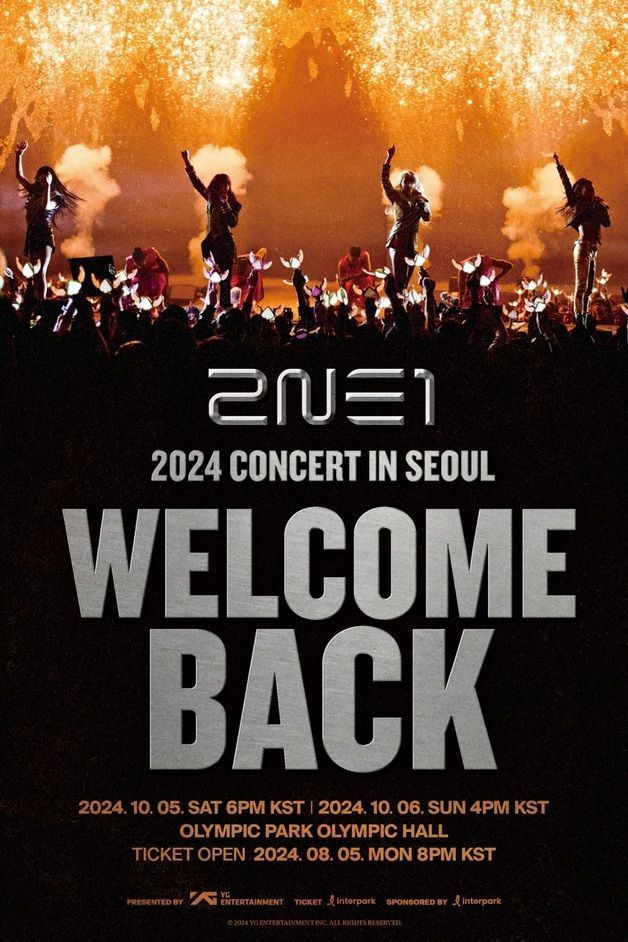 The 15th anniversary concert of 2NE1, originally scheduled for October 5-6, was extended to the 4th due to the limited venue size and continued ticket-picking frenzy, with restricted view seats also opened, resulting in a sold-out event amid intense enthusiasm.
 [Photo by YG Entertainment]
In response, K-pop agencies are devising self-help measures by holding three performances on Friday, Saturday, and Sunday or two shows a day at venues under 10,000 seats such as Jamsil Indoor Gymnasium, SK Olympic Handball Gymnasium, and Jangchung Gymnasium. However, if this situation continues without fundamentally solving the problem, competition for bookings will intensify, and eventually, only booking costs will soar, negatively impacting the entire concert industry.
The government and political circles recognize the problem but have yet to come up with a sharp solution. At a seminar titled ‘The Crisis of the Popular Music Performance Industry: Are There No Problems and Solutions?’ hosted by the Korea Popular Music Performance Industry Association at the National Assembly in January, Lee Sang-heon, then chairman of the National Assembly’s Culture, Sports and Tourism Committee, said, “K-pop dominates the global market, but the domestic performance infrastructure to enjoy it is insufficient. There is no large-scale concert hall dedicated to popular music in Korea, which does not match K-pop’s global status.” He pointed out, “Foreign artists frequently exclude Korea from their world tours, a phenomenon called ‘Seoul passing.’ It is also difficult to attract popular music-related events such as international award ceremonies to Korea.”
At the Ministry of Culture, Sports and Tourism’s audit in October last year, Ryu Ho-jeong, then a Justice Party lawmaker, pointed out, “Despite BTS selling over 1.33 million concert tickets in 2019 and ranking 5th worldwide in ticket power, there is not a single K-pop dedicated concert hall in Korea.” He added, “All bookings for the first half of the year are already finished, and due to the lack of venues, fierce competition leads to premium charges for bookings. The Ministry of Culture, Sports and Tourism should hasten to form a consultative body and establish long-term plans such as building additional concert halls for smooth booking operations.” Minister Yoo In-chon responded, “We will first inspect to quickly operate existing facilities.”
Popular music venues are generally classified by seating capacity into halls (around 5,000 seats), arenas (10,000 to 20,000 seats), super arenas (around 30,000 seats), domes (around 50,000 seats), and stadiums (over 70,000 people). Currently, KSPO Dome, where booking wars are raging, and Gocheok Dome, which is unavailable for bookings, are called ‘domes’ but are effectively ‘arena’-level venues. Unlike Korea, which suffers from a venue shortage, foreign countries have various concert halls.
In nearby Japan, there are about 40 venues nationwide at arena, dome, and stadium levels. In particular, Tokyo Dome, Sapporo Dome, Nagoya Dome, Oita Bank Dome, and Fukuoka Dome are considered the five major dome venues in Japan. Additionally, more than 20 stadiums are secured in Yokohama, Chiba, Saitama, and others, and there are 11 arenas classified as specialized music venues, which are highly preferred by K-pop idols, according to an entertainment industry insider.
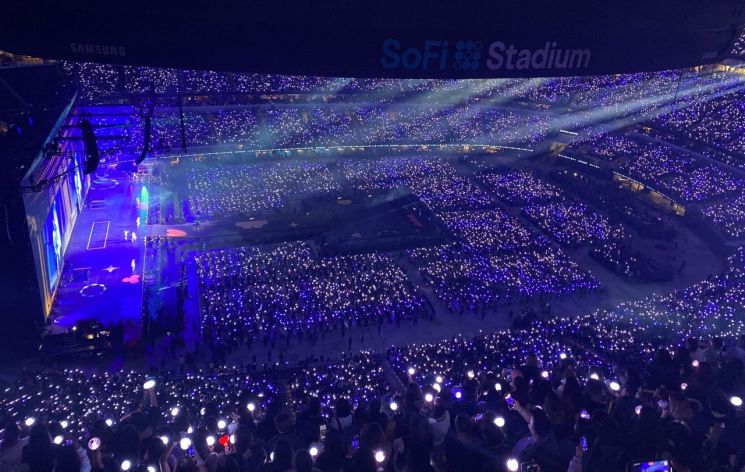
What about the United States? California alone has about 40 venues with a capacity of 10,000 seats. Including sports facilities such as soccer, basketball, and American football stadiums, unlike Korea, overseas actively utilize sports stadiums as popular music venues. The SoFi Stadium in Los Angeles, where BTS performed in 2021 and TWICE in 2023, is a 70,000-seat NFL stadium that is used as a concert venue when there are no football games.
Also, venues like Truist Park (40,000 capacity), where the Billboard Awards were held last year; Tottenham Hotspur’s home stadium (60,000), where Son Heung-min plays; LA Dodgers Stadium (56,000); Pasadena Rose Bowl Stadium (90,000); and Wembley Stadium (90,000) in the US and Europe are actively opened for concerts by utilizing sports stadiums.
As the venue shortage crisis deepens recently, the Korea Popular Music Performance Industry Association has launched a petition campaign to prepare ‘Seoul City Venue Shortage Measures’ and taken direct action. Lee Jong-hyup, chairman of the association, pointed out, “The lack of large venues leads to ‘Korea passing,’ where global tours of foreign artists exclude Korea, and the reduction of K-pop idols’ activities on Korean stages. This results in the loss of huge economic effects, and also causes various social problems such as soaring ticket prices due to booking wars and a surge in scalping caused by increased competition for tickets.”
Regarding solutions to these problems, Chairman Lee added, “An integrated consultative body (TF) involving the government, Seoul City, sports, and cultural sectors must be formed promptly, and public interest is needed to solve the venue shortage issue.”
© The Asia Business Daily(www.asiae.co.kr). All rights reserved.
![Clutching a Stolen Dior Bag, Saying "I Hate Being Poor but Real"... The Grotesque Con of a "Human Knockoff" [Slate]](https://cwcontent.asiae.co.kr/asiaresize/183/2026021902243444107_1771435474.jpg)


















