The International Atomic Energy Agency (IAEA) has determined that Japan's plan to manage soil and waste generated during the decontamination process following the 2011 Fukushima Daiichi Nuclear Power Plant (hereafter, Daiichi Nuclear Power Plant) accident meets safety standards.
On the 10th (local time), the IAEA stated in a report, "Japan's current plan to recycle or ultimately dispose of soil and waste resulting from contamination removal activities after the nuclear accident aligns with the IAEA's safety standards."
Rafael Grossi, Director General of the IAEA, explained, "The Japanese Ministry of the Environment has developed soil and waste management methods following our recommendations, and we are confident that the final disposal plan has been established in accordance with the IAEA's safety standards." He added, "We will conduct follow-up evaluations of the soil and waste management process and continue cooperation with the Japanese side."
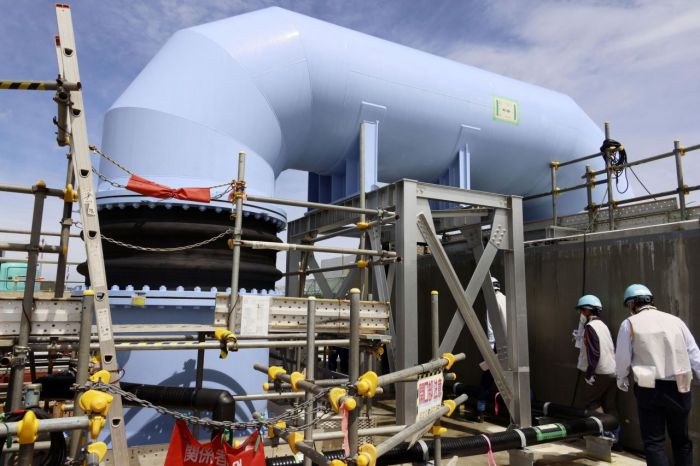
At the time of the Fukushima Daiichi Nuclear Power Plant accident, surrounding rice paddies, fields, and forests were contaminated with radioactive materials. Japan has been removing soil, processing it to eliminate contaminants, and storing it in temporary storage facilities. Ash generated from incinerating radioactive vegetation and other materials has also been sent to storage facilities. However, some soil and waste still contain radioactive substances.
Approximately 13 million cubic meters of decontaminated soil and 300,000 cubic meters of ash waste are stored in temporary storage facilities. Japan plans to recycle soil with low radiation levels, after safety verification, as civil engineering materials for road and railway construction. Decontaminated soil with high radiation levels will be transported outside Fukushima Prefecture for final disposal.
In response to Japan's request to evaluate this plan, the IAEA formed a team of six international experts from Belgium, Germany, the United Kingdom, and the United States starting in May last year to conduct verification. During the verification process, experts advised the Japanese side on areas needing improvement from technical and social perspectives, and the IAEA reported that the current report contains the results of this verification.
© The Asia Business Daily(www.asiae.co.kr). All rights reserved.
![Clutching a Stolen Dior Bag, Saying "I Hate Being Poor but Real"... The Grotesque Con of a "Human Knockoff" [Slate]](https://cwcontent.asiae.co.kr/asiaresize/183/2026021902243444107_1771435474.jpg)















