Jeju National University Hospital Lacks Beds and Specialists... Ultimately Transfers Patients
A high-risk pregnant woman in her 30s in Jeju was transferred by helicopter to a hospital in Incheon, located 400 km away, due to the lack of available beds and specialists.
According to the Jeju Fire Safety Headquarters on the 10th, a report was received at 1:28 p.m. the previous day from Jeju National University Hospital stating that "Ms. A, a woman in her 30s who is 25 weeks pregnant with twins, has a risk of premature labor and requires urgent transfer to another hospital."
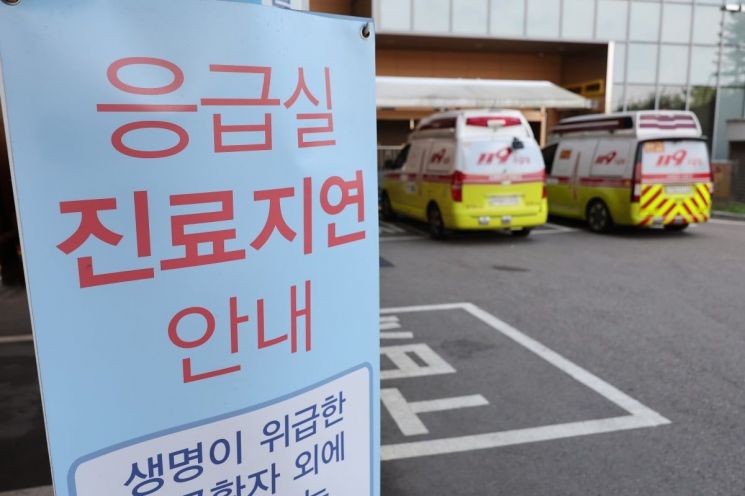
Jeju National University Hospital is the only facility in the province equipped with a neonatal intensive care unit. However, due to a collective strike by resident doctors, the usual two-person night shifts were reduced to one, resulting in a shortage of personnel. Consequently, the hospital was unable to admit Ms. A and arranged for her transfer.
Upon receiving the report, the Central 119 Rescue Headquarters dispatched a fire helicopter, transporting Ms. A and medical staff to the Chungnam region. Subsequently, a waiting 119 ambulance team transferred them again to a university hospital in Incheon. Ms. A, classified as a high-risk mother at 25 weeks of pregnancy, was able to receive treatment after traveling approximately 440 km in a straight line.
The Central 119 Rescue Headquarters first airlifted Ms. A and her guardian to the Chungnam region, after which the waiting 119 ambulance team transferred her again to a university hospital in Incheon.
Meanwhile, a survey revealed that 50.7% of hospitals experienced a decline in emergency room (emergency medical center) operation rates compared to before the collective resignation of resident doctors in February. However, 94% of emergency rooms nationwide continued to operate daily despite the medical staffing gaps. This survey on emergency room operation status was conducted by the National Health and Medical Industry Labor Union on the 10th, targeting 65 medical institutions. The respondents included 7 national university hospitals, 23 private university hospitals, 14 regional medical centers, 10 special-purpose public hospitals, 7 private small and medium-sized hospitals, and 4 others.
© The Asia Business Daily(www.asiae.co.kr). All rights reserved.
![Clutching a Stolen Dior Bag, Saying "I Hate Being Poor but Real"... The Grotesque Con of a "Human Knockoff" [Slate]](https://cwcontent.asiae.co.kr/asiaresize/183/2026021902243444107_1771435474.jpg)















