Financial Policy and Financial Supervision Separation Direction Pushed
Opposition Parties Say "TimeF, Financial Authorities Made Things Worse"
Passage Uncertain Due to Differences... 'Responsibility Debate' Also Analyzed
The call for the abolition of the Financial Services Commission (FSC) has resurfaced. This time, the opposition party is pushing for a bill to completely redesign the current financial supervisory system to prevent a second TMON-WEMAKEPRICE (Timep) incident. Although it is uncertain whether consensus can be reached due to significant differences in opinions among experts and stakeholders, there is speculation that the long-stalled discussions may gain momentum following the Timep incident.
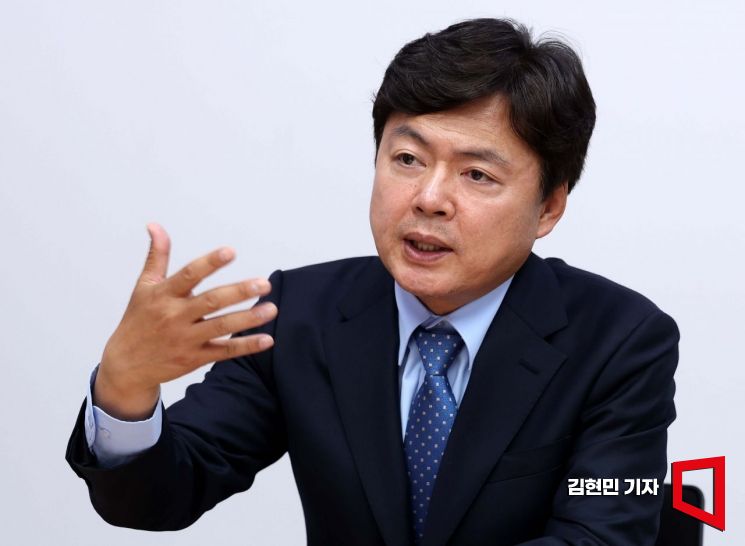
According to the National Assembly on the 9th, Kim Hyun-jung, a member of the National Assembly's Political Affairs Committee, has introduced a bill titled “The Act on the Establishment of the Financial Services Commission, etc. (Complete Revision).” At a press conference held on the 6th, she stated, “The bill is proposed to separate financial industry policy and financial supervision policy to secure the independence and efficiency of financial supervision policy and to strengthen the responsibility of financial supervisory agencies.” Currently, the FSC oversees both financial policy and supervision, while the Financial Supervisory Service (FSS) executes supervisory duties entrusted by the FSC.
The bill proposes returning to the pre-FSC structure, where the Ministry of Strategy and Finance (formerly the Ministry of Finance and Economy) handles financial policy, and the Financial Supervisory Commission and the Financial Supervisory Service are responsible for financial supervision. The bill also includes a provision for one person to concurrently serve as chairman of both the Financial Supervisory Commission and the Financial Supervisory Service, as was the case previously. A key difference from the past is the separation of consumer protection from financial supervision. The bill suggests dividing the financial supervision sector into the Financial Supervisory Commission and the Financial Consumer Protection Commission, transitioning to a dual-peak system. By establishing the Financial Consumer Protection Commission and placing the Financial Consumer Protection Agency under it, consumer protection would be separated from financial supervision and thereby strengthened.
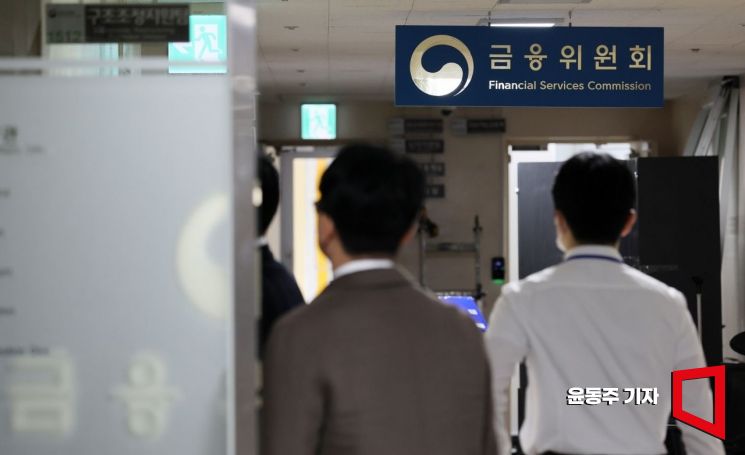
The reason the so-called “abolition of the FSC” is being discussed in the National Assembly is due to a decline in trust in the current financial supervisory system. At the press conference, Chang-min Han, a member of the Social Democratic Party, said, “The Timep companies’ insolvency was pointed out early on. The Timep incident was worsened by the financial authorities,” adding, “A complete redesign is inevitable to overcome the limitations of the current financial supervisory system.” He also stated, “It is necessary to separate the FSC’s financial industry policy and financial supervision functions and to expand their respective accountability and independence.”
Kim also pointed out that financial accidents are repeated due to the current supervisory system. He said, “From the KIKO incident, savings bank crisis, Dongyang Group incident, private equity fund incident, to the Timep incident, large-scale damages have recurred,” and added, “This stems from the current system being designed in a way that forces neglect of financial consumers in order to foster the financial industry.” He further noted, “Among various bills to prevent a second Timep incident, one is the reform of the financial supervisory system.”
The reform of the financial supervisory system has been a continuous topic of discussion, and related bills were also introduced in the 21st National Assembly. Those bills emphasized the need to separate financial policy functions from financial supervision functions but were discarded due to the expiration of the Assembly’s term.
Since experts and stakeholders have differing opinions on the reform of the financial supervisory system, the likelihood of this bill passing is uncertain. Professor Bin Ki-beom of Myongji University, a financial expert, said, “It is appropriate for the FSC to focus on financial supervision policy rather than financial industry policy,” adding, “Many of the activities the FSC explained as financial supervision were actually aimed at fostering the financial industry.”
However, the FSC maintains that separating financial policy and supervision is practically difficult. The FSC conveyed to the 21st National Assembly that “the separation of policy and supervision is conceptually and practically impossible,” and “if financial policy and supervision are artificially and arbitrarily separated, there is a risk of weakening accountability in financial administration due to responsibility evasion between the Ministry of Strategy and Finance and the Financial Supervisory Service.” There are also concerns that changing the system, which has been settled for 16 years since the integration of financial policy and supervision under the Lee Myung-bak administration in 2008, could cause confusion similar to that experienced at the time.
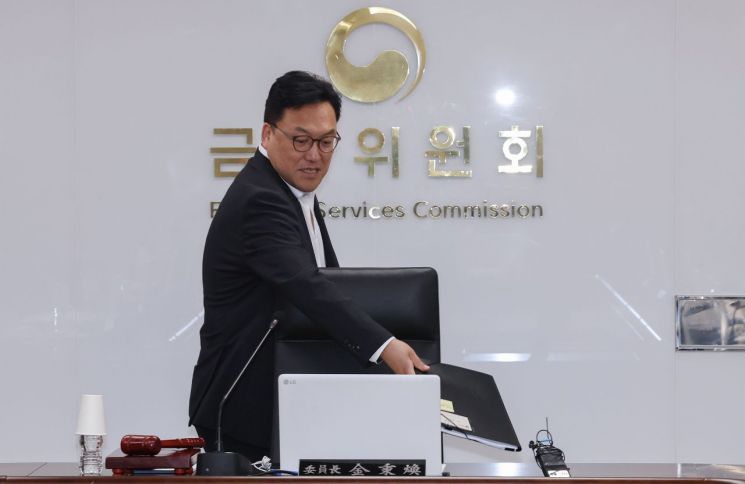
Some analysts interpret the calls to reform the financial supervisory system as part of the “FSC responsibility theory.” A former senior official of the FSC evaluated, “Although the FSC is a committee organization, it has had a significant role in handling Ministry of Strategy and Finance policies such as household debt,” and added, “It is a structure that makes it difficult to act as a control tower to make decisions and push forward.”
Professor Seo Ji-yong of Sangmyung University also diagnosed, “The discussion about separating functions seems to arise because the FSC is not fulfilling its role,” adding, “The FSC holds strong power and oversees many policies at a monopoly or oligopoly level, but its policies are inflexible and cooperation with institutions like the Financial Supervisory Service or the Bank of Korea does not appear smooth. The biggest problem is disharmony among internal departments.”
© The Asia Business Daily(www.asiae.co.kr). All rights reserved.



















