4000 Medical Institutions Designated for Treatment from the 14th to 18th
Ministry of Health and Welfare: "The Same Official Letter Every Holiday...Routine Measure"
To prevent a surge of patients at large hospitals during the Chuseok holiday period, the government has decided to operate 4,000 on-duty medical institutions, causing local clinics and hospitals to feel tense, fearing that holiday hospital treatments might be forcibly imposed. The Ministry of Health and Welfare stated that this is a "routine measure taken every holiday" and that there is no major issue.
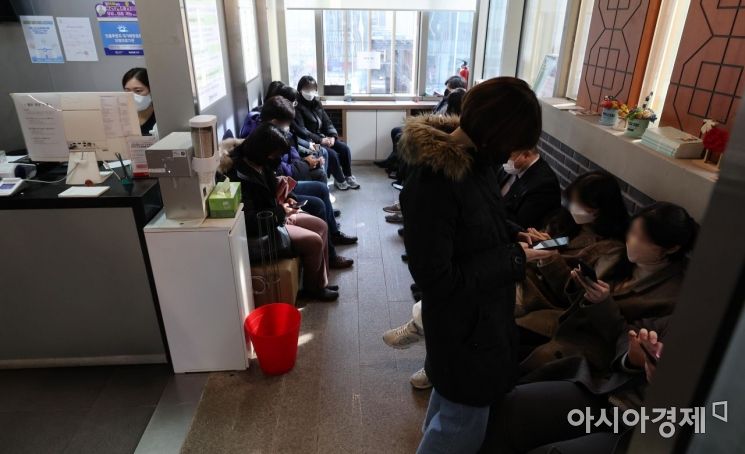
According to the Ministry of Health and Welfare on the 4th, the government designated the period from the 11th to the 25th of this month as the "Chuseok Holiday Emergency Response Week" and decided to increase the number of on-duty medical institutions to more than 4,000 during the holidays from the 14th to the 18th by forcibly designating them if necessary to prevent medical service gaps. This is about 400 more than the 3,600 hospitals and clinics that were open during this year's Lunar New Year holiday.
The Ministry explained that "the designation of on-duty medical institutions is a measure that has been taken every holiday." Basically, local governments designate and operate these institutions based on voluntary applications from medical institutions. Jeong Tongryeong, Director of Public Health Policy at the Ministry of Health and Welfare, said, "Usually, each local government head discusses with local medical associations and designates institutions based on applications, but this Chuseok holiday, the plan is to increase the number. Seoul has already designated about 1,800 institutions."
If there are not enough clinics and hospitals applying for on-duty service, forced designation may be made considering various circumstances, but the Ministry's position is that this is done flexibly. According to the current Emergency Medical Service Act, the Minister of Health and Welfare, governors, or mayors, county heads, or district heads can designate on-duty medical institutions on holidays, nights, or when there is a recognized risk of hindering emergency patient treatment. However, institutions found to be non-compliant may face administrative sanctions equivalent to a 15-day suspension of operations.
Song Youngjo, Director of the Emergency Medical Service Division at the Ministry of Health and Welfare, explained, "There are no specific details about forcibly designating particular departments or regional medical institutions. However, it is not done unconditionally without considering special circumstances."
The standard of "being open" does not necessarily mean maintaining the usual treatment capacity. Director Song added, "It is sufficient if treatment is possible when patients visit. It does not mean maintaining the same staffing as usual."
However, in the medical community, there are complaints that if designated as a forced on-duty clinic or hospital, it is not simple to have even non-doctor hospital staff come to work to maintain normal treatment.
Chae Dongyoung, Public Relations Director of the Korean Medical Association, said, "At least three people, including a doctor, nurse, and nursing assistant, must be present for treatment to be possible. In forcibly designated clinics, labor laws are ignored, and staff must be forced to work on holidays. If nursing assistants refuse to come, doctors do not have the authority to force attendance, and there are no support measures for staff wages when the clinic is open," he pointed out.
A representative of the Korean Nursing Assistant Association said, "Those working in medical fields will face many difficulties, such as canceling personal holiday plans if their clinic is forcibly designated as an on-duty medical institution. Although it is a social responsibility, there is a sense of problem regarding being forced to work outside normal hours."
The government maintains that since this has been a routine practice every holiday, it cannot accept excessive opposition from the medical community. Director Song said, "The same official letters have been sent every holiday, and there has been no opposition so far. Pharmacies have always taken on more holiday duty than clinics and hospitals, and this year, the schedule is being well coordinated without opposition," he explained.
© The Asia Business Daily(www.asiae.co.kr). All rights reserved.
![Clutching a Stolen Dior Bag, Saying "I Hate Being Poor but Real"... The Grotesque Con of a "Human Knockoff" [Slate]](https://cwcontent.asiae.co.kr/asiaresize/183/2026021902243444107_1771435474.jpg)
















