Main Focus on Punishment and Prevention
Legislation and Judiciary Committee's Current Issues Inquiry on the 4th
As cases of crimes involving deepfake (AI-based image synthesis technology) continue to surge, the National Assembly is flooding with related bills.
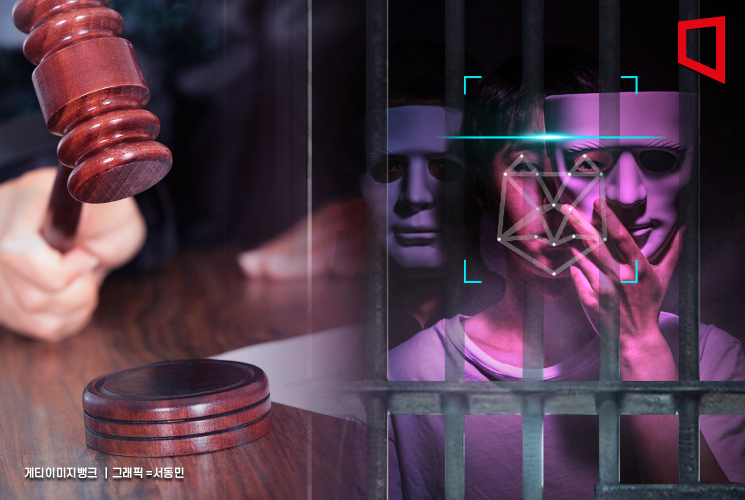
According to the National Assembly Legislative Information System on the 4th, a total of 28 bills related to deepfake were proposed in the week from the 27th of last month, when the Telegram deepfake incident became known, to this day. In particular, 18 bills were proposed regarding the ‘Special Act on the Punishment of Sexual Violence Crimes’ related to deepfake sexual crimes.
The bills mainly focus on punishment and prevention. The ‘Comprehensive Deepfake Prevention and Punishment Act (Partial Amendment to the Criminal Act)’ proposed on the 2nd by Go Dong-jin, a member of the People Power Party and former president of Samsung Electronics, contains punishment standards for deepfake crimes abusing artificial intelligence (AI) technology. Currently, the ‘Special Act on the Punishment of Sexual Violence Crimes’ only allows punishment if the purpose is distribution.
The bill allows punishment for those who produce (sell, distribute, use) deepfake content against the will of the subject, even if not for distribution purposes, or those who possess, purchase, or watch such content and damage the subject’s reputation. It also includes provisions to newly regulate and punish deepfake content involving not only sexual crime videos but also voices and photos. Violators of the law may face up to five years of imprisonment or a fine of up to 50 million won.
Kim Han-gyu, the opposition party secretary of the National Assembly’s Gender Equality and Family Committee from the Democratic Party, and his party colleague Han Jeong-ae also each proposed an amendment to the Sexual Violence Punishment Act (Partial Amendment to the Special Act on the Punishment of Sexual Violence Crimes) that punishes not only those who distribute deepfake sexual crime videos but also those who watch them.
The amendment to the Information and Communications Network Act proposed by Kim Jang-gyeom of the People Power Party on the 1st focuses on preventing deepfake-related crimes. It mandates online platform operators to label AI-generated content. As sexual crimes caused by illegal AI-generated content have recently emerged as a social problem, the bill assigns roles and responsibilities to portals and platforms to prevent this. According to the bill, portal and platform operators above a certain scale must provide a virtual information labeling function using AI technology, and failure to comply will result in a fine of up to 10 million won.
Meanwhile, the Gender Equality and Family Committee plans to hold an emergency inquiry on the current status of responses to deepfake sexual crimes on the same day. The Korea Communications Standards Commission decided on a total of 7,187 correction requests for sexually false videos last year. As of the end of July this year, it has requested corrections for a total of 6,434 cases, about 90% of the previous year.
© The Asia Business Daily(www.asiae.co.kr). All rights reserved.
![Clutching a Stolen Dior Bag, Saying "I Hate Being Poor but Real"... The Grotesque Con of a "Human Knockoff" [Slate]](https://cwcontent.asiae.co.kr/asiaresize/183/2026021902243444107_1771435474.jpg)











