Overwhelming Market Share and Sales Gap in Q2 This Year
Challenges Remain in IP Holdings and Front-End Processes
Samsung to Hold Forum in Munich, Germany in October
Samsung Electronics has struggled to narrow the market share gap with Taiwan's TSMC, the world’s number one foundry (semiconductor contract manufacturing) company. With Intel considering selling its foundry business, voices are emerging that Samsung needs to devise self-help measures to create a favorable position.
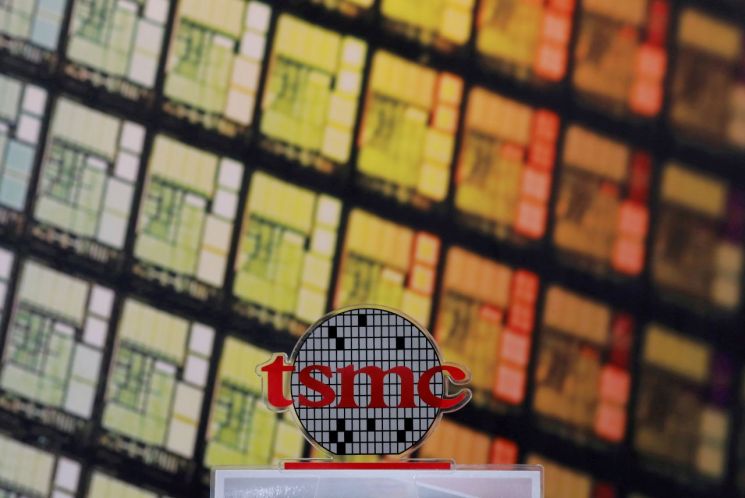
According to Taiwan market research firm TrendForce's "Global Top 10 Foundry Companies Q2 Business Status" report on the 3rd, TSMC's market share rose by 0.6 percentage points from 61.7% in Q1 to 62.3%. Its revenue also increased by 10.5% during the same period to $20.819 billion (approximately 27.887 trillion KRW). Samsung Electronics' market share increased by 0.5 percentage points from 11.0% to 11.5%, with revenue of $3.833 billion (approximately 5.134 trillion KRW). Although the semiconductor market has revived this year, the gap between the first and second place widened slightly from 50.7% to 50.8%.
Since Samsung began seriously expanding its foundry business in 2021, it has neither surpassed nor come close to TSMC’s dominance over the past three years. Samsung closely trailed TSMC in Q4 2021 but failed to maintain the momentum. TSMC reached a record high market share of 61% in Q1 last year and has been on an upward trend since Q4, distancing itself from Samsung’s pursuit.
Samsung Electronics Foundry Faces 'Triple Hardships'
Experts and foreign media identify three major issues Samsung Electronics faces in the foundry sector. Among these, the amount of Intellectual Property (IP) held has been the longest-standing concern. IP serves as the framework and foundation used by foundry companies to manufacture semiconductors upon order. Industry estimates indicate that TSMC currently holds 73,000 IPs, while Samsung holds 5,300. Samsung is making efforts to secure more IP by expanding its customer base from large corporations to small and medium-sized enterprises and strengthening cooperation with customers through the SAFE (Samsung Advanced Foundry Ecosystem) system. However, it is expected to take time before concrete results are achieved.
Lagging behind in advanced process technology competition is also cited as a factor making it difficult for Samsung to catch up with TSMC. Samsung introduced the world’s first Gate-All-Around (GAA) based 3nm process in July 2022, but its yield was only 20%, lower than TSMC’s 60%, failing to attract customers. Samsung plans to change the atmosphere by expanding yields with the second-generation 3nm process starting in the second half of this year and accelerate the development of the 2nm process to enable mass production next year. Additionally, unlike TSMC, which focuses solely on foundry, Samsung Electronics operates multiple semiconductor-related businesses, raising concerns among potential customers about possible leakage of semiconductor design technology and blueprints. Some also point to a recent decline in development enthusiasm and lax work attitudes within the company as problems.
Samsung Heads to Germany, TSMC to the U.S.
Intel has emerged as a variable in Samsung’s pursuit. Intel is expected to undergo restructuring due to severe financial difficulties. Specific plans are expected to be announced around mid-month, with speculation that Intel may downsize or sell its foundry business and related entities. This raises the possibility of Intel withdrawing from the foundry market.
There is a high likelihood of fierce competition between TSMC, Samsung Electronics, and others for the windfall benefits. Market share could fluctuate depending on who captures Intel’s customers. For now, TSMC is moving faster. On the 20th of last month, it broke ground on a semiconductor wafer manufacturing plant in Dresden, Germany. This will be TSMC’s first production plant in Europe and is expected to serve as a foothold for its European expansion. Europe has been Intel’s stronghold in foundry, with subsidies supporting the construction of R&D centers and semiconductor plants in France, Spain, Italy, and other countries. TSMC’s entry into the European market likely reflects a strategy to absorb Intel’s infrastructure.
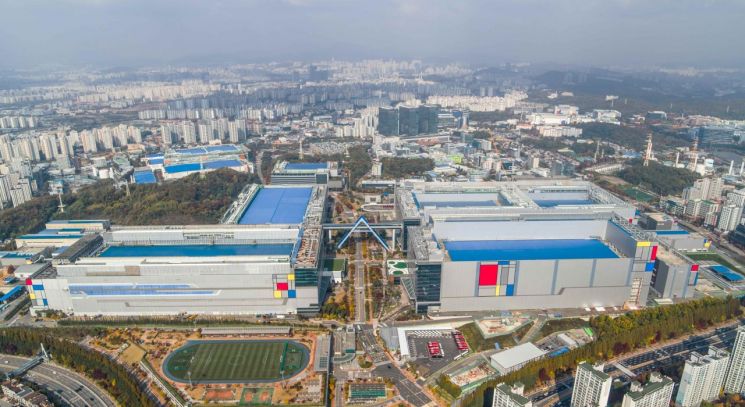
Samsung Electronics will hold a foundry forum next month in Munich, Germany. Munich is home to famous German automobile companies such as Mercedes-Benz, BMW, and Audi. Samsung has regularly held foundry forums there annually. Although the schedule for this year is not yet finalized, it is likely to be held next month. Samsung expects to expand cooperation with German automobile companies in developing and producing automotive semiconductors.
TSMC will hold its "Open Innovation Platform Ecosystem" forums starting on the 25th in Santa Clara, California, followed by Tokyo, Japan next month, then Hsinchu, Taiwan in November, Beijing, China, and Amsterdam, Netherlands. These events showcase the foundry ecosystem TSMC has built through collaboration with IP companies and others.
© The Asia Business Daily(www.asiae.co.kr). All rights reserved.


















