2019 Seoul Philharmonic Orchestra Musician of the Year Activities
Regular Concerts on 5th-6th and Chamber Music Concert on 7th
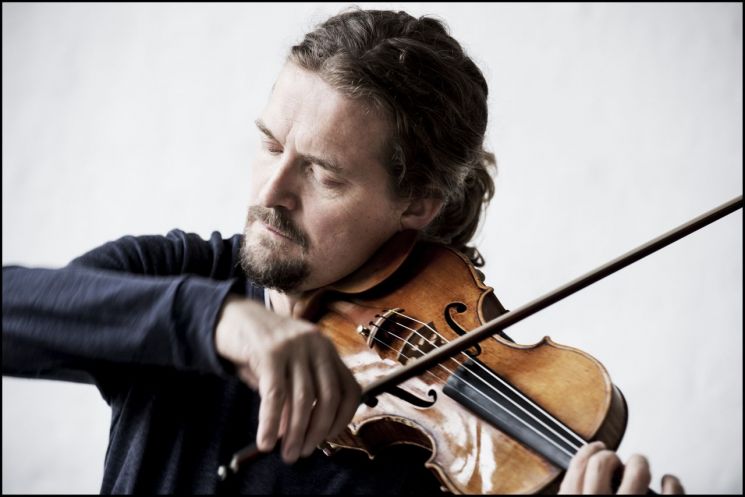
German violinist Christian Tetzlaff, who was named Musician of the Year by the Seoul Philharmonic Orchestra (SPO) in 2019, will collaborate with the SPO again after five years.
Tetzlaff is a violinist renowned for his outstanding interpretation of Brahms' works. He will perform Brahms' pieces consecutively at the SPO's regular concerts on the 5th and 6th, and at a chamber music concert on the 7th. The regular concerts on the 5th and 6th will be held at the Seoul Arts Center Concert Hall and Lotte Concert Hall, respectively, while the chamber music concert on the 7th is scheduled at the Sejong Center Chamber Hall.
Tetzlaff has served as a resident musician with the Berlin Philharmonic, Dresden Philharmonic, Wigmore Hall, and London Symphony Orchestra. He is a world-renowned violinist who has received the Diapason d'Or in 2018, the MIDEM Classical Award in 2017, and the German Record Critics' Award in 2015. In 1994, he founded the string quartet 'Tetzlaff Quartet,' showing great interest in chamber music performance.
During the two-day regular concerts, the SPO will open with "Winter Sky" by Finnish composer Kaija Saariaho. This piece is an arrangement of the second movement of Saariaho's "Orion," which premiered in 2002, as an independent work, based on the ancient Greek myth of Orion. It begins with a shimmering yet sharp piccolo tone, and in this multilayered polyphonic piece, the clear melodies and diverse timbres of the solo instruments are impressive.
Following this, Tetzlaff will perform Brahms' Violin Concerto. This masterpiece, composed during Brahms' prime, is his only violin concerto. It is a work filled with passionate, beautiful, and warm romantic sentiments, showcasing the mature Brahms.
The second half of the concert features Shostakovich's Symphony No. 15. Among Shostakovich's 15 symphonies, this is the most popularly successful work and his final symphony. Completed in the summer of 1971, it premiered the following year in Moscow under the baton of Shostakovich's son, Maxim. This classical work consists of four movements, with the middle two played without interruption, and is filled with Shostakovich's contemplative and cozy lyrical melodies. Thanks to Shostakovich's innovative approach of extensively quoting his early works as well as 19th-century opera composers Rossini and Wagner, it is regarded as a groundbreaking piece.
The first movement features brass melodies quoting Rossini's "William Tell" overture, and the second movement continues with a funeral march-like performance infused with Shostakovich's distinctive tone color. The final movement extensively uses fragments from Glinka's songs and Wagner's operas "G?tterd?mmerung" and "Tristan und Isolde." The opera melodies and the passacaglia theme reminiscent of Shostakovich's Symphony No. 7 lead to a powerful climax, ending quietly yet uneasily with the intrusion of dissonance.
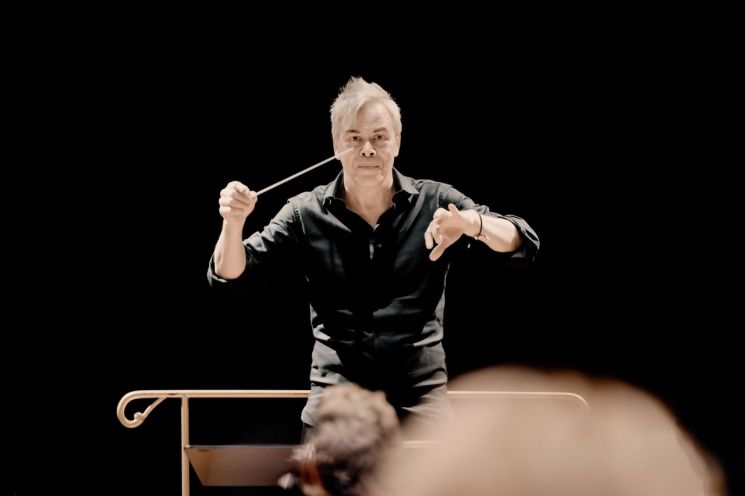
The conductor is Hannu Lintu, chief conductor of the Finnish National Opera and Ballet and music director of the Gulbenkian Orchestra in Portugal. Lintu left a deep impression on audiences when he performed Shostakovich's Symphony No. 1 with the SPO in 2017.
At the chamber music concert on the 7th, Mozart's String Quintet No. 4 and Brahms' String Sextet No. 2 will be performed. Mozart's String Quintet No. 4 is scored for a string quartet plus an additional viola and consists of four movements. It is said to express Mozart's feelings toward his father Leopold Mozart, who passed away around the time this piece was completed.
Brahms' String Sextet No. 2 is a work filled with memories of an old love and the pain of parting. Brahms left two string sextets, each scored for two violins, two violas, and two cellos, where the instruments support and pair with each other. While the first string sextet, known as "Brahms' Tears," features melancholic melodies, this piece is nicknamed the "Agathe Sextet." Brahms passionately loved Agathe von Siebold, a soprano and daughter of a university professor he met in G?ttingen, and was even engaged to her, but they ultimately did not marry.
© The Asia Business Daily(www.asiae.co.kr). All rights reserved.
![Clutching a Stolen Dior Bag, Saying "I Hate Being Poor but Real"... The Grotesque Con of a "Human Knockoff" [Slate]](https://cwcontent.asiae.co.kr/asiaresize/183/2026021902243444107_1771435474.jpg)
















