Carving Old Signboards to Create New Ones
Considering Aging Factors Such as Dancheong Fading, Peeling, and Flaking
A new signboard will be hung in the Heungbokjeon area of Gyeongbokgung Palace. On the 2nd, according to the Cultural Heritage Administration, the Palace and Royal Tombs Cultural Heritage Subcommittee under the Cultural Heritage Committee recently discussed the agenda to produce and install four signboards in the Heungbokjeon area.
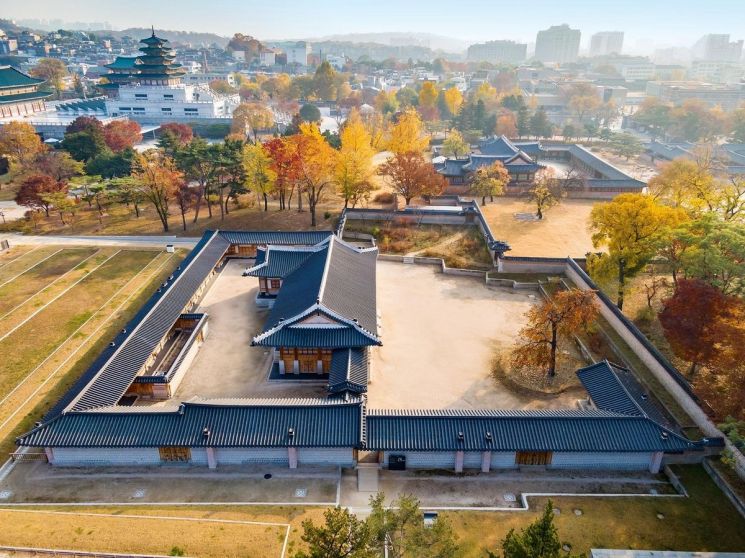
Heungbokjeon, which was dismantled during the Japanese colonial period, was restored in 2018 along with Donghaenggak, Seohaenggak, and Bukhaenggak, but the dancheong (traditional Korean decorative coloring on wooden buildings) has not yet been completed. The Cultural Heritage Administration’s Headquarters for Palaces and Royal Tombs originally planned to preserve and reuse four of the nine signboards in good condition stored at the National Palace Museum of Korea while performing the dancheong work.
However, considering the condition of the artifacts, the policy was changed to create new signboards by tracing (mogak, 模刻: copying an existing carved work by sight) the old signboards. They were concerned that, like the signboards in the Taewonjeon area restored at the end of 2005, the dancheong could fade and deterioration such as peeling and flaking could rapidly progress.
Accordingly, four signboards?'Gwangsunmun (光順門)', 'Taejidang (泰祉堂)', 'Jeokgyeongmun (積慶門)', and 'Okhwamun (玉華門)'?estimated to have been made in 1868, will be newly created by copying the originals. The dancheong restoration design service for the Heungbokjeon area is expected to be completed within this year, and construction will begin next year, proceeding together with the installation.
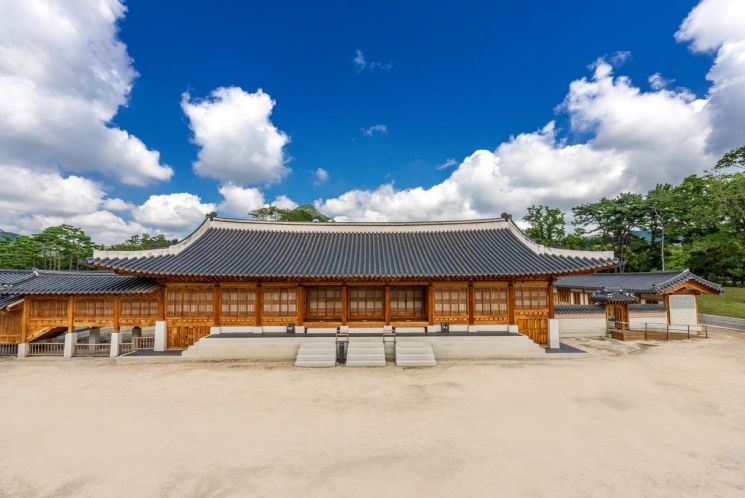
Heungbokjeon was a pavilion where the king met foreign envoys. It was built between Gyotaejeon and Hamhwadang when Gyeongbokgung Palace was rebuilt during King Gojong’s reign. Records show that foreign envoys from Germany, Japan, Italy, and France were received during King Gojong’s era. It is also known as the place where Queen Sinjeong Jo, the mother of King Heonjong and the adoptive mother of Heungseon Daewongun’s son who ascended the throne, passed away in 1890.
© The Asia Business Daily(www.asiae.co.kr). All rights reserved.


















