"57% of Rural Areas in the US Lack Obstetrics and Gynecology Clinics"
20 Minutes to Delivery Rooms in Cities, Over 40 Minutes in Rural Areas
Shortage of OB-GYN Doctors and High Maintenance Costs Impact Availability
As the number of obstetrics and gynecology hospitals in South Korea is insufficient, leading to an increase in 'birth tourism' to other regions, it has been revealed that in the United States, too, it is difficult to find obstetrics and gynecology hospitals in non-urban areas, causing pregnant women to endure hardships such as long-distance ambulance rides during delivery.
Bloomberg News cited a recent report from the Center for Healthcare Quality and Payment Reform (CHQPR), stating that 57% of rural areas in the U.S. lack obstetrics and gynecology wards, which could affect childbirth.
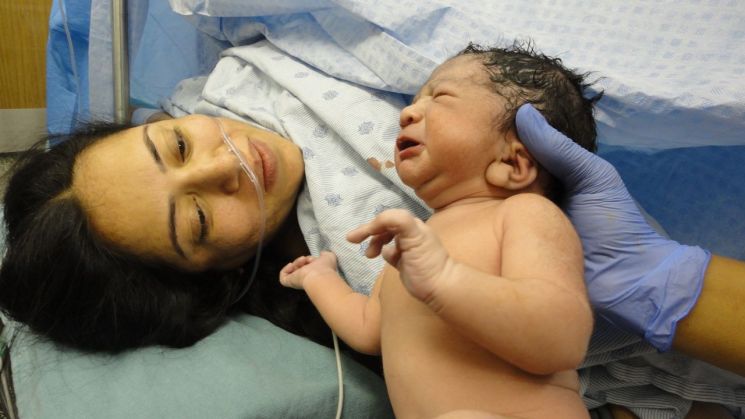
It was reported that from January to May this year, 19 hospitals in the U.S. decided to stop accepting delivery patients. The number of hospitals that ceased deliveries last year was 29. Obstetrics and gynecology hospitals in suburban areas of Cincinnati, Milwaukee, and San Diego have closed, forcing women in these areas to travel 30 minutes by car to reach a hospital.
As obstetrics and gynecology hospitals decrease in rural areas, pregnant women in urban areas can reach a hospital within 20 minutes if necessary, but in rural areas, pregnant women must travel to hospitals more than 40 minutes away for delivery, Bloomberg reported. According to a study, when pregnant women have to travel more than 30 minutes by car to reach an obstetrics and gynecology hospital, the rate of prenatal checkups decreases, the rate of cesarean sections increases, and there is a higher likelihood of giving birth en route to the hospital.
Endidi Amaka Onuka, a professor at Tufts University School of Medicine, expressed concern, saying, "If we do not try to fix the broken system, obstetrics and gynecology wards will continue to disappear, eventually leading to disaster," and added, "Limiting access to care and pushing people out of their communities ultimately makes mothers suffer more."
Bloomberg pointed out that the rapid disappearance of obstetrics and gynecology hospitals in the U.S. is due to a combination of three factors: labor shortages, high hospital maintenance costs, and declining birth rates.
According to U.S. medical authorities, there were about 50,000 obstetricians and gynecologists in the U.S. in 2018. This was about 1,000 fewer than the demand at the time, and the number has continued to decline steadily since then. U.S. medical authorities predict that by 2030, there will be a shortage of about 5,000 obstetricians and gynecologists in the U.S. The U.S. medical community diagnoses this phenomenon as resulting from the federal government not increasing funding for resident training since 1997.

Not only is there a shortage of medical staff, but the enormous funds required to maintain obstetrics and gynecology hospitals also seem to have an impact. Bloomberg reported that malpractice insurance premiums for obstetricians and gynecologists in the U.S. exceed $150,000 annually (about 200 million KRW), which is higher than those for surgical specialists. Additionally, operating an obstetrics and gynecology ward requires a 24-hour working environment staffed by specialists such as anesthesiologists and delivery nurses.
Given these high costs, hospitals facing deficits find it easier to decide to close obstetrics and gynecology wards. Eric Swanson, Senior Vice President of Data Analytics at Kaufman Hall, a U.S. medical consulting firm, said, "Delivering babies requires significant costs. Therefore, when hospitals face financial difficulties, this area is often targeted for budget cuts."
The declining birth rate is also cited as one of the factors reducing the number of obstetrics and gynecology hospitals. The fertility rate per woman in the U.S. was 1.66 in 2021, showing a rapid decline since 2007 (2.12). According to the U.S. Centers for Disease Control and Prevention, although the number of women aged 15 to 44 in the U.S. is increasing, the number of newborns last year decreased by 72,000 compared to the previous year.
The collapse of delivery infrastructure due to the disappearance of obstetrics and gynecology hospitals is also occurring in South Korea. The Korean Association of Obstetric Hospitals, the Korean Society of Maternal-Fetal Medicine, the Korean Society of Perinatology, and the Korean Society of Obstetric Ultrasound emphasized in June that support for training obstetricians should be strengthened to maintain delivery hospitals, and that an adequate number of regional delivery hospitals and clinics should be secured to rebuild delivery infrastructure at the national level.
According to them, the number of delivery hospitals, including birthing centers, steadily decreased from 1,371 in 2003 to 739 in 2012, 582 in 2017, and 470 in 2022. This represents a 65.8% decrease over 20 years. Among 250 cities, counties, and districts nationwide, 22 have no obstetrics and gynecology hospitals, and 50 have obstetrics and gynecology hospitals but no delivery rooms. Both the number of delivery beds and hospital rooms are decreasing. They consider the minimum number of delivery institutions necessary to maintain safe delivery infrastructure to be around 700.
© The Asia Business Daily(www.asiae.co.kr). All rights reserved.


















