The Optimal Site for Connecting History, Symbols, and Relics of the Later Baekje Capital
Voluntary Signature Campaign by Citizens... "Community Aspiration"
Jeonju City in Jeollabuk-do is making an all-out effort to build the 'National Later Baekje History and Culture Center,' a research institution on Later Baekje, as a core project of the 'King's Palace Garden Project.'
According to the city on the 30th, it is actively responding to the call for candidates for the construction site of the National Later Baekje History and Culture Center. It aims to gather cultural heritage scattered throughout the city and recreate it with modern significance to enhance its tourism value. The project is accelerating as a flagship pledge of the 8th local government administration.
Four basic local governments, including Jeonju City, applied for the call for candidates for the construction site of the National Later Baekje History and Culture Center. After about two weeks of preliminary evaluations such as document screening, Jeonju was included among the two final candidate sites for on-site inspection. On the 27th, the Cultural Heritage Administration conducted an on-site inspection of the candidate sites for the center's construction.
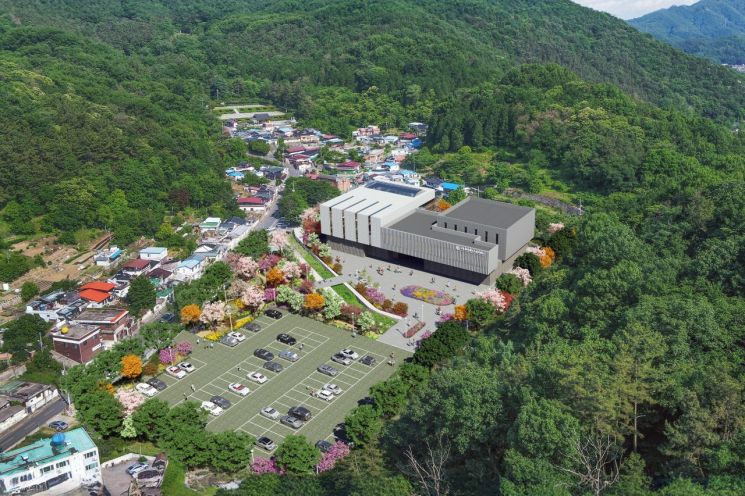 Perspective view of the candidate site for the construction of the 'National Later Baekje History and Culture Center' in Jeonju.
 [Photo by Jeonju City]
According to various historical records such as the Samguk Sagi, King Gyeon Hwon established his capital in Jeonju and declared the founding of 'Baekje,' ruling for 37 years. Jeonju is evaluated as the optimal site for the National Later Baekje History and Culture Center, securing both historical and symbolic significance.
The Naksujeong site, which the city applied for as a candidate, is located near Donggosanseong Fortress, the Later Baekje city walls, and the ruins of Naksujeong and Uadong, presumed to be royal temples. It is considered the best place for in-depth research on Later Baekje history and culture.
Currently, urban regeneration projects such as the Naksujeong Saetteul Village and the Seungamsan Humanities and Natural Scenery Trail are underway around the construction site. The city plans to connect these projects to create a Later Baekje Art Village based on Later Baekje history and culture.
Furthermore, the city expects the National Later Baekje History and Culture Center to give momentum to the promotion of the King's Palace Garden Project, a key pledge of the 8th local government administration.
Jeonju will not only protect, research, and utilize Later Baekje relics scattered throughout the city but also link them with Later Baekje cultural heritage in other regions. It is anticipated to elevate Later Baekje history and culture as a major historical and cultural resource of South Korea.
Jeollabuk-do Province is also putting all its efforts into attracting the National Later Baekje History and Culture Center in line with Jeonju City's efforts. Citizens are also joining forces to support the construction. Private organizations such as the Later Baekje Citizens' Solidarity and the Later Baekje Promotion Association have contributed by gathering the will of about 3,000 citizens through signature campaigns.
Prior to this, the city led the formation of the Later Baekje Cultural Zone Local Government Council (comprising Jeonju, Nonsan, Mungyeong, Sangju, Wanju, Jangsu, and Jinan counties) to clarify Later Baekje history and culture. As the chair city of the council, it has made various efforts, including leading legislative amendments to include 'Later Baekje' in the 'Special Act on the Maintenance of Historical and Cultural Zones.'
From 2017, over five years, a survey of the entire Jeonju area identified more than 70 sites related to Later Baekje. Through 15 academic conferences and publications, the city further strengthened Jeonju's historical significance and symbolism as the royal capital of Later Baekje.
Since the excavation of Donggosanseong Fortress in the 1980s, which revealed the reality of Later Baekje, continuous excavations have been conducted. As a result, defensive facilities of the Later Baekje city walls such as Seogosanseong, Omokdae, Jamandong, Bali Mountain, and Girin Peak were discovered, and Later Baekje tombs were confirmed around Uadong and Wansan Chilbong.
Woo Beom-gi, Mayor of Jeonju, said, "We plan to present Jeonju's unique rationale and support measures that differentiate it from other regions to ensure the construction of the National Later Baekje History and Culture Center in the royal capital of Later Baekje, Jeonju. We will gather the aspirations of Jeonju citizens and work closely with experts, academic societies, political circles, and Jeollabuk-do to succeed in attracting the center."
© The Asia Business Daily(www.asiae.co.kr). All rights reserved.
![Clutching a Stolen Dior Bag, Saying "I Hate Being Poor but Real"... The Grotesque Con of a "Human Knockoff" [Slate]](https://cwcontent.asiae.co.kr/asiaresize/183/2026021902243444107_1771435474.jpg)
















