'Direct Verification of Compositions' by 16 Teachers and 13 Students
Additional Threats Arise Under False Damage Pretenses
Ministries Including Education, Gender Equality, and Science Respond
The Korean Teachers and Education Workers Union (KTU) conducted a survey on the actual conditions related to 'school deepfakes' and confirmed that 517 people were victims who either directly verified sexually explicit deepfake content or received related threats. While relevant government departments have formed a task force (TF) to respond, school members unanimously agreed that punishing even possession and viewing of illegal synthetic content is necessary to prevent recurrence.
On the 29th, KTU held a press conference in front of the Government Seoul Office and announced that based on 2,492 reports received over two days starting from the 27th from schools nationwide, 517 cases of direct or indirect deepfake damage were confirmed. Among them, 29 victims directly confirmed that illegal synthetic content was created using their photos (16 teachers and 13 students), and 488 victims indirectly received threats related to the production of illegal synthetic content from their surroundings (188 teachers, 291 students, and 9 school staff).
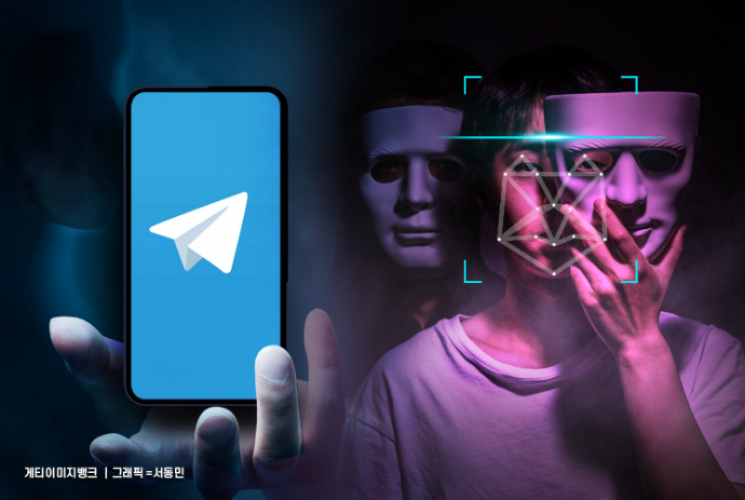
When limited to direct damage to teachers, this figure is larger than the scale of damage announced by the Ministry of Education the previous day. The Ministry of Education had announced that from January this year until the 27th, 186 students and 10 teachers reported deepfake damage. KTU stated, "We confirmed that as schools suffering from sexual crime through illegal recordings were leaked via SNS recently, additional threats demanding photos, personal information, and money under false pretenses of victimhood have occurred among members of those schools," adding, "It seems necessary to conduct a thorough and continuous investigation into additional damages."
According to KTU, Teacher A suffered damage when the perpetrator maliciously synthesized their photo into nude and obscene content and distributed it on SNS. Personal information was also leaked, leading to harassment via calls and texts, and only after filing a criminal complaint did they learn that the suspect was a student. Teacher A tried to convene the Teacher Rights Protection Committee, but due to privacy protection, investigative agencies refused to provide suspect information to the education office, school, or teacher, preventing the committee from being convened. Student B was threatened through deepfake videos on SNS. After receiving light threats, mockery, and obscene messages from strangers, the threats escalated to videos with her face inserted. Eventually, out of fear, Student B deleted her SNS account.
With the scale of damage identified at the government level, relevant departments have begun preparations for regular status checks and victim support. The Ministry of Education formed an emergency deepfake response TF consisting of six teams, led by the Deputy Minister and Deputy Director of the Planning and Coordination Office. Following discussions with related agencies such as the Ministry of Gender Equality and Family and the Ministry of Science and ICT, and the formation of an expert advisory group, follow-up measures will be announced at the Social Relations Ministers' Meeting in October.
The Ministry of Gender Equality and Family, together with the Ministry of Science and ICT, agreed to cooperate on advancing technology to automatically detect deepfake sexually explicit content in the Digital Sexual Crime Deletion Support System. The two ministries are conducting a research project titled 'Measures to Prevent and Protect Against Deepfake-Based Digital Sexual Crime.' Through this research, they plan to explore legislative reforms such as sanctions for the production or possession of deepfake sexually explicit content, which are currently not legally punishable, as well as the introduction of deepfake detection systems and victim support policies.
In actual educational settings, strengthening legal sanctions was identified as the top priority. According to the KTU survey, 81.2% of school members, including teachers and students who participated, responded that establishing punishment regulations for possession and viewing of illegal synthetic content and strengthening punishment regulations for distribution are necessary as measures to prevent recurrence.
© The Asia Business Daily(www.asiae.co.kr). All rights reserved.
![Clutching a Stolen Dior Bag, Saying "I Hate Being Poor but Real"... The Grotesque Con of a "Human Knockoff" [Slate]](https://cwcontent.asiae.co.kr/asiaresize/183/2026021902243444107_1771435474.jpg)
















