Ministry of Land, Infrastructure and Transport Announces Supply Plan for 'New Type Long-term Private Rental Housing'
Long-term rental housing. Key is supply by companies
Rental fee regulations eased, tax benefits
Support for finding sites within urban areas
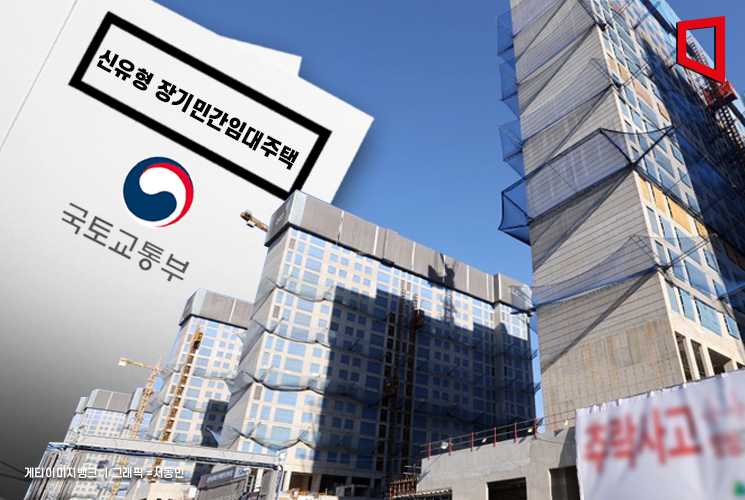
The Ministry of Land, Infrastructure and Transport announced plans to attract numerous companies to the private rental market and create more than 100,000 private rental housing units with over 100 households per complex and a minimum residence period of 20 years by 2035.
The plan involves easing rent increase regulations and attracting companies to the private rental housing market through tax benefits such as acquisition tax and property tax reductions. The Ministry of Land plans to propose related legislative amendments next month, and if the bill passes the National Assembly, a new type of private rental housing is expected to emerge in large numbers.
On the morning of the 28th, the Ministry announced these details at the Economic Ministers' Meeting held at the Government Seoul Office under the title "New Rental Housing Supply Plan for Housing Stability of Low-income, Middle-class, and Future Generations."
A Ministry official stated, "There has been a shortage of rental housing that allows long-term residence in the private rental market led by unregistered and individual landlords," adding, "Going forward, corporations, including REITs (Real Estate Investment Trusts), will be enabled to provide large-scale, long-term rental housing services."
According to the 2022 Housing Survey, the rental housing market consists of 78.5% private rental (6.58 million households) and 21.5% public rental (1.86 million households). Among private rentals, unregistered rentals account for 61.8% (5.14 million households), which is much higher than registered rentals (about 17%, 1.44 million households). Within registered rentals, individuals hold 63% of the units, whereas corporations owning 100 or more households account for only 32%.
Differences Among Private Rental Housing Operators: 'Autonomous', 'Semi-autonomous', and 'Support' Types
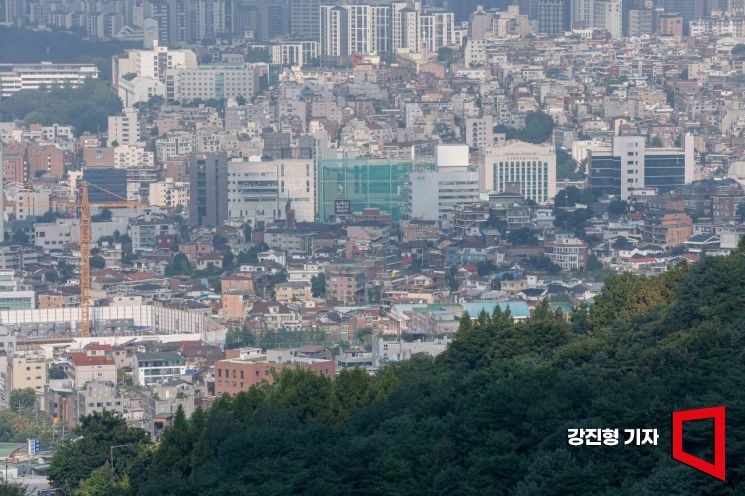 The government announced measures to expand housing supply for national housing stability, and will announce new residential sites for 50,000 households in November. The photo shows a dense villa area in Huam-dong, viewed from Namsan, Jung-gu, Seoul on the 9th. Photo by Jin-Hyung Kang aymsdream@
The new types of private long-term rental housing are divided into three categories: 'Autonomous', 'Semi-autonomous', and 'Support'. The more freedom from government regulations and the more support received, the more restricted the rent increase is and the more obligations must be fulfilled. Conversely, the more regulations and less support, the more freely rent can be raised.
First, 'Autonomous' operators receive no regulatory exemptions or support but can raise rents at their discretion. Private rental housing operators choosing the Autonomous type are subject to the Housing Lease Protection Act (2+2 years, rent increase limit of 5%) only for the first four years after tenants move in. After that, they can freely increase rent for monthly or yearly leases.
'Semi-autonomous' operators can receive housing fund loans from the government but must apply the Housing Lease Protection Act throughout the tenant's lease period. 'Support' operators receive housing fund loans and discounted public land supply but must fulfill more public obligations than Semi-autonomous operators. In addition to complying with the Housing Lease Protection Act during the tenant's residence, they face initial rent restrictions (95% of market price) and must prioritize renting to the homeless.
A Ministry official explained, "Autonomous rental operators can raise rents freely after four years," adding, "However, Semi-autonomous and Support operators can only increase rent by up to 5% every two years." The official further noted, "All three types are exempt from regulations on 'rent increase rates linked to inflation' and 'rent increase limits when tenants change'." Additionally, benefits include increasing the floor area ratio for constructing long-term rental housing up to 1.2 times the limit set by the Enforcement Decree of the National Land Planning Act.
Possibility of Senior Welfare Housing Business as Long-term Rental Housing
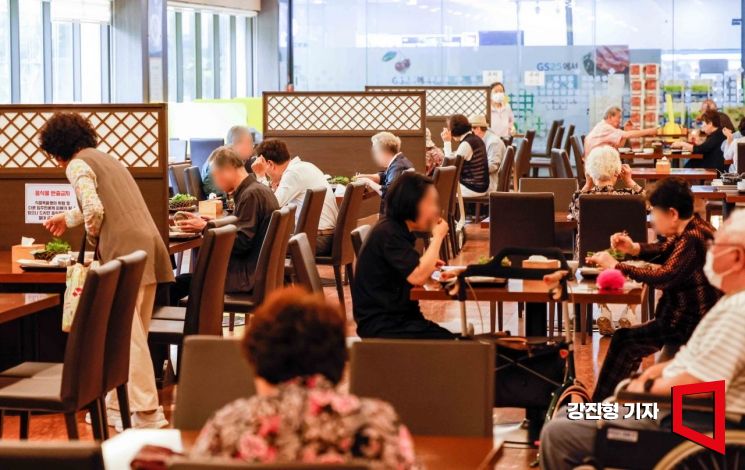
With the emergence of long-term rental housing allowing residence for over 20 years, the Ministry expects that specialized services for youth, newlyweds, and the elderly can be combined according to the operator's business plan. For example, operators could run these long-term rental houses as 'Silver Stay' facilities like senior welfare housing. If 'Support' type private rental buildings operate as Silver Stay, the move-in fees will be set within 95% of the market price of similar nearby facilities.
The Ministry also introduced tax support measures. A Ministry official explained, "All 'Autonomous', 'Semi-autonomous', and 'Support' operators who comply well with the 20-year rental obligation period and rent increase criteria will be exempt from acquisition tax surcharges (12%), comprehensive real estate tax aggregation, and additional corporate tax (20%)." Semi-autonomous and Support operators can also receive acquisition tax and property tax reductions.
The official added, "Smooth financing is essential for operating long-term rentals over 20 years," and stated, "The Housing and Urban Guarantee Corporation (HUG) will provide project financing (PF) guarantees to all 'Autonomous', 'Semi-autonomous', and 'Support' operators." Housing fund loans apply only to Semi-autonomous and Support types. Depending on whether the housing is newly built or purchased and the area per household, loans range from 90 million to 140 million KRW, with interest rates around 2.0-3.0%.
Securing land for private rental housing construction is also becoming easier. For private landowners in urban private sites, when selling land for private rental housing construction, capital gains tax is reduced by 10% to lower land prices. For corporate-owned land, no additional 10 percentage point corporate tax will be imposed upon sale. For Support types, there is also a plan to lease idle national and public land such as closed schools in urban areas through private contracts for up to 50 years.
"Insurance Companies Also as Rental Operators" System Reorganization
The scope of participants in private rental housing projects is expanding. A Ministry official said, "We will prioritize offering rental REIT shares to tenants to share profits with them and activate the rental housing REIT indirect investment market."
The foundation for long-term investment funds, including insurance companies, to enter the market has also been established. The official explained, "Insurance companies have been hesitant to enter due to uncertainties despite their willingness for long-term investment, so we clarified legal interpretations," adding, "When insurance companies hold long-term rental housing, the risk coefficient for the solvency ratio, an insurance company's financial soundness indicator, will be reduced by 20% from the existing 25%, easing regulations."
Regulations on transactions of rental housing between corporate private rental housing operators will also be relaxed. If a rental housing operator transfers properties to another operator after operating for more than five years, and the transferee continues rental operations, the transferor can maintain previously received tax benefits. The transferee is also exempt from acquisition tax.
"Mandatory Review of Aging Public Office Buildings for Rental Housing"
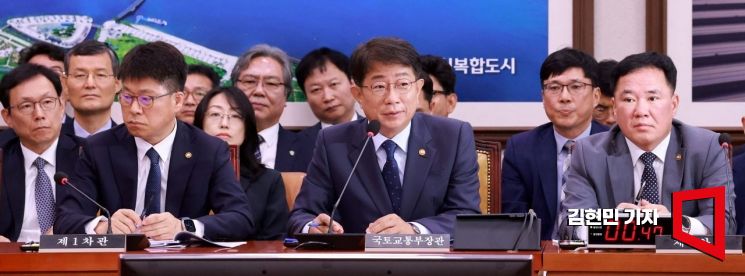 Minister of Land, Infrastructure and Transport Park Sang-woo is speaking at the full meeting of the Land Committee held at the National Assembly on the 21st. Photo by Hyunmin Kim kimhyun81@
Meanwhile, the Ministry announced plans to supply 50,000 rental housing units in urban areas by 2035 through the complex development of aging public office buildings. Until now, Korea Land and Housing Corporation (LH) and Korea Asset Management Corporation (KAMCO) directly discovered project sites or local governments proceeded individually, resulting in sluggish progress.
To address this, a 'Public Facility Complex Development Promotion Council' led by the Ministry will be established. The council will include the Ministry of Economy and Finance, Ministry of the Interior and Safety, local governments, and project implementers. A Ministry official stated, "We will mandate the review of complex development to build rental housing on public office buildings aged over 30 years or on sites scheduled for school closures."
Minister of Land, Infrastructure and Transport Park Sang-woo said, "We hope this measure will serve as a turning point in the paradigm of rental housing supply. We will be able to sufficiently supply high-quality rental housing where diverse demanders, including youth, newlyweds, and the elderly, can move in without worries about moving or lease fraud, at reasonable rents, and live safely for the desired period," adding, "We will implement follow-up measures such as legislative amendments and project site discovery in consultation with the National Assembly and related ministries."
© The Asia Business Daily(www.asiae.co.kr). All rights reserved.
![Clutching a Stolen Dior Bag, Saying "I Hate Being Poor but Real"... The Grotesque Con of a "Human Knockoff" [Slate]](https://cwcontent.asiae.co.kr/asiaresize/183/2026021902243444107_1771435474.jpg)

















