98% of Global Gallium and 60% of Germanium Production
"Retaliation Against US Advanced Technology Sanctions"
On the 26th (local time), major foreign media reported growing concerns over the production of advanced semiconductors and military optical hardware in the West as China controls exports of key semiconductor material minerals.
Since August last year, China has started controlling exports of germanium and gallium used in semiconductors, military, and communication equipment citing national security reasons. Gallium and germanium require specifying their usage and obtaining approval for each individual shipment, which takes 30 to 80 days. Due to this uncertainty, long-term supply contracts are also impossible. As a result, prices of these minerals in Europe have nearly doubled.
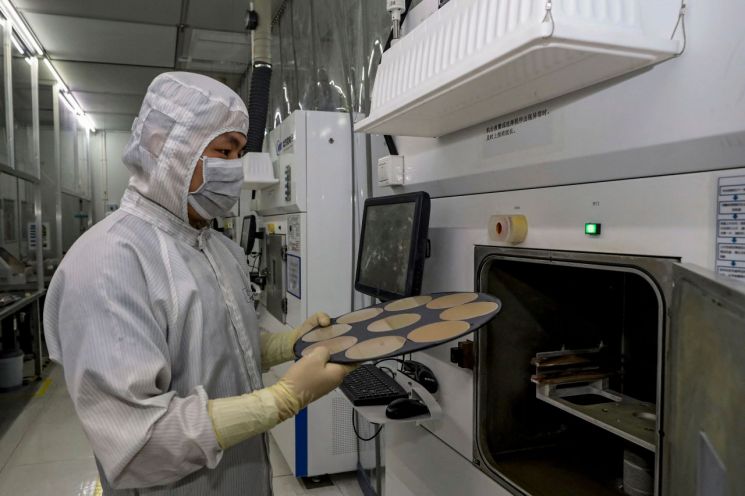
According to the U.S. Geological Survey, China produces 98% of the world's gallium supply and 60% of the germanium supply. Germanium and gallium are essential for manufacturing advanced microprocessors, optical fibers, and night vision devices.
An industry official said that overall exports have decreased by about half since the control measures were implemented, adding, "If China reduces gallium exports like in the first half of the year, inventories will be depleted and shortages will occur."
Jan Gietz, Senior Manager of the Minor Metals Division at Tradium, said that the gallium and germanium secured through China's new export licensing program represent only a portion of the quantities previously purchased, stating, "These export controls further complicate an already difficult-to-access market."
Terence Bell, manager at Strategy Metal Investment, a small metal trading company headquartered in Vancouver, Canada, said, "China no longer sells germanium overseas."
According to data provider Argus, the price of germanium in China surged 52% since early June, reaching $2,280 per kilogram.
Foreign media forecast that if China continues to restrict exports, production of products using gallium and germanium could be halted.
Cory Combs, director at consulting firm Trivium China, commented, "This signals that China may retaliate against the pressure the U.S. is applying to Chinese companies and essential industries."
China recently announced export restrictions on antimony, which is used in batteries and other applications. China is the world's largest producer of antimony, accounting for 48% of global antimony production last year, according to the U.S. Geological Survey.
An industry official heavily reliant on semiconductor materials said, "If the global situation and U.S.-China relations remain as they are now, there is no sign that China will have any motivation to ease export controls."
© The Asia Business Daily(www.asiae.co.kr). All rights reserved.
![Clutching a Stolen Dior Bag, Saying "I Hate Being Poor but Real"... The Grotesque Con of a "Human Knockoff" [Slate]](https://cwcontent.asiae.co.kr/asiaresize/183/2026021902243444107_1771435474.jpg)















