Providing Consultation on Systems and Procedures Not Specified in Relevant Laws
Two associations that received project implementation approval decided to merge, increasing the number of apartment floors and expanding the scale of reconstruction. This is the first case in Korea, involving Daechi Woosung 1st Apartment and Ssangyong 2nd Apartment located directly east across from Eunma Apartment in Daechi-dong, Gangnam-gu, Seoul.
Woosung 1st consists of 7 buildings with 476 households and received project implementation approval in 2022. Ssangyong 2nd, with 4 buildings and 364 households, received approval earlier in 2017. Each proceeded with their respective reconstruction projects but agreed to merge in September last year and approved the integrated reconstruction promotion general meetings in December.
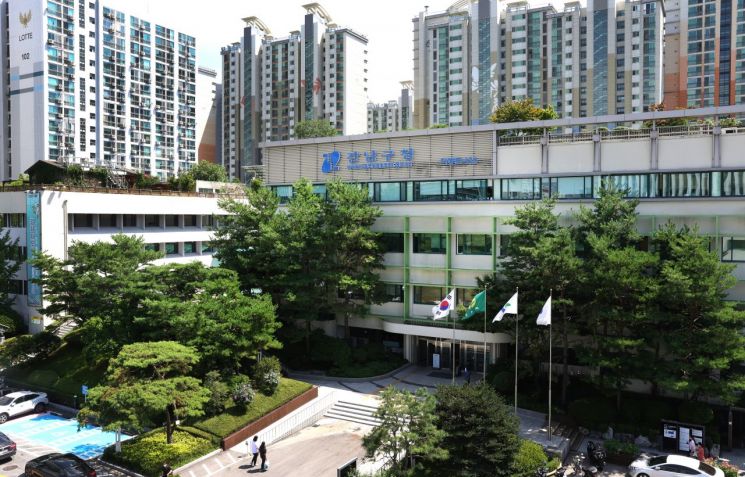
This process was supported by the Gangnam-gu Office Reconstruction Dream Support TF. The TF, launched in the 8th civilian administration, consists of 20 experts including public officials in charge of reconstruction projects, lawyers, judicial scriveners, and tax accountants, providing education and dispute consultation to associations.
As the first case in Korea, the TF continuously provided legal and administrative advice on parts not specified in related laws. Before reaching an agreement, each association inquired with the TF about ▲work procedures for promoting integrated associations ▲resident consent form formats and member consent rates ▲integrated reconstruction project schedules ▲integration procedures for Woosung 1st commercial area, meticulously preparing for the merger.
The TF conducted legal reviews on procedural requirements (consent of two-thirds or more of members) and changes to maintenance plans to help the two associations reach an agreement quickly. According to the agreement, the Ssangyong 2nd association was dissolved and absorbed by Woosung 1st, and the plan to build up to 35 floors was changed to a maximum of 49 floors. Existing contractors and service providers will be borne by each association under the principle of independent settlement.
Gangnam-gu continued to review legally unclear systems and procedures even after the merger. First, there was the issue of forming an election management committee. To elect executives and delegates at the integrated general meeting, an election management committee must be formed, but there was no legal procedure for owners of the dissolved Ssangyong 2nd association to become election management committee members.
In response, the advisory group proposed a proactive measure for fair and smooth election procedures. Woosung 1st association revised its current election management regulations, confirmed the general meeting resolution, then formed an integrated election management committee, ensuring participation of Ssangyong 2nd owners during the regulation revision.
The succession procedure for contracts between the dissolved Ssangyong 2nd association and existing service providers (designers and contractors) was also unprecedented. It was unclear whether contract changes could be made through private contracts or if general meeting approval was required. The advisory group recommended listening to authoritative interpretations from the Ministry of Land, Infrastructure and Transport and the Ministry of Government Legislation and preparing practical guidelines through legal advisors, as there were no separate regulations on this matter.
The district office expects this case to serve as an important precedent for other regional associations pursuing integrated reconstruction in the future.
Cho Sung-myeong, head of Gangnam-gu Office, said, “There were many unclear regulations due to Korea’s first integrated reconstruction project, but the TF’s professional support was a great help to residents,” adding, “We will continue to listen to associations’ opinions and provide necessary administrative support to ensure reconstruction projects proceed quickly and transparently.”
© The Asia Business Daily(www.asiae.co.kr). All rights reserved.

















