Elon Musk, CEO of Tesla, owns the social media platform X (formerly Twitter), which plans to relocate its San Francisco headquarters to Austin, Texas within weeks, the New York Times (NYT) reported on the 25th (local time).
The last remaining employees at the San Francisco headquarters will move to offices in Palo Alto and San Jose in the Silicon Valley area. The new headquarters will be established in Austin, Texas. This marks 18 years since X was founded in San Francisco in 2006.
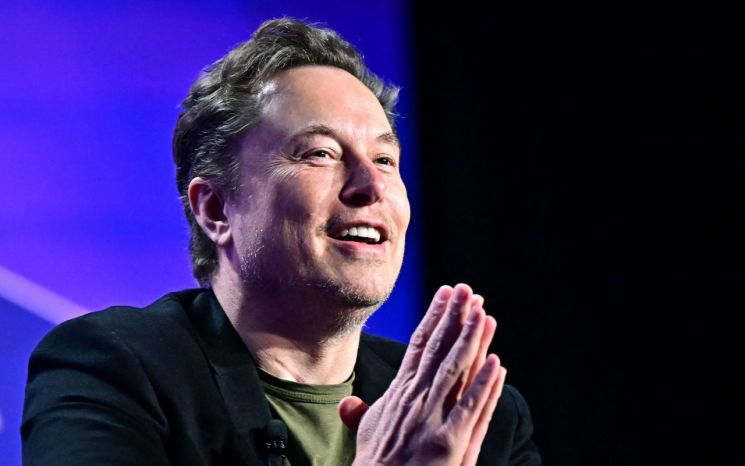
Earlier, on the 16th of last month, Musk announced via his X account that he would relocate the X headquarters along with his space company SpaceX, and has since begun executing the move.
At that time, Musk cited California Governor Gavin Newsom’s signing of the LGBTQ+ student-related law 'AB1955' as a reason for the headquarters relocation. The law prohibits California school staff from disclosing a student's gender identity or sexual orientation to parents or others without the student's consent. Conservative groups have opposed the law, arguing that it infringes on parental rights.
Musk also criticized San Francisco’s gross receipts tax, which imposes taxes on transactions occurring outside the city.
The NYT reported that San Francisco has not shown a strong reaction to X’s headquarters relocation. This contrasts with 2011, when Twitter attempted to move to Brisbane, a city with lower taxes, and San Francisco offered tax incentives to encourage the company to stay.
David Chiu, the city’s legal affairs officer who supported tax incentives for Twitter at the time, said, "I share the same view as San Francisco residents," and called the relocation a "good decision."
London Breed, Mayor of San Francisco, said, "I met with Musk once a few months ago and exchanged texts with him," but added that she did not request X to remain in the city.
San Francisco’s lack of opposition to X’s headquarters move appears to be due to the significant change in X’s status compared to over a decade ago.
At that time, Twitter’s workforce had grown from a few hundred to over 7,000 employees, creating jobs and revitalizing the stagnant local economy. It was a symbol of San Francisco, the "startup capital."
However, after COVID-19, many employees worked remotely, leaving buildings empty. Especially after Musk’s acquisition in October 2022, X’s status has declined. About two-thirds of the entire workforce have left due to layoffs and other reasons, and revenue has significantly decreased.
Ted Egan, San Francisco’s chief economist, said, "X has already shrunk so much that its relocation will not significantly impact the city’s finances," adding, "X has already lost its presence in many ways."
© The Asia Business Daily(www.asiae.co.kr). All rights reserved.
![Clutching a Stolen Dior Bag, Saying "I Hate Being Poor but Real"... The Grotesque Con of a "Human Knockoff" [Slate]](https://cwcontent.asiae.co.kr/asiaresize/183/2026021902243444107_1771435474.jpg)















